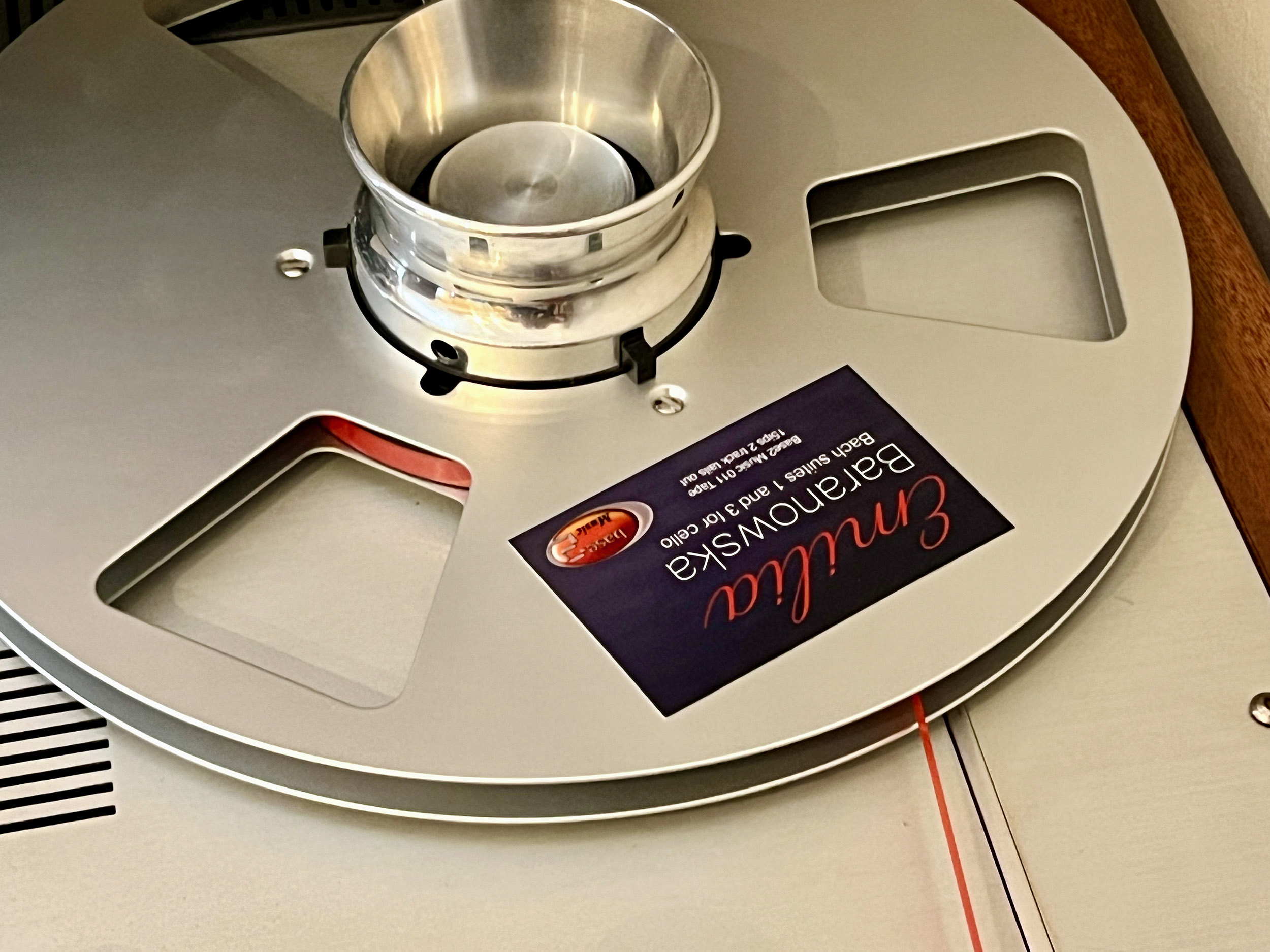
 Based in West Sussex, UK, Base2 Music is likely one of our more niche creators of reel-to-reel recordings – so I guess that makes them almost a niche within a niche, in mainstream terms. The benefit of going super-niche is of course super-specialism and so, as a lover of musical recordings that are superbly well done, I was keen to find out whether this is indeed the case here.
The ‘niche’ aspect in question is the fact that the label, founded in 2017, focuses entirely on making “beautifully recorded and produced organ and classical music to audiophile standards”.
“Our intention,” says Base2’s website, “is to present superb interpretations performed on magnificent instruments by artistes of the highest calibre. In pursuit of this goal, we record diligently in well-chosen venues with state of the art equipment and carefully selected microphones in very high resolution DSD, PCM digital and analogue tape.”
As for output formats, “While the world goes gaga over streaming, we’re holding a torch for the tangible. Our super audio CDs and LPs are more than just a listening experience, they’re a journey into the heart of the music. And for the purists, our analogue editions, recorded on reel-to-reel tape, are a raw, unfiltered encounter with musical genius. For those who wish to download, we offer from 192 kHz to 352 kHz PCM up to 32-bit, and DSD.”
Sounds good so far. And then I also read that the recordings made to reel-to-reel “are pure analogue productions and are hand edited with razors.” Woah. Now that’s piqued my interest – sounds like we’re dealing with purists here and I sure love a purist!
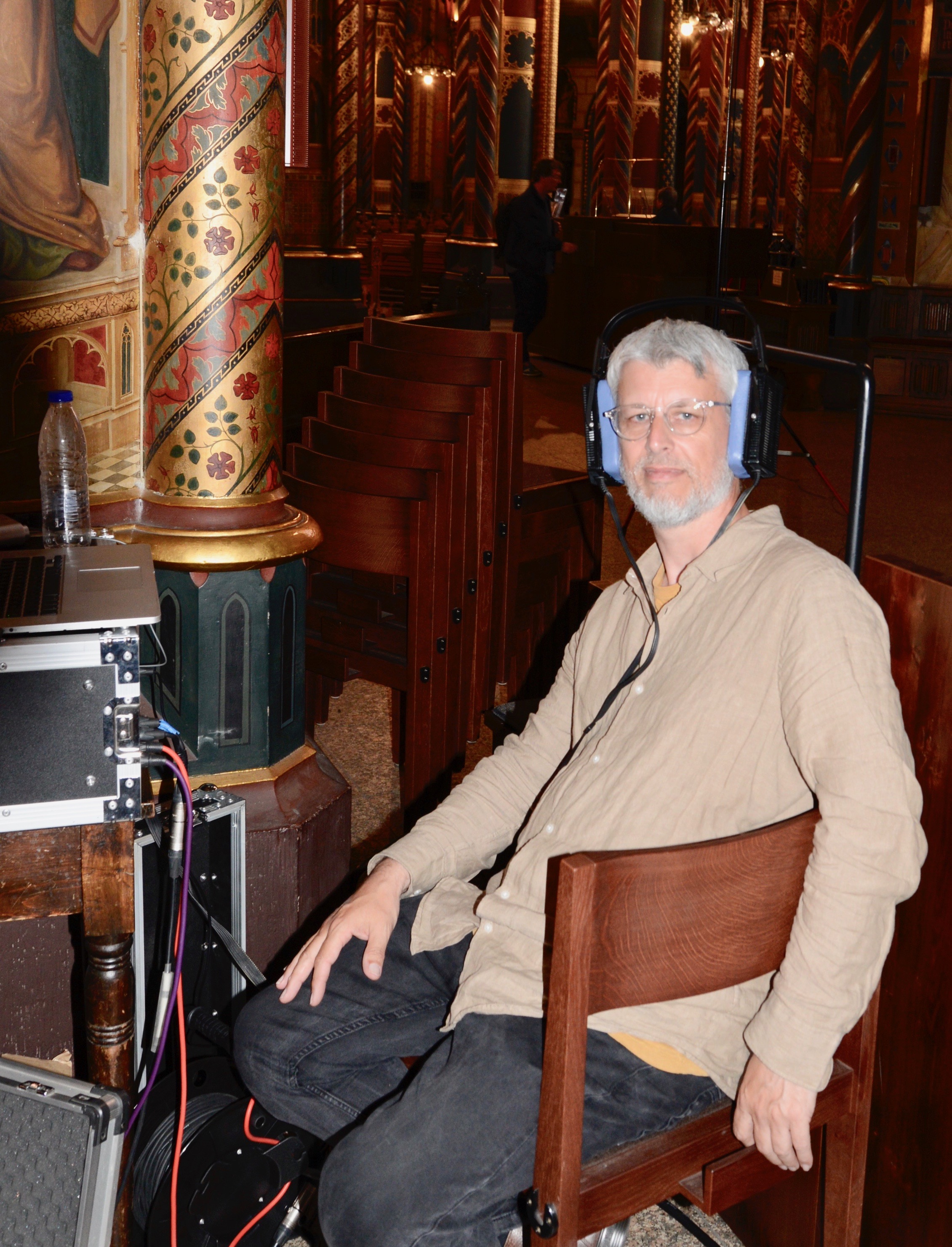
Base2 is owned by and run by Jacob (Jake) Purches who describes himself as “a producer, recording engineer, 3D designer, audiophile and music lover”.
Jake says, “We’re not out to build a large catalogue in a short period of time, but to carefully and slowly produce recordings to the highest possible standards of the best artistes that are relevant today. Recordings are expensive to do to this calibre and in this uncertain age, we feel that making music should be an act of bringing beauty into the world not just for a financial incentive.” Well, if folks can afford to do so, then I’m all for that! (Interestingly, the company invites sponsorship as part of its business model).
A word on the ‘niche’
In my personal experience, what you tend to get with super-niche, bijou, artisan (call them what you will) labels such as this is, for better or for worse, a recording that’s very much closer to the performance. Some might call it unpolished, raw or natural. Some might also assume that it’s unlikely to be as balanced or considered or ‘well-produced’ as the product of a major label, though that would be an assumption I’d strongly question, based on how much consideration goes into the making of recordings by many such labels (in terms of calibre of artist, recording location, microphone set-up, recording equipment etc, as distinct from the big bucks thrown at all the after-the-fact mixing, mastering and production by the big labels). Done well, what one hopes to expect from the niche end of the market is the possibility of capturing something very special in its purest, most naked truth. Whether the choice of performance (music, artist, venue, etc) actually warrants – or can withstand – such intimate, raw, scrutiny is perhaps what ultimately decides the worth of the project.
In today’s computer-driven, lip-synced, pitch-corrected, digitally-edited, hyper-compressed world of music recording, there often seems little-to-no space for a true artist to shine on their own terms, and for connoisseurs of the art of sound and music, precious little to sate our appetites. So this is me on my soap box saying that we – artists and listeners alike – would do well to support such endeavours as much as we can. Okay, mini-rant over, let’s cut to the chase and see whether this turns out to be one of our finer examples of the joys of niche…
The choice of music: Bach’s Cello Suites (1 & 3)
 If we’re talking about music in its most unadulterated, distilled form, then Bach’s Cello Suites might well come to mind. The Suites for solo cello (of which there were / are six in total) are widely regarded as a fine example of the purest, most elegant musical expression and are undoubtedly a worthy subject for the ultimate purity of recording treatments.
This performance / recording focuses on Suites 1 & 3. (I asked Jake Purches whether he intends to complete the series but sadly this isn’t on the horizon.) Running for around 48 minutes, it’s certainly a full album’s worth of material and fills a Recording the Masters long play studio tape.
Anyway, since we’re dealing with solo pieces, what we obviously have here is just one instrument, one musician, and so there’s no absolute need for mixing, no need for a big ‘lossy’ desk, no need for anything other than a cello, a cellist and a microphone or two set up in a well-chosen acoustic space. Purity, simplicity, it doesn’t get any more direct, any more intense than this. All of which means you need one heck of a cellist to pull it off! Step forward Emilia Baranowska…
The artist: cellist Emilia Baranowska
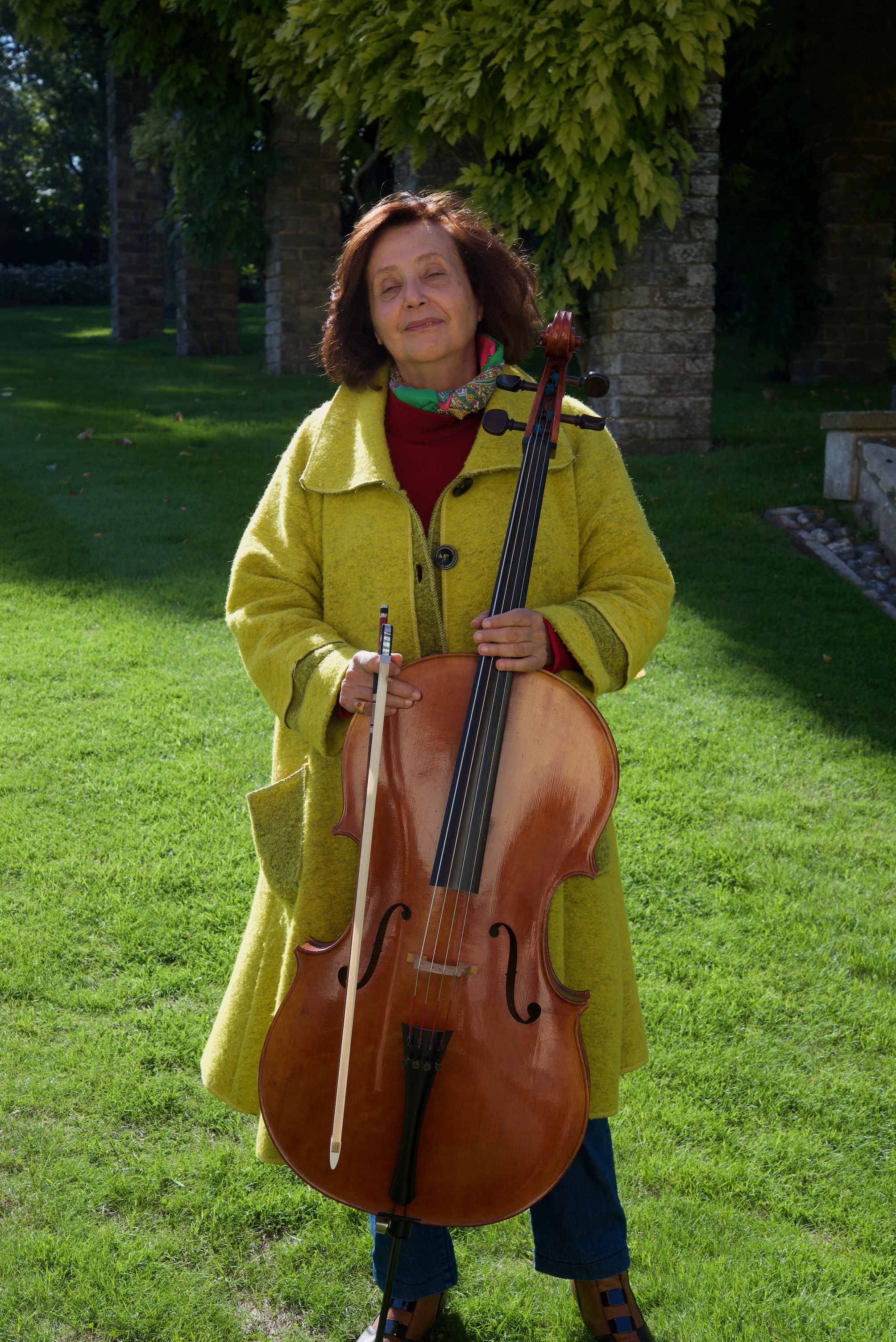
On its choice of artists, Base2 Music says this: ” We’re not just about presenting top-notch interpretations on exceptional instruments – we’re crafting a sonic experience that transcends the ordinary. Our artists have one thing in common: to eschew an overly academic presentation and bring life and exciting interpretations to the music. Each artist is a world class performer who brings their own personality to each project.”
Born in Sofia, Bulgaria, Emilia Baranowska is a Franco-Bulgarian concert cellist and professor. She first began playing at age 9 and became a student of the great Bulgarian cellist Zdravko Yordanov, who in turn was a student of Russian cellist and composer Rostropovitch. At age 18, Emilia left home alone and moved to Paris, having been invited to pursue her musical studies with cellist Eleftherios Papastavro at the École Normale Supérieure de Musique in Paris. From there onwards, her international career was launched – although her prestigious training continued in tandem. In 1978 she was invited to study with the great cellist Jacqueline du Pré, and visited Jacqueline four times before illness made any further visits impossible. Then, in 1979, Emilia moved to New York and the Julliard School to study under American cellist Leonard Rose, after he ‘spotted’ her performing Bach’s Suite No 5 on French television.
Emilia has since performed and collaborated with a variety of prestigious artists, orchestras and music festivals around the globe. In parallel with her concert performance career, she is also a professor of cello and has taught at various French music conservatoires. You can read more about Emilia, and about all of Base2’s artists, at http://www.base2music.store/base2music-artistes.html
The recording kit
 “We’re not just recording, we’re sculpting soundscapes with state-of-the-art equipment and selected microphones,” says Base2’s website.
Company founder Jake Purches is, he tells me, something of a bass fanatic – hence a sizable proportion of Base2 Music’s catalogue comprising organ works (and hence presumably the label’s name too). Through this, Jake has forged a relationship with a number of prominent organists with whom he’s travelled Europe to record many of the most majestic organs in Christendom – which seems like a very fine pursuit! Purches also has, as it turns out, a number of ‘day jobs’ of direct relevance, including works for Vivid Audio, the extremely high-end / state-of-the-art loudspeaker brand headed by renowned designer Lawrence Dickie (the man who designed the now fabled Bower and Wilkins ‘Nautilus’).
And so, when it comes to recording, not only does Purches know what he’s doing, he also has access to some seriously impressive kit with which to do it.
 Purches records on what might at first glance seem a mere ‘consumer’ tape recorder: a Revox B77. I say ‘at first glance’ because his B77 ain’t no regular unit – it was built for Purches by none other than the late, great, Tim de Paravacini. In fact, Purches’ recording career started under the mentorship of Tim de Paravacini. De Paraviacini’s professional tape recorders and studio electronics have, of course, gained epic cult status and have graced the studios of such musical nobility as Sir Paul McCartney and Dave Gilmour.
To put this into perspective: Purches’ de Paravacini B77 has a bandwidth of 12Hz to 35kHz at 15ips, nothing remotely akin to a standard ‘consumer’ unit. In addition , Purches has a separate Tim de Paravacini Dolby A unit, crafted to achieve startlingly low levels of noise. Lucky fellow!
Overall, the equipment set-up for this recording was: a pair of SE Voodoo ribbon microphones placed about 1.5m away from the cello, together with a third microphone, an omnidirectional Sennheiser MKH8020, placed near the floor, to supplement and fill in the lower bass octaves.
The signal was fed to a microphone preamp, from there to a simple mixer, then to the de Paravacini Dolby A unit, and finally to the Revox B77. A second output from the mixer fed a digital recorder.
Interestingly, that very same tape (ie. the one on the B77 that captured the original recording) was used for editing, so rather than making a ‘safety copy’ for editing, Purches took a razor blade to the one and only session tape to produce the actual master! Nerve wracking and certainly risky, but unquestionably the perfect sonic approach, avoiding any extra generational losses.
And it’s from this very same tape that the 1:1 retail copies are made. They’re copied onto a similar recorder, with all connecting wires throughout the recording and reproducing chain being cotton-insulated, pure silver conductors.
The listening test (and the venue)
You know how I often say I’ve been transported to some sublime venue or other while listening to a great tape – an Italian church, an iconic London studio, a Canadian concert venue with swimming pool, etc? Well this time I wasn’t. This time, the performance, the artist came to me. Emilia Baranowska surprised me by joining me in my living room!

I mean, not literally, she didn’t come visit. How come, then? Well, it turns out that, in contrast to most of Base2’s recordings, this one wasn’t made in a church. The recording venue was the music room of a fine old country house. The room was carpeted over a solid wooden floor and measured around 10 by 20 metres. The effect, to my ears, is to deliver a similar acoustic quality to a typical domestic living room. As a result, the sound is utterly natural and ‘just right’, which is perhaps why it appears to transport the cellist into your room, rather than performing some strange space swapping ritual in which your living room becomes a church or a recording studio. It’s a subtle effect, but there’s a beautiful richness to the sound. I’d say that warmth, balance and a gentle yet full presence are the main qualities in abundance here.
One of the key aspects here was, I think, the choice of microphone. Purches tells me he selected the Voodoo ribbons because they avoid any tendency towards hardness which can really clash with the warmth of the cello, something which can be a real issue with other mic designs. The room too, while being of an ample size, was neither too damped nor too live, so the warmth, dynamics, body and texture of the cello are very well captured and reproduced.
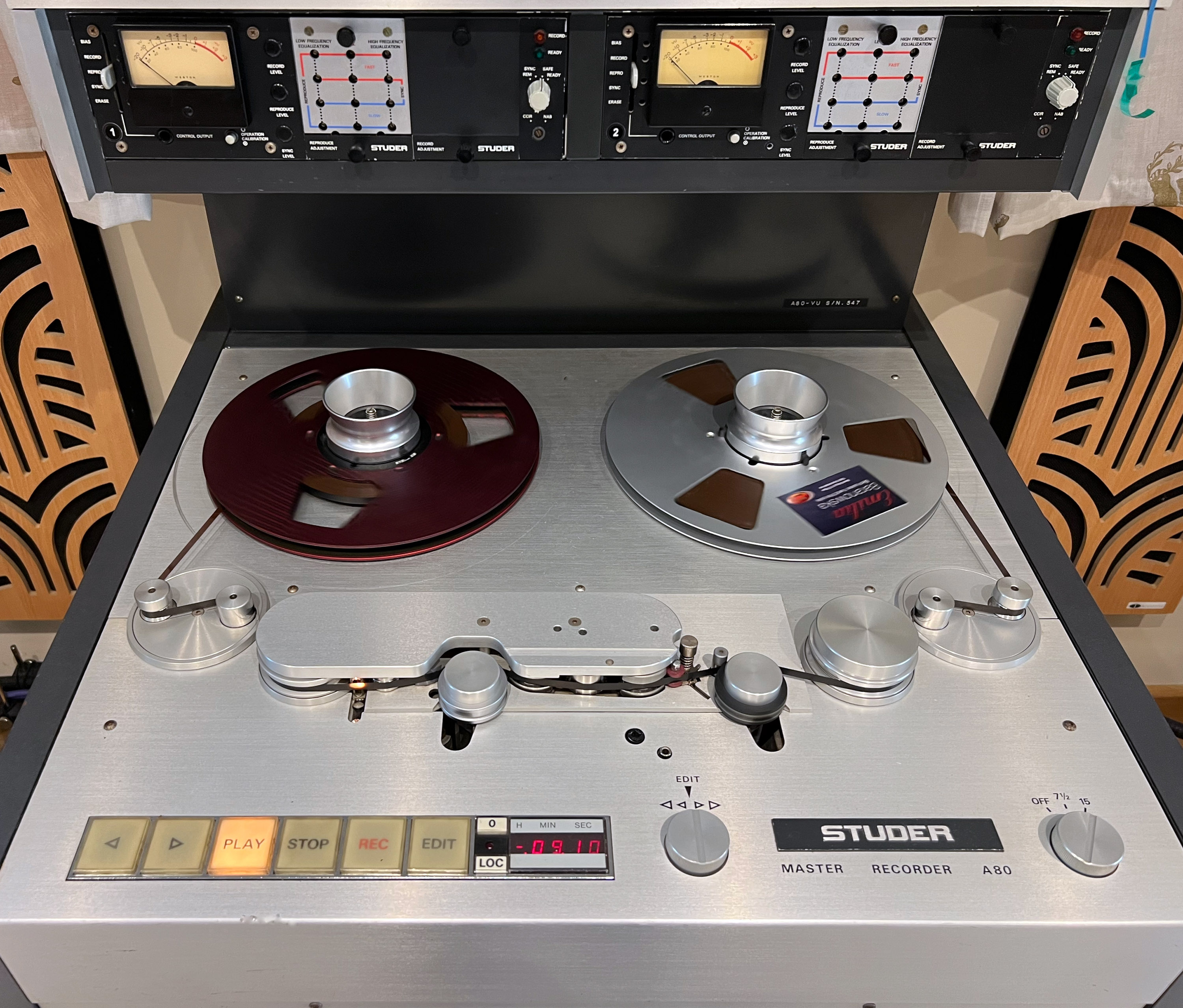 As the first Cello Suite starts, its familiarity is obvious. It’s a much-played piece of music, and whether from film scores or advertisements, you will certainly recognise it. What stands out here is the wonderfully natural body and presence, the fullness and neutrality of this impressive recording. As the notes cascade from high to low there’s an evenness and a balance to the tone that’s all too often missing in more mainstream recordings. The cello sits solidly within in the soundstage surrounded by the ambiance of the room, but unlike so many ‘church’ recordings, it’s warm and resinous and oh-so-intimate.
The cello possesses a sweetness, a woodiness and a rich tonal neutrality that makes it one of my favourite instruments to listen to. This recording doesn’t disappoint: the sound blooms and washes over you with a full gamut of colour and emotion.
Emilia Baranowska’s performance is captivating and I find myself feeling drawn in, or gently pulled in, towards the space that she inhabits.
However, at this point I have to put my hands up and say that I’m none too knowledgeable about Bach’s oeuvre and so I don’t feel best placed to wax lyrical in too much more detail on the music or the performance per se, lest I be accused (quite rightly) of coming up with a load of ill-informed tosh! So I’m largely sticking to what I do know here, which is my personal impression of the recorded sound quality.
On that note, the Cello Suites would appear to be a popular choice for audiophile recordings, although this is the only one I’m aware of on R2R tape as yet.
Chasing The Dragon, another UK-based audiophile label, has recorded all six suites, performed by Justin Pearson (a project that was more than a year in the making), which are released as a five LP box set at £450. I haven’t personally heard them, but Neville Roberts was present at one of the recording sessions and wrote me a guest blog back in 2019.
What I have heard (on Qobuz) and loved are master cellist Janos Starker’s recordings for Mercury Living Presence, which have been recently remastered by Ryan K Smith for Analogue Productions and released as a 6 LP box set at $195 via Acoustic Sounds. In fact, I’m seriously tempted to invest in a copy.
Where to buy the tape – and other formats
Base2 Music’s Cello Suites on tape is available for a very reasonable £250, bearing in mind that this is a hand-made, one-at-a-time, direct copy of the actual original studio session / master tape.
There are also two digital options available, taken from the simultaneous DSD128 digital recording. As with the tape, the DSD ‘master’ recording has not been edited and so is also a live unedited recording of the performance; it could equally be referred to as the ‘session tape’ or the ‘master’:
- A hybrid CD / SACD containing both this recording plus a second recital of the works recorded live in a church. The latter live performance is presented in both stereo and 5.0 surround.
- A digital download of the two stereo recordings is available for just £18. This includes a DSD128 recording of the studio performance and a 24/192 of the live performance.


 Dave Denyer: The Reel-to-Reel Rambler