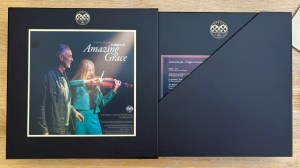
 The title that reeled me in
It was inevitable, really, that this title would grab me by the lapels. For more than a decade I’ve been following — and, let’s be honest, evangelising — the wonderful, defiantly niche world of audiophile reel‑to‑reel tape. I’m talking about ¼‑inch, 15ips, studio‑grade tape sold as a consumer format. A tiny market, yes. A high‑end indulgence, absolutely. But also the closest most of us will ever get to touching the master tape of a beloved recording.
The growing tape revival
My gateway drug was The Tape Project back in the early 2000s. They were the first outfit I encountered selling fully licensed 1:1 copies of original studio masters. My first ‘copy master tape’ purchases came from them, and their catalogue — now 32 titles deep — still reads like a greatest‑hits list of analogue glory.
Since then, the landscape has kind of exploded. Revox (who absorbed Horch House, one of the early pioneers) now presides over a combined catalogue of more than 150 titles. Analogue Productions joined the fray a few years ago with their Ultra Tape series, now with around 40 releases. Italy’s Hemiolia Records has quietly assembled a jewel‑box of about 20 superb jazz classics (well, not that quietly, I’ve shouted about them from a few rooftops). And most recently, Rhino — yes, that Rhino — have stepped into the arena with Rhino Reel to Reel. When a major label’s catalogue division starts issuing tape, you know something’s happening.
These are the reissue ‘giants’. Their catalogues are built on classic albums, re-presented in a form that, frankly, is as close to unbeatable as consumer audio gets. If you believe the original master is the definitive expression of a recording — and I do — then a 1:1 copy of that master (or its safety/production equivalent) is the purest way to hear it. This is why I started The Reel to Reel Rambler in the first place. Without these labels, we audiophiles would be kidding ourselves about ‘high fidelity’ (strong words there, but I stand by them!).
Now there’s also another branch of the tape world — one that overlaps with the reissue labels but has its own flavour. These are the recording engineers and studios making new recordings, often fully analogue, and crucially, mastering to tape. Some record digitally and mix through analogue desks before recording to tape; most stay analogue from start to finish. Some release SACDs, DSD downloads or vinyl; others don’t. The ones that interest me are the purists: the labels selling 1:1 tape dupes of their freshly minted masters. In other words, you’re buying the safety master of a brand‑new performance.
Enter Reel to Reel Haven and Stella Records
 This is where Reel to Reel Haven and its sister company Stella Records come in. Stella is both a label and a recording studio. Reel to Reel Haven, as the name suggests, is the broader ‘ecosystem’: they service and sell restored tape machines, stock blank tape and accessories, host tape‑centric concerts and events, and of course sell Stella’s recordings.
And then there’s their bigger mission. Reel to Reel Haven exists not only to champion the most natural, unvarnished form of recorded music — a noble cause in an era of AI‑generated vocals and hyper‑processed pop — but also to raise funds for cancer research. Promoting analogue purity and fighting cancer? Hard to argue with that.
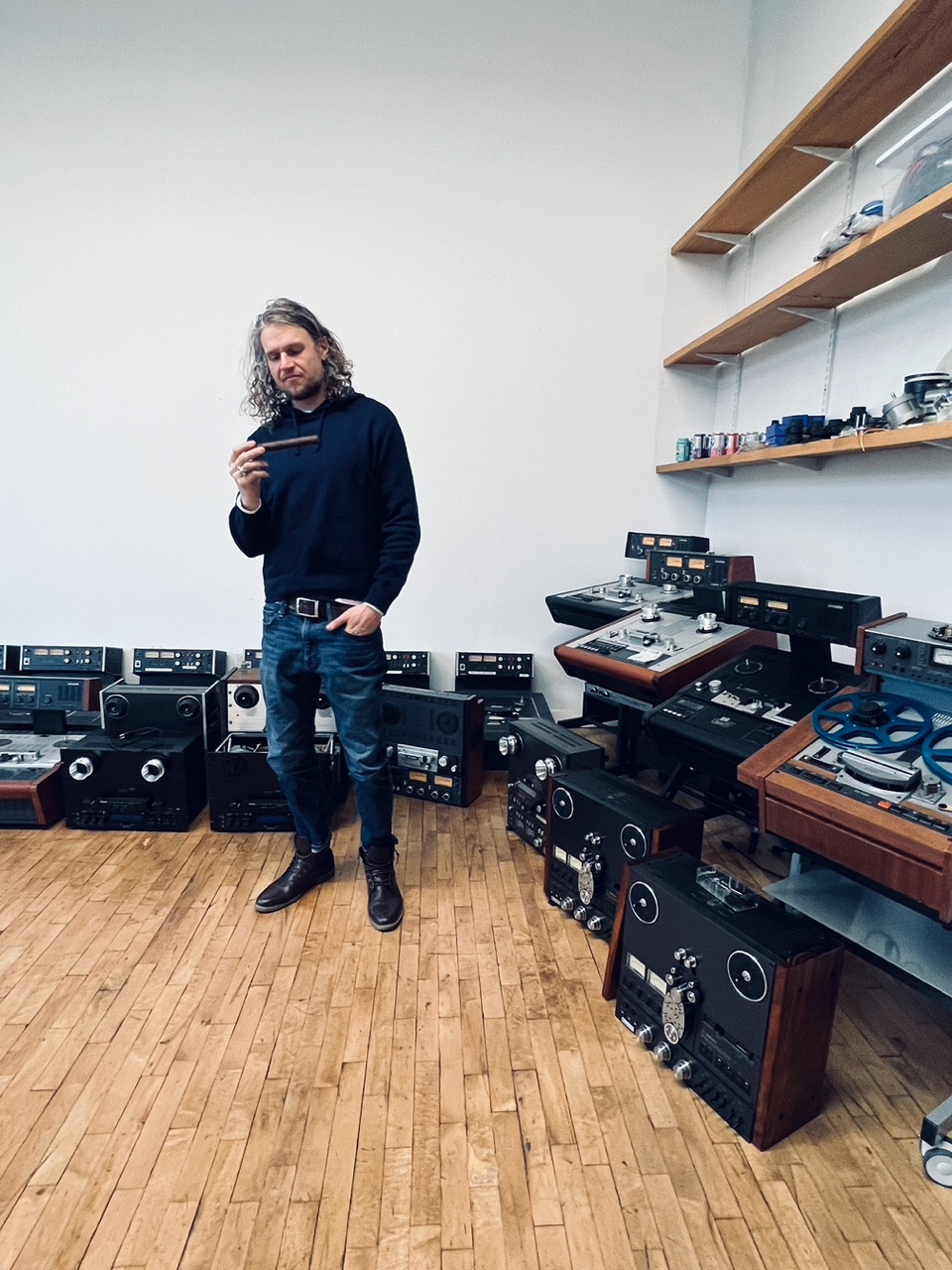
Fuelled by the boundless enthusiasm of owner/co‑owner Ryan O’Connor, Reel to Reel Haven has built a loyal following and caught the attention of some big‑name artists. The question this led me to, of course, was how these artists get involved.
The model is beautifully simple– and pretty darned unique: an artist gets to make a fully analogue tape master for free. The “catch” — if you can call it that — is that they must perform live in front of a small audience at Reel to Reel Haven. The performance is recorded straight to tape and mixed through an AWS 924 Delta console onto a ½‑inch, 15ips master. The artist walks away with a copy to use however they like and, importantly, the rights to their own recording. Reel to Reel Haven/Stella Records keeps the master and sells 1:1 dupes on tape and vinyl.
(If you’re interested, you can read more about the outfit and the man behind it in my earlier blog: Inside Reel to Reel Haven & Stella Records: the studio keeping tape culture alive — and giving back.)
The moment Bocelli entered the chat
Which brings us to the moment this whole operation crashed into my world: Andrea Bocelli — yes, that Andrea Bocelli, one of the most famous operatic vocalists of all time — has just made a one‑of‑a‑kind recording for Stella Records and Reel to Reel Haven. A proper ‘wait, what?’ moment.
Because remember: Stella specialises in live, in‑the‑room, straight‑to‑tape recordings. No overdubs. No digital safety nets. No studio trickery. What you get is a ticket to an impossibly intimate performance, captured with absolute analogue purity. Only a tiny number of tape copies will ever exist. Every time you play one, you’re effectively stepping back into that room, hearing the performance as the 90 people in attendance heard it — maybe even better, because there’s no PA, no room noise, no distractions. Just the master tape.
So how did this extraordinary session come to be?
Bocelli reached out after hearing about Reel to Reel Haven’s cancer‑fighting mission. His son Amos visited Ryan O’Connor to learn more. Ryan explained the model: live concerts and tape sales fund cancer research. Amos took this back to the family, who already run the Andrea Bocelli Foundation, and the partnership became obvious. Like minds came together. Plans were made. A date was set.


The big day…
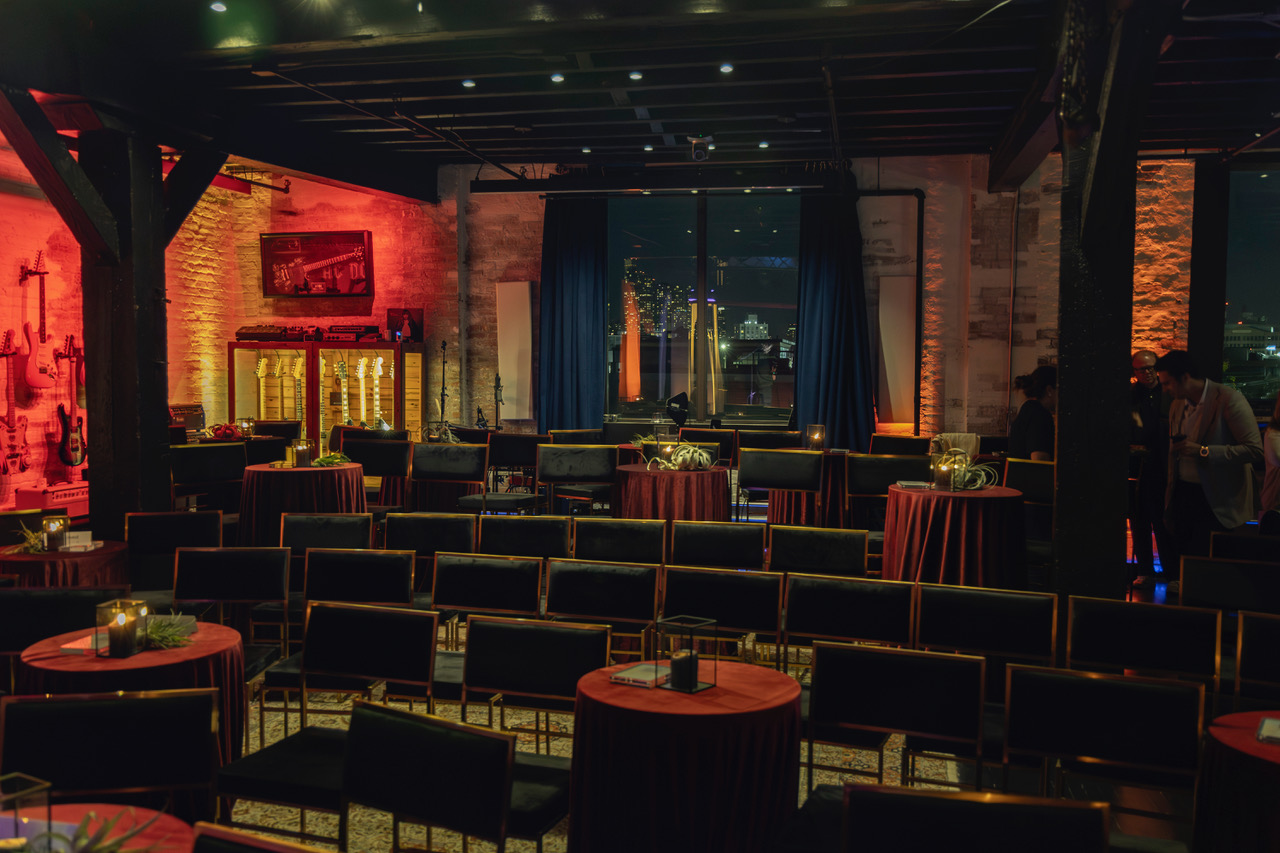
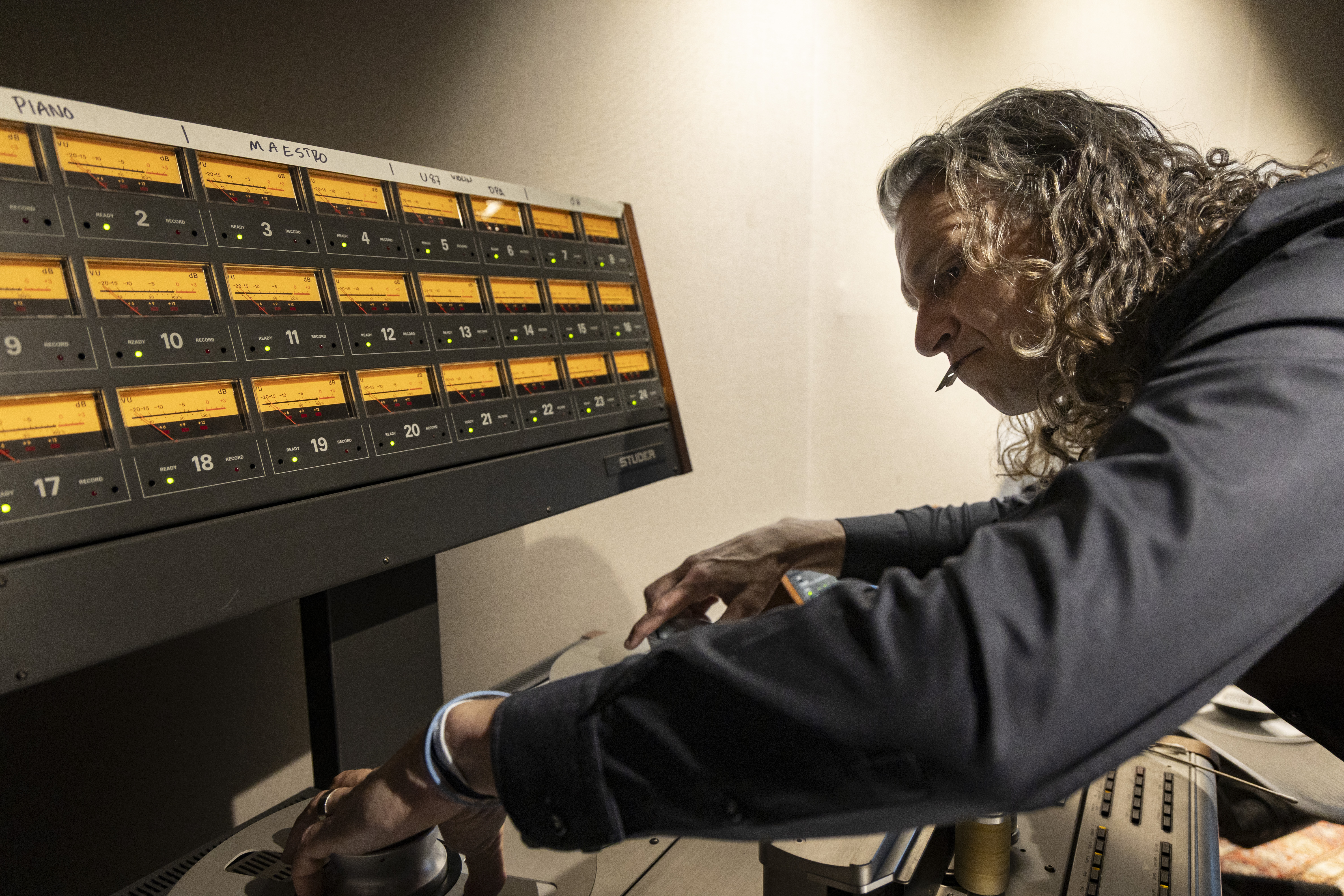
On 3 October 2025, an audience of just 90 people gathered in the 3,600‑square‑foot Reel to Reel Haven studio in Brooklyn (talk about intimate!) to witness something truly singular. Bocelli, accompanied by pianist Carlo Bernini and violinist Anastasiya Petryshak, took the stage. Bocelli’s engineer Pierpaolo Guerni, assisted by engineer Reed Seely, captured the performance on a fully restored Studer A827 2‑inch, 24‑track machine. The multitrack was mixed down to a ½‑inch, 2‑track Otari MTR‑10, and the final dupes were made on ¼‑inch SM911 using Studer A807s, A80‑RCs, or Otari MTR‑10s. The result? A tape you can play at home that isn’t just ‘high fidelity’ — it’s ultimate fidelity.
And that, dear reader, is why I absolutely had to get my hands on one of these ultra‑precious tapes and find out what Reel to Reel Haven is really about.


And now for the tape… first impressions
Before even getting to the music, I have to talk about the experience of dealing with Reel to Reel Haven’s Ryan O’Connor. Nothing about this project feels like it came from a conventional business plan. Bocelli would never have agreed to make a recording like this for a typical label — and that’s precisely the Haven’s secret weapon: Ryan’s personality, passion and sheer youthful drive. His enthusiasm is so contagious that I didn’t just buy one tape — I walked away with two. The second, an astonishing Adam Levy album, deserves its own write‑up (I’m working on that – watch this space…). But for now let’s stay with the Bocelli tape, the one that first pulled me into Ryan’s orbit.
Unboxing the precious cargo
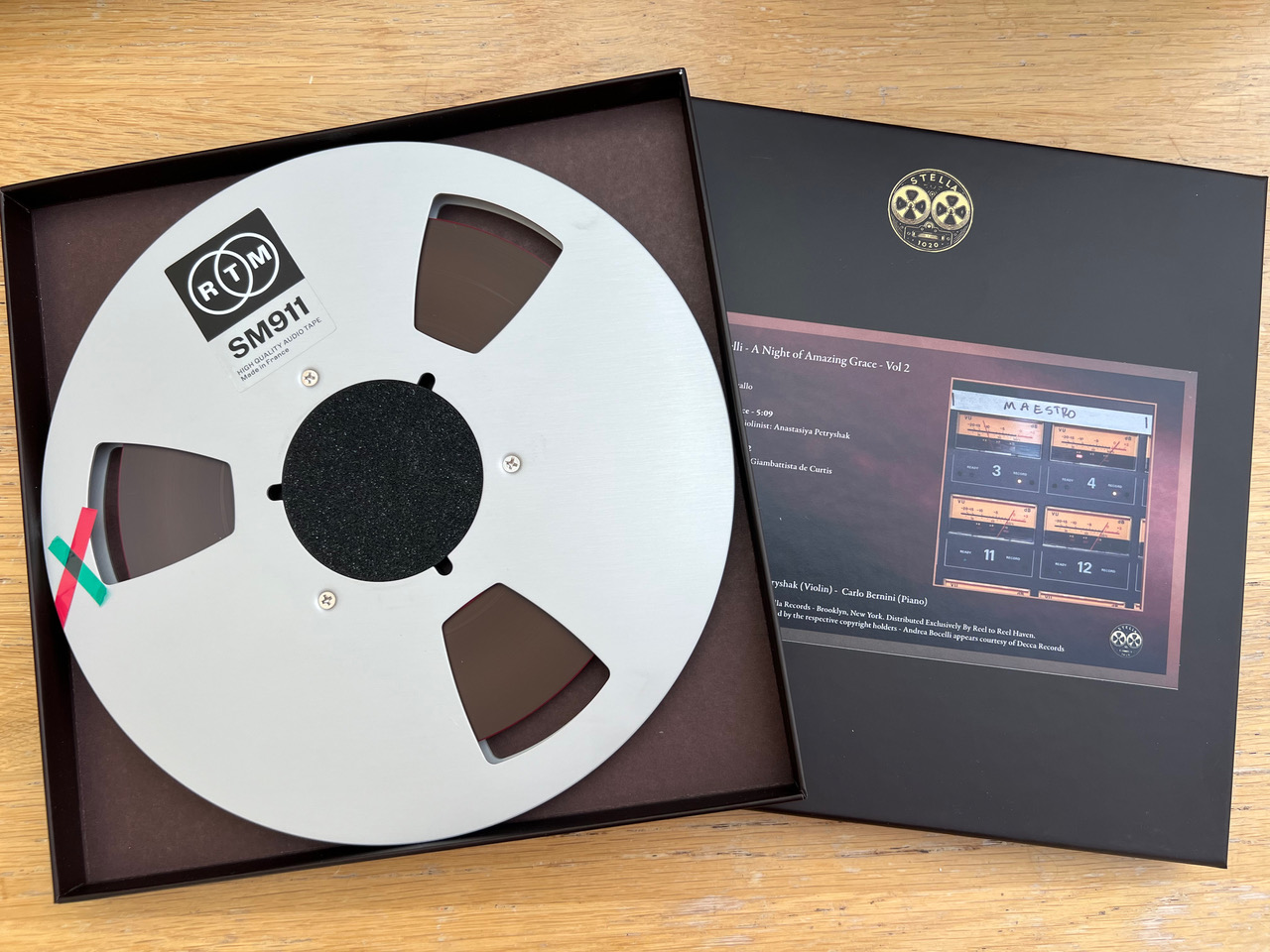 When the package arrived, I was embarrassingly excited. The outer shipping box was large and reassuringly sturdy. Inside were two more boxes, equally robust, each packed with enough protective material to survive a small meteor strike. Not a dented corner, not a scuffed edge — and believe me, I’ve had my share of seam splits and crushed LP sleeves over the years. When you’re spending serious money, perfection matters – and Reel to Reel Haven delivers.
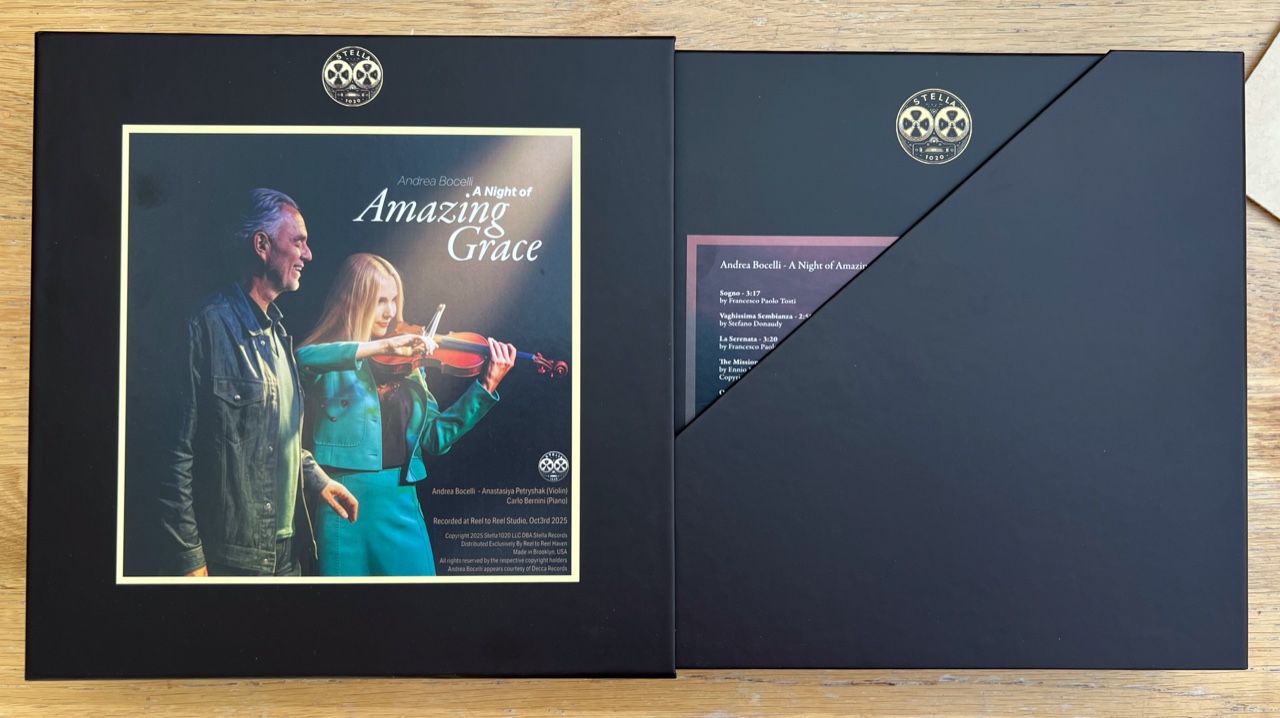 The tape boxes themselves echo the design of Analogue Productions’ Ultra Tape series, but in a deep, elegant dark‑chocolate brown. The slide‑out inner tray matches the same rich tone and holds the two individual reel boxes. At first glance they resemble those from other labels, but the subtle differences — the finish, the typography, the tactile choices — reveal a fastidious attention to detail. These things ooze class.
Inside, the boxes are lined in black and brown with foam centring inserts, including a shallower foam pad on the underside of the lid — something I’ve never seen before. It’s a tiny detail, but it’s the accumulation of these little details that makes the physical presence of these tapes feel genuinely special.
The tape itself is Recording the Masters SM911 — a wise choice. SM911 has been a studio staple for forty years, immune to the sticky‑shed degradation that plagued so many others, such as Ampex. Introduced by BASF in 1986, SM911 has remained in continuous production longer than any other tape on the market. Reliable, stable and sonically superb.
Listening Notes
Tracklist
Reel One
- Sogno – ‘Dream’, from the 1999 album of the same name
- Vaghissima Sembianza — ‘A painting so lifelike, I believe she stands before me’
- La Serenata –‘The Serenade’
- The Mission (instrumental)
- Occhi Di Fata — the song Bocelli sang to his wife on their first date!
- L’Alba Separa Dalla Luce L’Ombra — ‘the dawn divides the darkness from the light’
Reel Two
- Mattinata — ‘morning’
- Csardas – ‘Gypsy Dance’ (instrumental)
- Torna A Surriento — ‘Come Back to Sorrento’
- Vieni — ‘come’
- Musica Proibita — ‘forbidden music’
The shock of reality
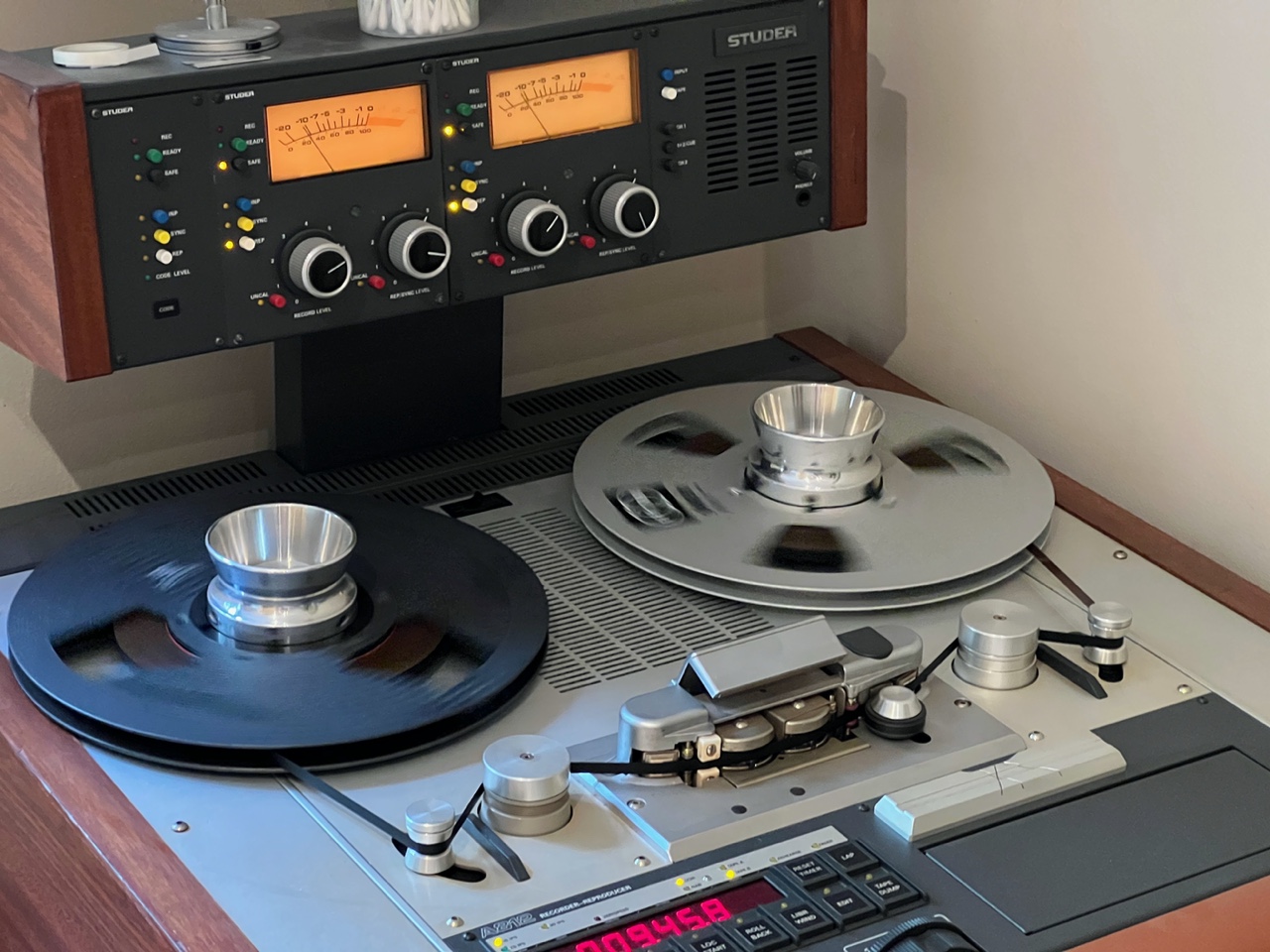
From the moment reel one starts turning, Bocelli materialises in the room — dead centre, life‑sized, fully illuminated yet never bright or etched. The microdynamics are astonishing: I hear the tiny movements of his mouth, the way he releases a note, the breath between phrases. The stopping of a note is almost more visceral than the attack. It’s the kind of realism most listeners have never experienced – myself included at times. As with all truly high‑purity recordings, it’s the silences that give the game away. The space around the voice. The sense of air that separates reproduction from genuine suspension of disbelief.
The piano: a room‑filling presence
It’s not just Bocelli’s voice; Bernini’s piano is full‑scale and full‑bodied. My speakers sit about two metres apart — roughly the width of a grand piano — and the instrument fills that entire space, slightly behind the speaker plane. The left‑hand bass notes bloom into the room exactly as they would in the venue itself. Capturing a piano well is notoriously difficult, particularly in terms of the piano’s interaction with the space in the venue itself, and the microphone placement— everything has to align. Here, it does. The piano sounds resonant, colourful, and utterly convincing.

The violin: sweetness, fire, and hypersonics
To the right and slightly forward of the piano, stands Anastasiya Petryshak. Her violin dances between folkish exuberance and sublime high‑register purity. Those latter notes will test any tweeter – fortunately my Kerr Acoustic K100 ribbons relish in these hypersonic frequencies. The realism is startling.
Bocelli himself
And then there’s the maestro himself. Solid, stable, immovable in the centre image. Bocelli’s voice ranges from an almost whisper to a room‑shaking crescendo. The VU meters on my Studer A80 swing deep into the red when he unleashes his full vocal power!
More than listening
Calling this ‘listening’ feels inadequate. It’s an experience. The dynamic range is enormous. The sense of presence is overwhelming. You hear the audience shifting, the engineers moving, the maestro himself speaking and breathing and existing. You hear the presence, all of it. But don’t let that put you off; not once does this detract or distract; all of it enhances the sensation of being there. Even the occasional audience cough feels like part of the fabric of the night. It’s emotional. It’s meditative. It’s spiritually uplifting. It brings on serenity and a deep sense of awe and wonder. It left me feeling calmer, more centred, more alive.
Two instrumental interludes
I want to mention the inclusion of of two instrumental tracks: The Mission and Csardas, which is both unexpected and very welcome. A surprising choice for a world-famous vocalist, but in including these two instrumentals we get even more of Bocelli’s intention. Remember, he’s performing live for a (very small and privileged) audience and we get to eavesdrop on that. The instrumentals shift the flow of the evening, reminding us that this is a real concert, not a curated ‘greatest hits’ tape. They also showcase the sheer quality of the musicianship — violin and piano, played with supreme feeling, and reproduced into our listening rooms with the utmost dynamic range and an unlimited bandwidth, at both ends of the frequency spectrum.
The power of three
The other thing that this tape demonstrates is how incredibly powerful just three performers can be.
Bocelli’s voice has a texture and colour and an utterly unbelievable power. When he reaches a crescendo and holds the note, your hair will be on end, you will have tears in your eyes. Boy, can this man move you.
The power, fullness and colour of a piano recorded and reproduced on tape is also something to behold. And the violin, you simply won’t hear the upper reaches of a violin when digitised, or tracked by a needle in a groove. Analogue tape allows all of this to exist unsullied, preserves it all without strain, without limitation, without editorialising. Hats off to tape. Hats off to Stella Records and Reel to Reel Haven.
 Final thoughts
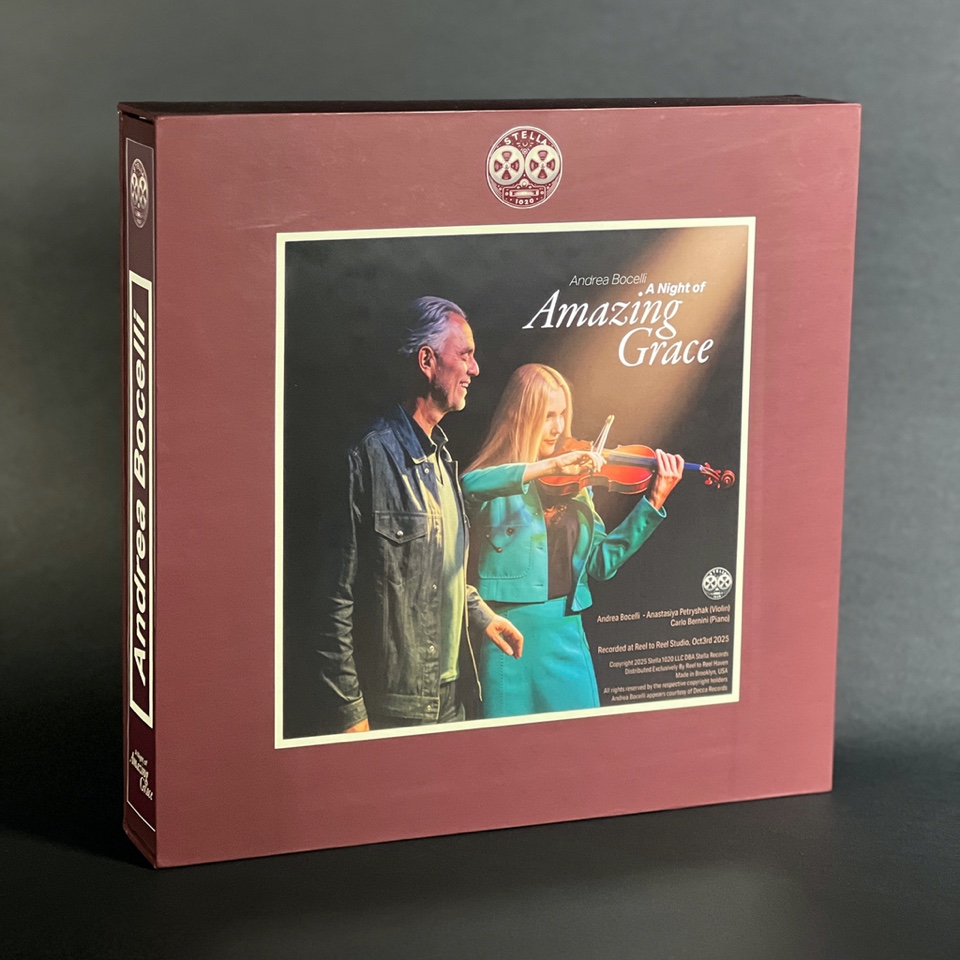
For lovers of classical music, opera, or simply Andrea Bocelli himself, this tape will become one of the crown jewels of your collection. It’s staggering. It’s stellar. And it’s wholeheartedly recommended.
You can find out more and buy a copy at:
https://reeltoreelhaven.com/products/new-andrea-bocelli-master-tape-copy-copy
PS. If you missed my earlier blog introdcuing Reel to Reel Haven & Stella Records, here’s my YouTube video interview with Ryan O’Connor:

