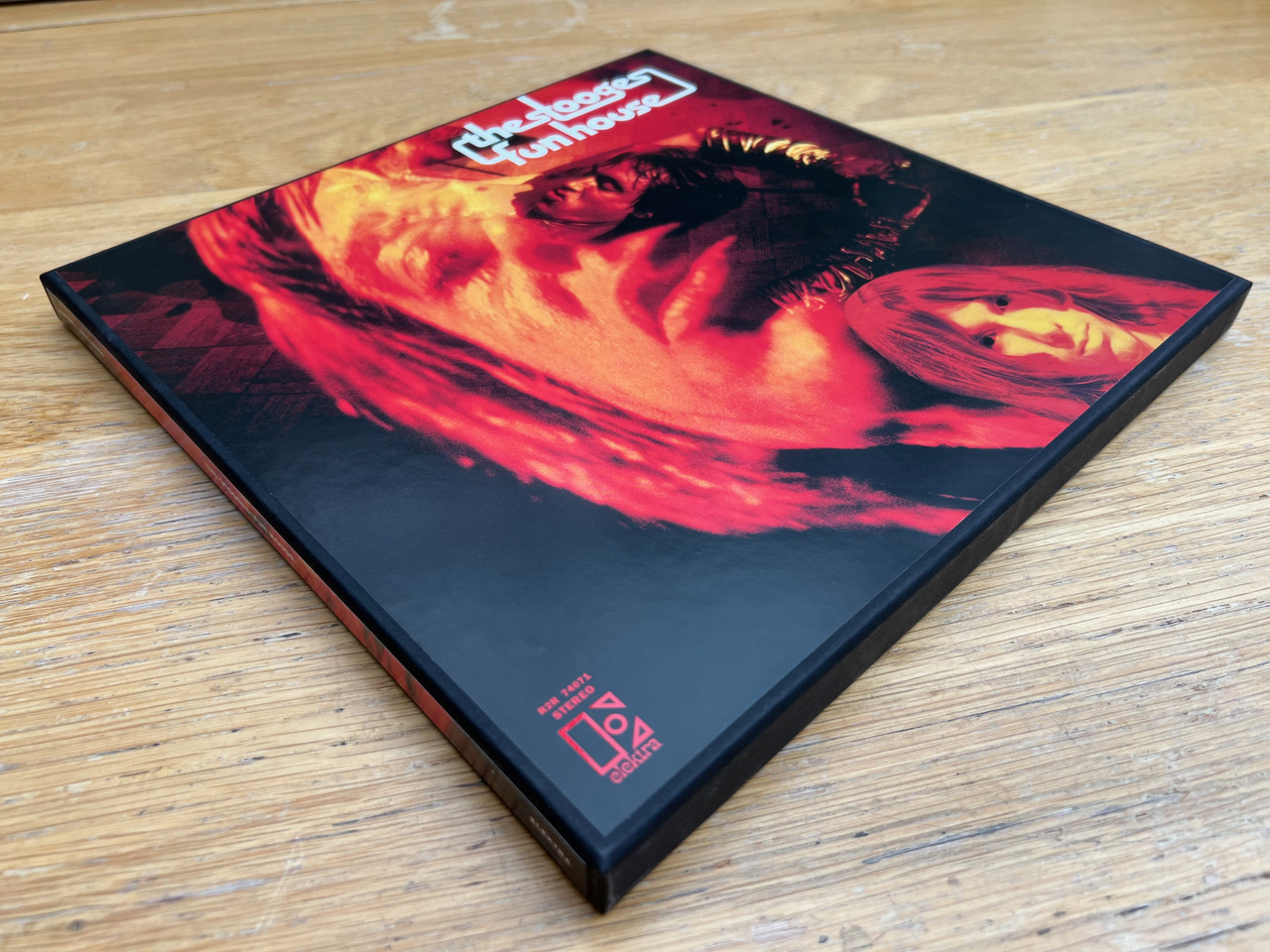
 Straight from the off I need to come clean; for the past 56 years Fun House and the Stooges have not been on my radar. I grew up as a fan of progressive rock and shied away from anything hard and aggressive, too… confrontational. By the mid‑seventies, when I was first starting to buy records with my own money, punk arrived and just shoved me even further into the arms of ‘sophistication’ and ‘elegance’ in music. Prog dovetailed perfectly with my other obsessions—chiefly the books of JRR Tolkien—so distorted guitars and sneering vocals didn’t stand much of a chance.
But over the years, as my sphere of interest grew, psychedelia and to some degree heavier rock began to appeal. The Velvet Underground, for example, absolutely hit the spot, especially their epic Venus in Furs. Sonically, though, I’ve never felt that The Velvet Underground & Nico was a particularly great‑sounding record. It’s iconic, yes, but ‘hi‑fi’? Not so much.
And The Stooges? In my head they were filed firmly under a more ‘punk’ space, I just… didn’t go there and never really gave them a fair hearing.
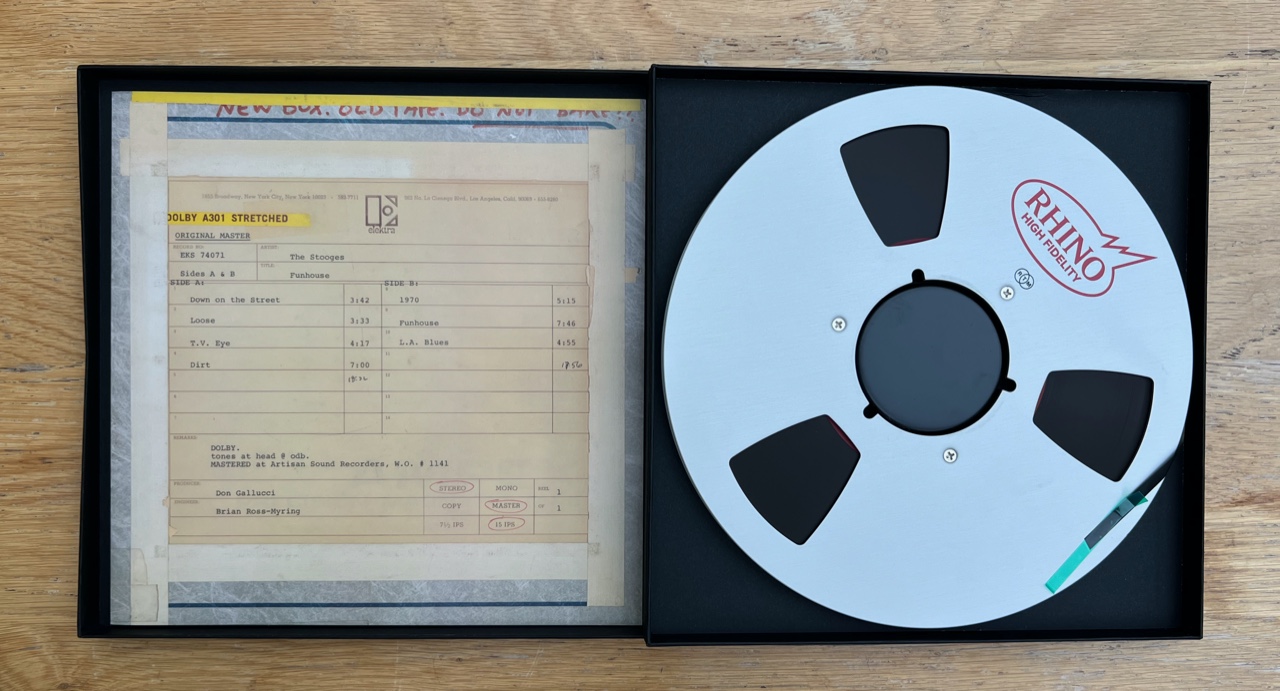
Until, that is, a few weeks ago, when Rhino—Warner Music Group’s archive division—announced the next title in their literally must‑have Rhino High Fidelity Reel‑to‑Reel tape series. So far there have only been three releases, but each one has been, by a country mile, the best that album has ever sounded—and, frankly, the best it ever will sound. A one‑to‑one copy of the master tape is simply unbeatable. Yes, if we’re being pedantic, the only thing that can beat it is the actual master tape itself, but if the copy is made in a well‑set‑up studio environment, on properly aligned machines, that gap becomes vanishingly small. For all practical listening purposes, you’re there.
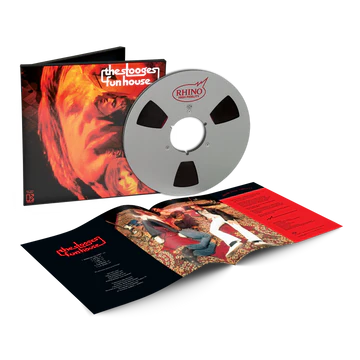
It was this realisation that led me to launch The Reel‑to‑Reel Rambler, a blog and web resource dedicated to the absolute best of the best in high‑fidelity terms—to champion reel‑to‑reel as the pinnacle of music playback. A mission that, with the advent of the Rhino High Fidelity Reel‑to‑Reel series, really feels like it’s coming to fruition. These Rhino tapes are the crown jewels, the holy grails of recorded music reproduction.
And so, for me, Warner’s move into the world of tape is perhaps the most exciting thing to happen in the history of recorded music—certainly from a high‑fidelity perspective. For the first time ever, the public can buy a version of the music they love exactly as it was born in the studio. Not a watered‑down, EQ‑massaged, dynamically strangled version designed to survive earbuds, car stereos and Bluetooth speakers, but the real thing: the master, in all its unfiltered glory, coming off your own machine.
First Impressions
So, given that Fun House wasn’t on my radar, what did I make of it?
OH WOW!
From the very first moments I felt like I’d been grabbed by the throat and slammed against the wall. Not metaphorically. Physically. This tape doesn’t so much start as materialise in the room and then proceed to rearrange your internal organs.
The intensity, the impact, the visceral raw power here is like nothing you will ever have heard at home. I say that confidently: unless you’re a top musician, recording engineer or producer who’s spent time in front of real master tapes, you simply won’t have experienced anything like this. Imagine the sound at a concert—the volume, the weight, the immediacy—then purify it. Strip away the echoey ambience of a typical venue, the thrum and chatter of the crowd, the shouting, the clinking glasses, the bloke behind you who won’t stop talking. Take away the gritty harshness and PA‑system glare. What you’re left with is pretty much what you get here: that same live‑wire energy, but focused, clean, and staggeringly direct.
Last weekend, just after the tape arrived, a professional hi‑fi reviewer friend popped round with his wife for a coffee. I showed him the Stooges tape. Unlike me, he knew the album well and said, “It’s a great album, but I’ve never really heard it sounding good.” Well, that was all the excuse I needed. Thinking, “There is absolutely no way anyone could not be utterly blown away by this tape,” I put it on. For context: I’ve worked in the high‑end hi‑fi business for more than forty years, and this tape is one of the most phenomenal music replay experiences I’ve had to date. His response was exactly as I’d anticipated. In fact, the analogy of “sounding like being at a live concert, but better” was actually his. To say he was blown away would be an understatement. He’d never heard bass sound so real; he’d never heard drums sound so real. Everything—the guitars, the sax, and of course Iggy Pop’s vocal—is absolutely right there, right in front of you…
Just as with the first three Rhino High Fidelity Reel‑to‑Reel releases (The Yes Album, Electric Warrior and Workingman’s Dead), this is the absolute best that Fun House has ever sounded—and, let’s be honest, the best it ever will sound. There is no “better” than this, short of being allowed to walk out of the building with the actual master under your arm, which of course you can’t.
What’s more, there are only 350 copies of this being made. Imagine that: you can be one of just 350 people in the world who are able to play this album in all its power and glory, at this level. It’s no surprise that Workingman’s Dead, last month’s Rhino reel‑to‑reel release, has already sold out. These are not just “nice to have” collectibles; they are, in very real sonic terms, the ultimate versions.
Live energy: raw power
After several attempts at recording in a conventional studio context, producer Don Gallucci and the band elected to set up the studio as if they were actually performing live. Trying to corral them into a more typical studio approach clipped their wings so much that it killed the energy. So they did the obvious thing: they played live. Apart from some second‑guitar overdubs, the album is essentially a live performance captured to tape. And it really, really shows.
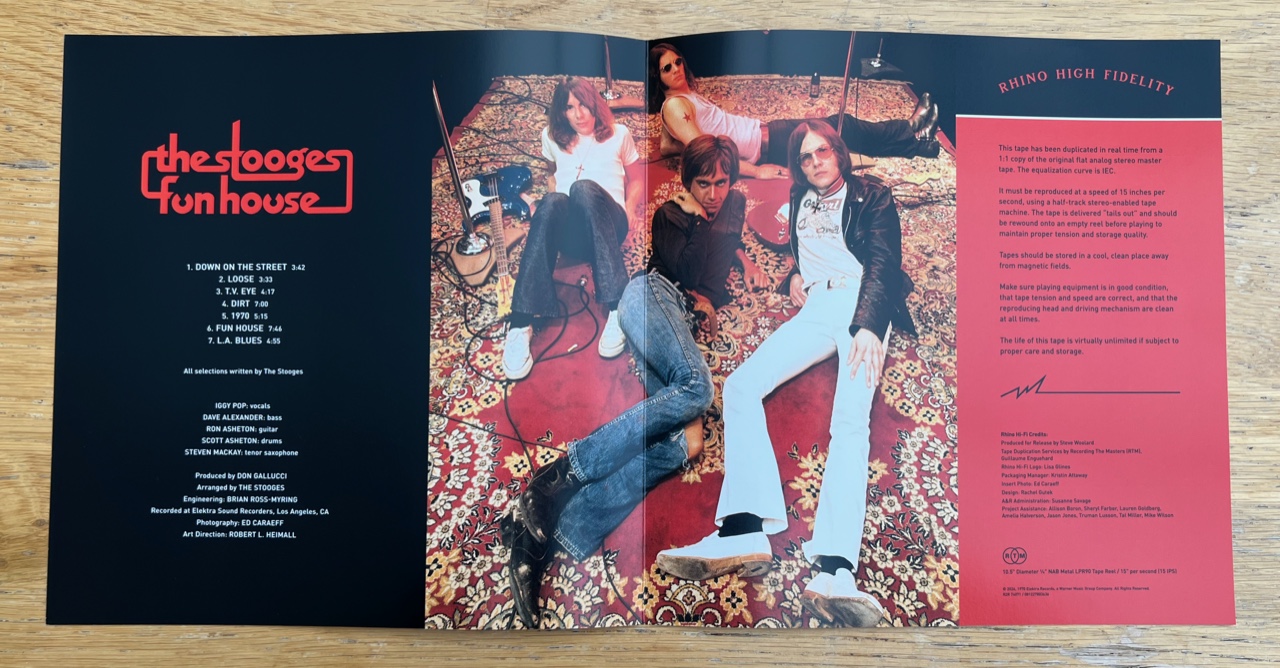 You want to be right in that space, sat just a few feet in front of The Stooges playing at their absolute best? Then buy this reel of tape. It will almost certainly be the most electrifying thing you’ve ever heard through your system.
I’ve mentioned punk already, because Fun House is so often described as ‘proto‑punk’—the genesis of the punk scene that would follow some six or seven years later. Personally, I think that does it a disservice. The Stooges deliver with intense, visceral power, a stripped‑back rawness that feels almost primal, but the roots are clearly in psychedelia, in blues, in rock and, at times, even in jazz. This is not some lumpen thrash; it’s a band with feel, with groove, with a sense of space and timing that’s far more sophisticated than the ‘proto‑punk’ tag suggests.
What it definitely isn’t is unsophisticated noise. Its powerful punch and gripping intensity are energising in the best possible way.
And in a world overflowing with over‑polished ‘audiophilia’ this tape is a breath of fresh, slightly dangerous air. Consider it the polar opposite of Steely Dan; some might even say an antidote to Steely Dan. (I love Steely Dan, by the way, but you get my point.)
What I will warn you is this: do not underestimate this tape. In fact, do not underestimate any of the first four Rhino reels. Each one should leave you jaw‑dropped, speechless, amazed to be experiencing something you thought you never could: the sense of actually being there, in the studio, for the sessions when these legendary albums were laid down. Fun House just happens to do it with its hands around your collar, shaking you and grinning.
A word about costs and hifi system requirements
OK, so tape isn’t cheap. But then again… is it expensive? I’m not convinced. At the time of writing, there are still copies of this Stooges reel available (Workingman’s Dead, the previous release, has already vanished into the ether), and what’s the damage? In the UK it’s £224. Now, yes, that’s not pocket change—but let’s keep things in perspective. It’s half the cost of an ERC vinyl release. It’s only a whisker more than an Analogue Productions UHQR or a Mobile Fidelity UltraDisc. And sure, those are limited to a few thousand copies, but this? This is a direct, one‑to‑one‑to‑one copy from the actual master. No reformatting. No cutting a mechanical medium from a magnetic one. No DSD stage. No conversion. No fairy dust. Just a straight dub of the master. Sonically, it’s as pure as it gets. This is the stuff that makes your system sit up straight and say, “Oh, this is what I was built for.”
And consider the cost of the raw materials. A single roll of Recording The Masters LPR90 tape is £87 at the moment. And these ultra‑limited‑edition tapes are hand‑made, in real time, direct from a 1:1 copy of the master. When you look at it that way, this might actually be the best value in the entire world of recorded music.
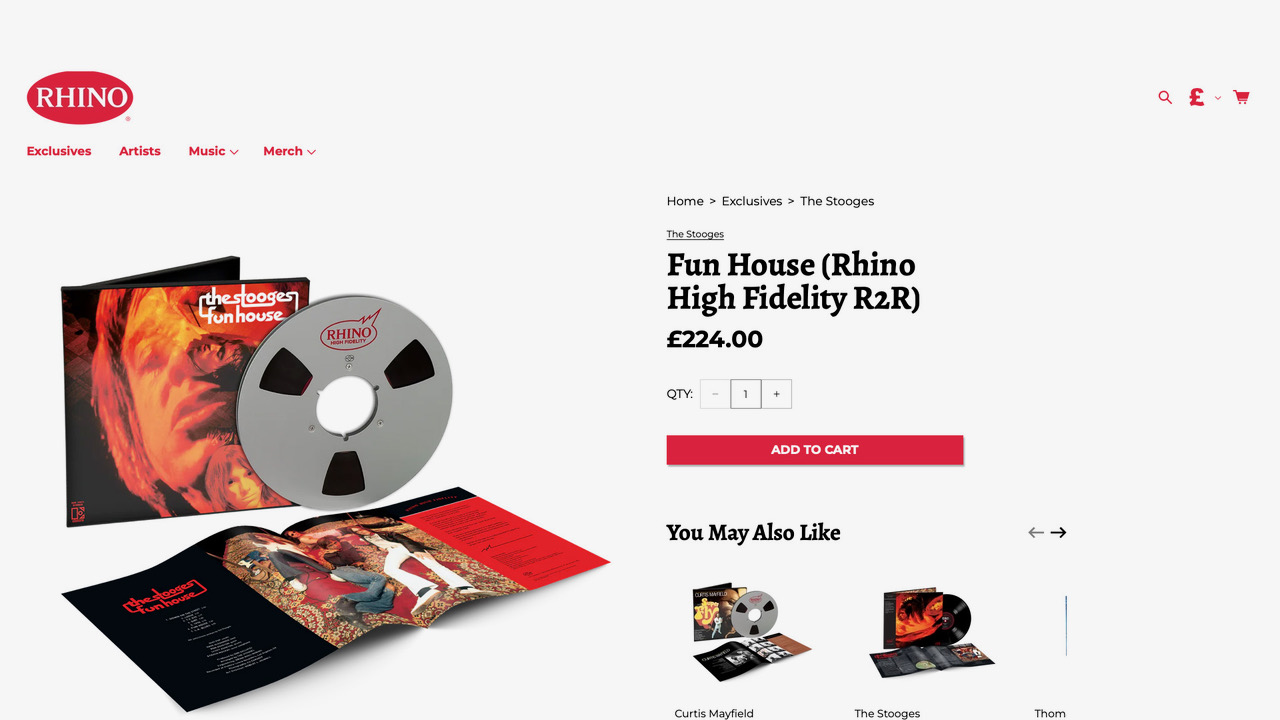
Twenty years ago, no one would have even dreamed of master dubs being made available to the general public. And if they had? You’d be talking many hundreds—possibly thousands—of pounds. Yet here we are, with the real thing, for £224. No wonder they’re selling out fast. These will become legendary collectors’ items in a very short time.
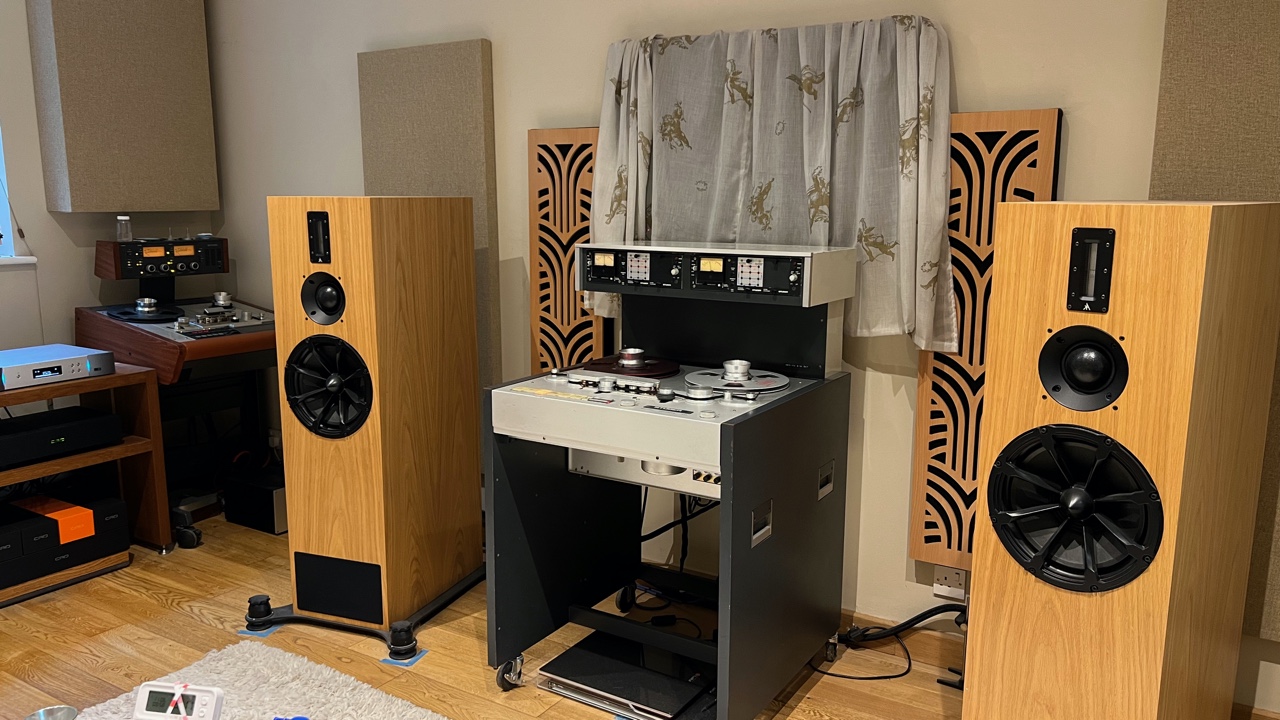
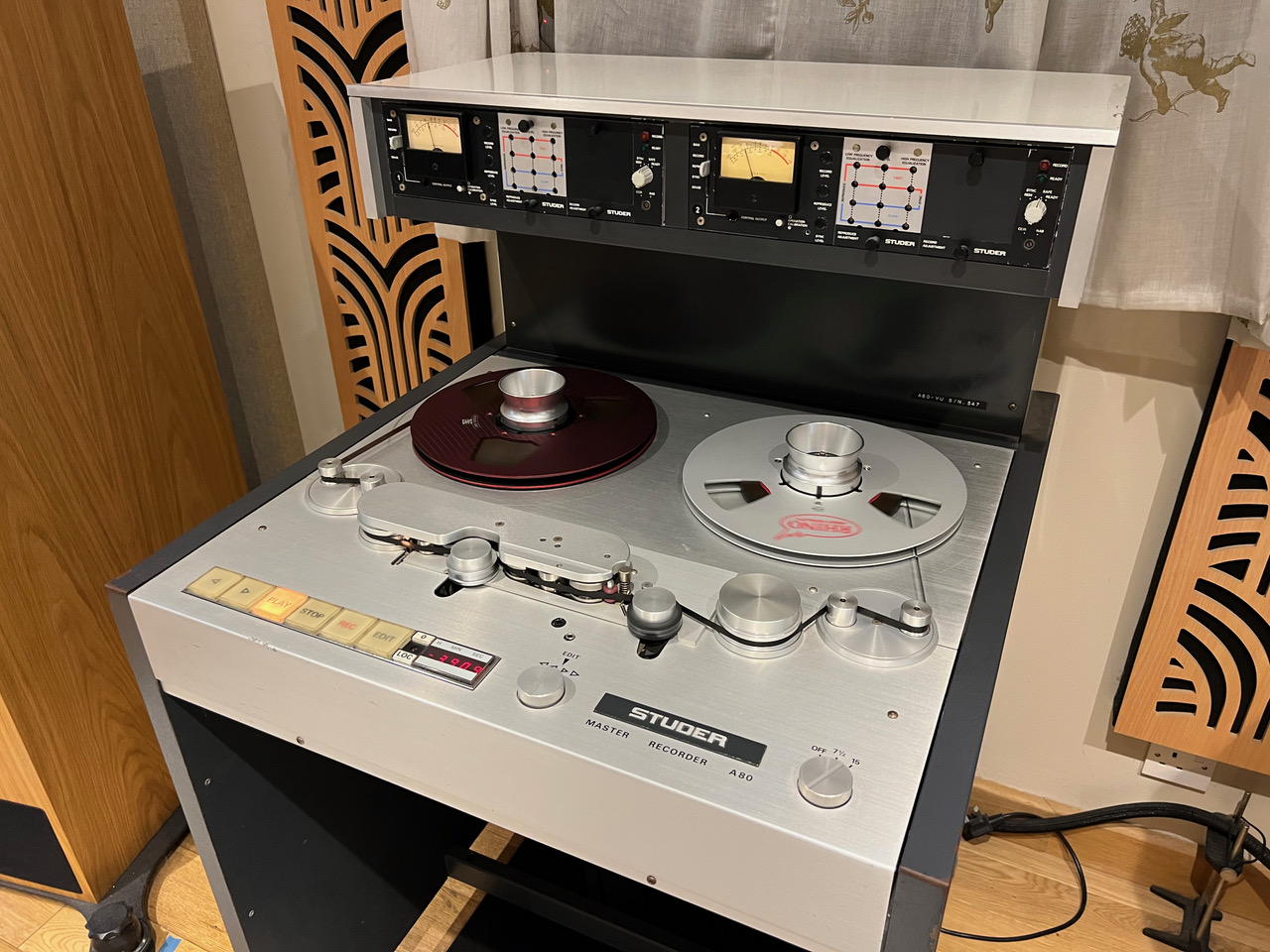
So what do you actually need to play these wonderfully amazing tapes? Honestly, not as much as people assume. All you need is a ¼‑inch, 2‑track stereo reel‑to‑reel machine that runs at 15ips with CCIR (aka IEC) equalisation. That’s it. Second‑hand consumer machines start around £1,000. Perfectly respectable. Professional studio‑grade machines can be found from around £5,000 if you’re patient and lucky. And if you want new? Well, that used to be a fantasy, but here in 2026 we’re spoiled. Revox are making a brand‑new version of their classic B77, the MkIII, for a little over £15k. Ballfinger, Analog Audio Design, Metaxas—they’re all building new machines from around £20k upwards. And then there are the “remanufacturers”, the artisans who take the skeleton of a vintage classic and rebuild it into something essentially new. United Home Audio, Sonorus, J‑Corder… these folks are doing astonishing work.
OK, so none of these options are cheap, but then the best never is—and frankly, it shouldn’t be. Compare it to a really good digital front end (my transport/streamer and DAC combo is in the region of £30k), or a really good vinyl front end (again, tens of thousands if you want truly great results). And here’s the kicker: neither of those will ever come anywhere close to the actual source. Master tape—or “master‑quality” tape—is simply in another league.
And here’s something interesting: I’ve had feedback from previous reviews that shrewd audiophiles are buying these tapes even though they don’t yet own a machine capable of playing them. And honestly? I get it. Why miss out on the ultimate version of an album just because you haven’t yet found the right reel‑to‑reel deck? Machines come and go. These tapes… these tapes are once‑in‑a‑lifetime.
There are only two things I can say about this Stooges tape: it got me into The Stooges, and it sounds utterly, jaw‑droppingly incredible.
But who am I to talk? One of the greatest musical artists I’ve ever seen live—certainly in terms of sheer raw energy—is Jack White. I’ve seen him twice, with two different bands, and each time he reached right into my soul and grabbed my heart with both hands. And Jack White has said that Fun House is “the greatest rock ’n’ roll record ever made… a brilliant, brilliant record. I don’t think it’ll ever be topped.”
After hearing this tape, I’m starting to understand exactly what he meant.
Listening to Fun House
 Down on the Street
From the very first notes—notes that don’t so much begin as detonate—you’re right there. You’re in the room with them, the band who famously insisted on recording live, all together, all at once, no isolation booths, no surgical overdubbing, no safety nets. The realism is outrageous. The bass locks in like some kind of deranged pacemaker, thumping away with a pulse that feels alarmingly biological. The drums, sitting over on the left, are so real, so massive, so present that you half expect to see the floorboards flex. Never will you hear a drum kit sounding more like a drum kit. A real one. A big one.
The bass propels everything forward, dead centre, with unstoppable momentum. Then the guitars—mostly just one, rear left, but with those occasional overdubbed stabs from the far right—snarl and wail with Ron Asheton’s signature mix of brute force and edgy finesse. And then there’s Iggy. Centre stage. Wailing, howling, shrieking, swaggering. Larger than life because, well… he is.
Loose
Track two doesn’t so much follow track one as burst out of its chest. The two guitars scream with raw, primal energy; the bass thunders with that same unstoppable weight; and Iggy drawls away dead centre. What’s astonishing is that despite the sheer ferocity of the guitars, despite the wall of energy, Iggy never gets lost. His vocal is low in the mix, yes, but captured with such vivid immediacy that he feels inches away. The guitars, meanwhile, are practically feral.
 T.V. Eye
Here Iggy goes full demonic maniac, centre stage, while Ron’s guitar tears through the air on the left like a buzzsaw dipped in adrenaline. Scott’s drums, centre‑right, pound with relentless force, and Dave Alexander’s bass steamrollers away at the rear. It’s impossible to sit still. This track grabs you by the collar and shakes you. And here’s the thing: there has never been a release of any recording with this much power and energy available as a master‑tape copy. Not until now. I mentioned Jack White earlier, but even his Elephant—a phenomenal tape from Analogue Productions—can’t out‑muscle this. If you’re a rock fan into tape, both Elephant and Fun House are non‑negotiable. Essential. Mandatory. Every rock fan deserves to hear this tape at least once. The sheer physicality of it—this much power, this much energy, with zero compression, zero saturation, zero mud—is something you feel in your bones.
Dirt
As if T.V. Eye hadn’t already launched you into orbit, Dirt arrives and simply blows your mind. Probably my favourite track on the album, it’s slower, bluesier, but absolutely dripping with tension. Iggy stands there between your speakers, life‑size in scale and life‑size in emotional weight. The guitar wails with a kind of existential angst, the bass rolls out a thick foundation, the drums pound out time. You will keep turning the volume up. And up. And up. If your system can take it, there is no such thing as ‘too loud’ for this track. It’s on fire.
Then comes that phenomenal drum fill, the key change, and the guitar ‘solo’ that follows—hell’s teeth. Everything is visceral, weighty, full of edge, steel and grit. The bass anchors, Iggy moans and croons and howls, and yet nothing gets harsh. Nothing gets bright. Nothing smears. Nothing collapses. It’s chaos, but precise chaos. The best kind.
1970
Side two of the original LP opens with 1970, and yes, this is where things get more ‘punk’—but honestly, that’s mostly Iggy. The bass kicks things off dead centre at the back, the guitar screams on the left, the drums thunder centre‑right, and Iggy howls like a man possessed. Then the guitar breaks into a solo of earth‑shattering energy, and just when you think it can’t get any more unhinged, Steve Mackay’s sax barges in from the far right. Iggy descends into some kind of infernal screaming pit, and the guitar is already down there waiting for him.
Funhouse
Here the sax is part of the party from the start. This track is jazzier, hypnotic, driving, and still absolutely ferocious. And again—this is 1970. Nineteen‑seventy! I’ve never heard anything from that era with this level of raw, unfiltered power. Every instrument is played as if the band’s collective life depends on it. It’s no wonder The Stooges became such a foundational influence—not just on punk (and honestly, pigeonholing them as ‘proto‑punk’ is a massive disservice), but on rock, noise, alternative, everything. This is the pinnacle of unbridled, unrestrained, soul‑rattling rock energy.
And of course they were on Elektra—the same label that unleashed The Doors. There’s a similar intensity here, a similar willingness to go wherever the music demands, no matter how dark or unhinged. Listening to this tape isn’t really ‘listening’ at all. It’s a full‑body event.
L.A. Blues
L.A. Blues opens like the gates of hell. The band goes absolutely berserk. A swirling, howling maelstrom of sound that makes Van der Graaf Generator sound like The Nolans. The drums and sax thunder and wail; the guitar on the right screams with Satan’s own anguish; the bass and Iggy pound and howl and moan. It’s mind‑blowing. Absolutely, utterly mind‑blowing. Not for the faint‑hearted. The Stooges don’t just open the gates of hell—they tear them off and throw them at you.
This is the nightmare before the “tomorrow”—maybe the Tomorrow The Beatles never knew. I’ve never experienced anything like it.
Going back to what my reviewer friend said: this is the closest he’s ever come to being at a live concert, except the acoustics here are perfect. You really do feel there, in the studio, with the band, as they tear the place apart.
And if anyone still thinks tape—master‑tape copies, high‑end audiophilia—is just for classical buffs listening to string quartets and polite acoustic folk… think again. This is what raw power sounds like. This is what music can do. This is what tape can deliver.
Incredible. An absolute must‑have. And perhaps the single best reason yet for any rock fan, of any persuasion, to get themselves a tape deck – now!
Where to buy
This will sell out FAST – get yourself pronto to https://store.rhino.com/en-gb/products/fun-house-rhino-high-fidelity-r2r?variant=50735432761590
For more rambling – check out my video:


One thought on “Holy FS – you HAVE to hear this! The Stooges’ Fun House from Rhino”
Comments are closed.