If you’re a regular reader here (or anywhere on the R2R tape forums) you’ll no doubt be aware that Rhino High Fidelity is steaming ahead at full speed, settling into releasing around two absolute classic albums each month as one-to-one-to-one reel to reel master copies. Happy days!
But… before I get into the specifics of this review, I want to address a few observations that have come to light since the Rhino project first took off.
Rhino’s international sales
First up, there’s been some real confusion around the availability of tapes for international buyers, and I have to say I’m not surprised – there have been some rough edges to iron out.
When I first became aware of Rhino High Fidelity’s tapes, I ordered my copies direct from Rhino’s US website, as I’ve always tended to buy my tapes direct from whoever’s producing them rather than through local retailers. Why? Well, when you’re buying tapes that originate in the US, you either buy direct from the US (I also order direct from Acoustic Sounds’ website with alarming regularity!) and pay international shipping charges, import duty, VAT etc, or you buy from a UK reseller – but then you pay a higher price which reflects these same added charges which the reseller has to pay anyway. Six of one and half a dozen of the other.
In the meantime, Rhino’s tapes have also begun to appear on the company’s UK webstore – BUT they’re often marked as sold out even where there are copies still available in the US, and it seems a bit hit or miss whether you can get your order accepted.
I’m told that Rhino is working to resolve this issue so I guess we should bear with them. In the meantime, if as a UK buyer you do manage to get your order accepted, then expect to be charged VAT when the package reaches UK shores. (Obviously all of this only applies to buyers outside of the US… US readers, sorry to bore you with irrelevancies there!).
Mastering and production
Next up is she subject of mastering: ‘are these tapes mastered or not?’ is a question I keep hearing. Well, in my opinion, yes they absolutely are, but the precise details will likely vary slightly from title to title. So let me shed a little light on this….
These master tapes come from earlier in the production chain than when the album was mastered for vinyl, vinyl having been the predominant format at the time when these classic titles were released. But that does NOT automatically mean that they’re NOT mastered, it just means they haven’t been ‘mastered for vinyl’. Mastering for vinyl will typically entail significant equalising: for example, cutting bass frequencies to facilitate easier groove tracking and to allow more recording time to be fitted onto each LP side, and often reducing the high frequencies in order to protect the cutter head and lessen unpleasant artifacts such as sibilance. So, what you get when you buy a Rhino High Fidelity Reel to Reel tape is as close to the original recording as is realistically possible. They are straight transfers from the mixdown masters.
Consider the process of making these Rhino High Fidelity Reel to Reels: a studio engineer has to prepare and replay the original master tape, decode Dolby noise reduction if used (a process very much more complex than pressing the Dolby B button on a cassette deck!), and adjust levels, equalisation and azimuth according to whatever test tones are on the master tape. This will ensure what exits the master playback machines’ outputs equals exactly what was intended in the original mastering. Next, the engineer has to set up and align two studio master recorders to record according to modern standards (typically 250nWb/m CCIR equalisation) and make the first two ‘production masters’. However, unlike many historical production masters, these are straight copies of the original tapes without the introduction of any of the compromises required for consumer format production.
They are essentially clones of the original master, but on brand new tape and devoid of any historical noise reduction etc.
These two tapes are then duplicated again, but this time at Recording the Masters in France, and on a one-player-to-five-recorder duplication rig. So, to make the 350 copies of this prestigious edition of Blue, each of these two ‘production masters’ has to be played 35 times. Frankly that’s nothing: I absolutely don’t believe that from the first tape run to the 35th there will be any perceptible reduction in fidelity.
Now, compare this to vinyl manufacturing: no matter how careful the process of lacquer cutting, plating, creating the stampers and pressing, how could this ever be ‘closer’ to the tape than a direct 1:1 studio-made copy of that very same tape? To suggest anything else is frankly ridiculous! (Still, people do…). And the notion that the tape is in some way ‘wrong’, unmastered etc, because it doesn’t have these format-specific limitations dialled in – well, that’s just plain nuts!
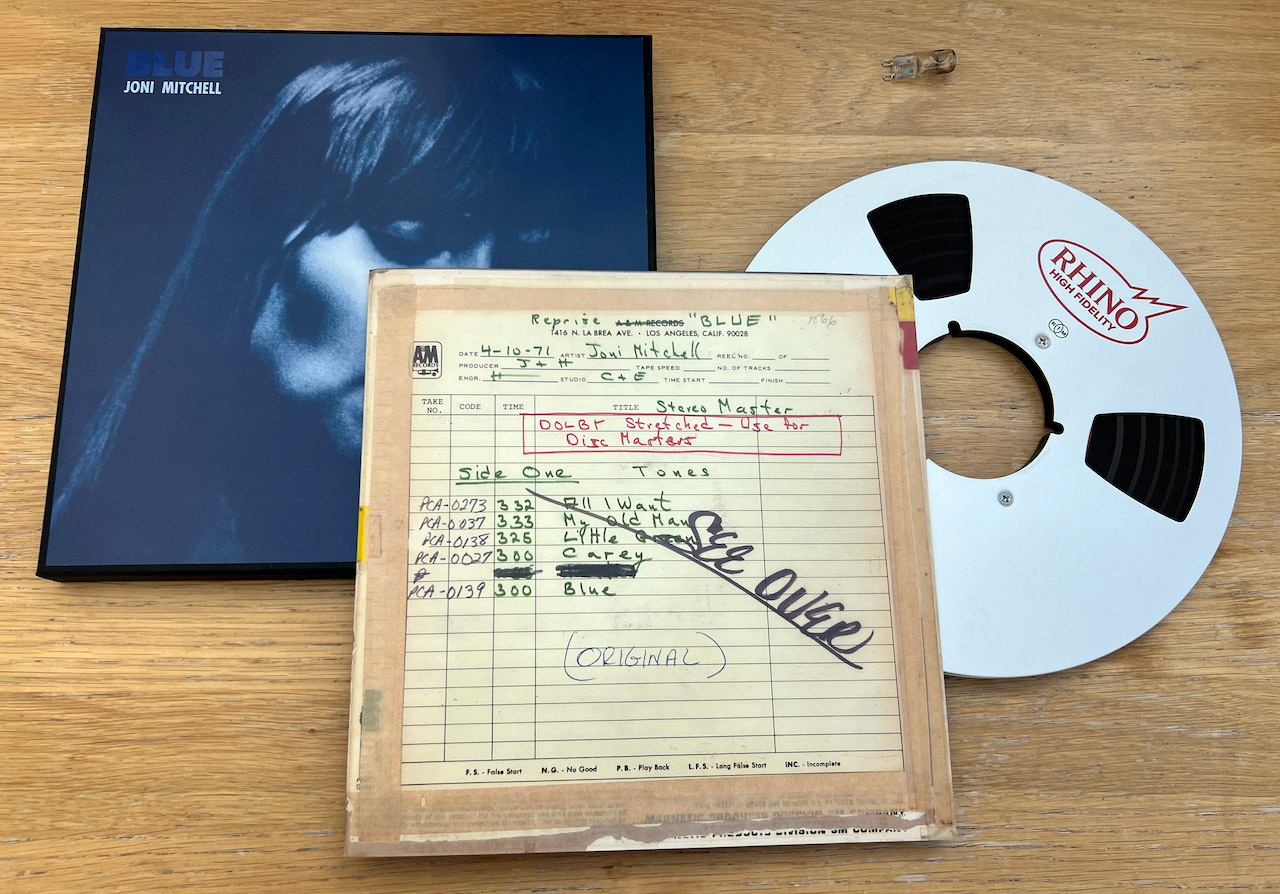 When listening to this Rhino Reel to Reel what you’re doing here is listening to the original mastering. You’re listening to what Joni Mitchell let out of the studio and on to the media production chain. You’re not listening to format specific limiting, compression, equalisation and the summing of the left and right channels of the bass. You’re not listening to the de-essing, you’re not listening to the limitations of the cutting lathe, nor to the digital delay of modern cutting methods, you’re not listening to the quality of the plating, nor to the plate-making, nor to the vinyl formulation, to the pressing quality, and of course, you’re not listening to your cartridge trying to track the groove, to any resonances within the tonearm or turntable assembly, to your phonostage… The list goes on and on and on but I’ll stop here. I’ve said my piece!
You ARE listening to what was laid down in the studio, you’re listening the assembled musicians, and to the job done by engineer Henry Lewy. But, mostly, you’re listening to Joni, to her use of the microphone, to her playing, to her vision and to what she as both producer and artist signed off as finished and ready to go on to disc cutting etc.
The specific provenance of Blue
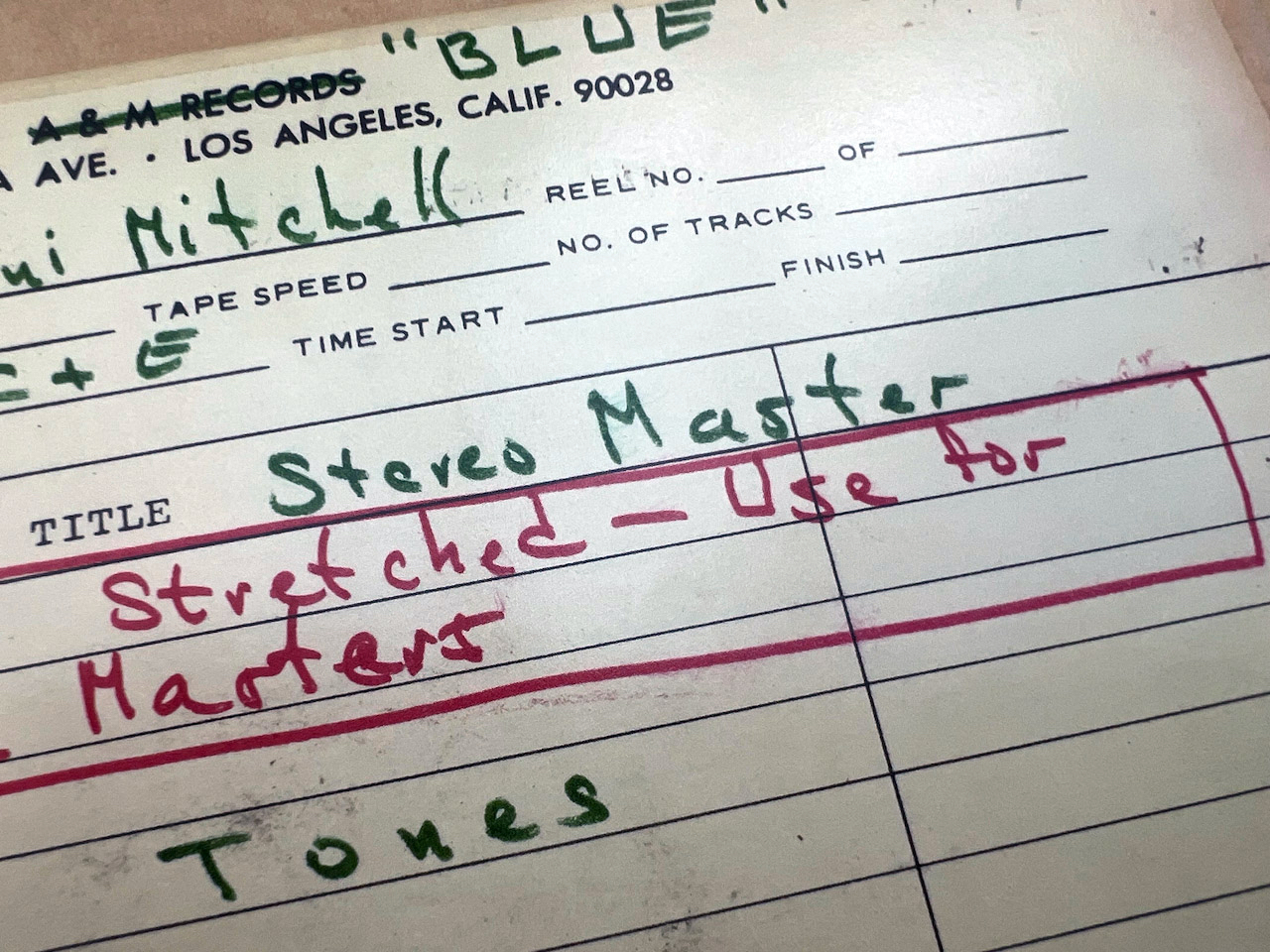
If you check the Blue tape box images carefully, you’ll see that this tape is indeed an exact copy of a de-Dolbied copy of the “original” “stereo master” which, being the album producer, Joni produced herself. There really isn’t anything closer to her original work than this, no matter how you look at it. There is no greater provenance than these photos of the tape box notes. What more could you ask?
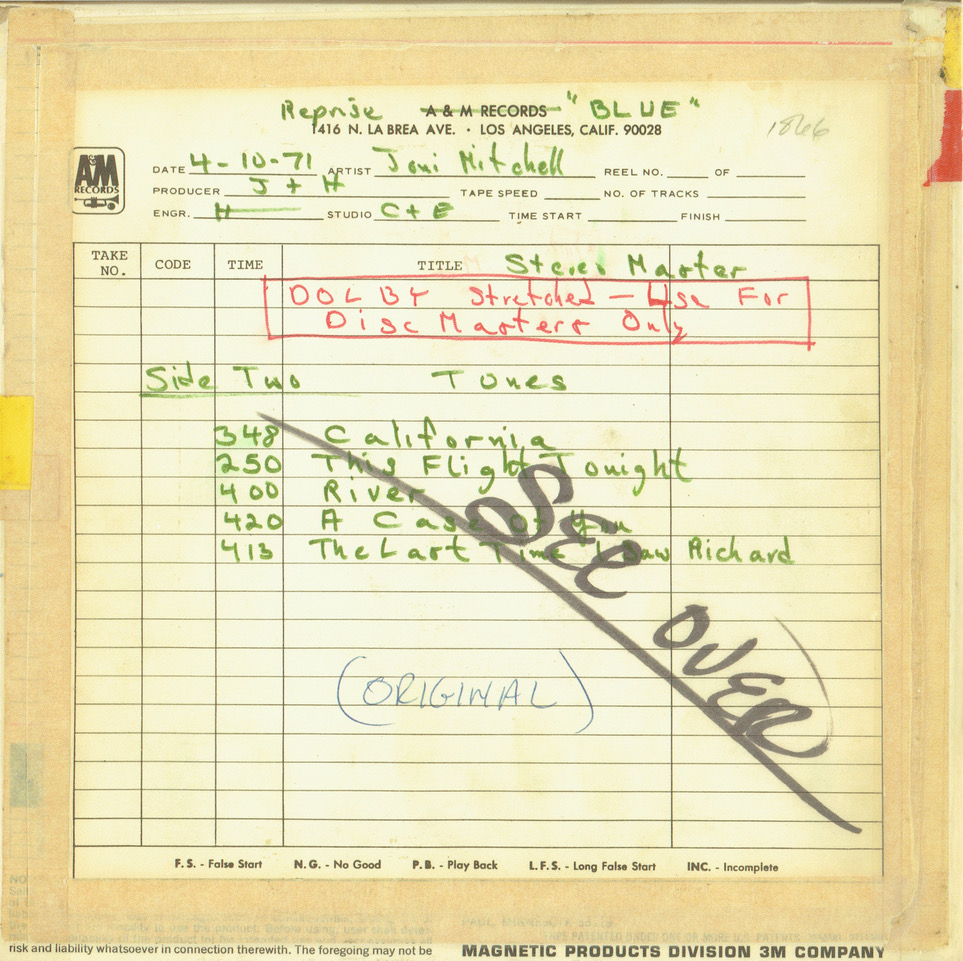
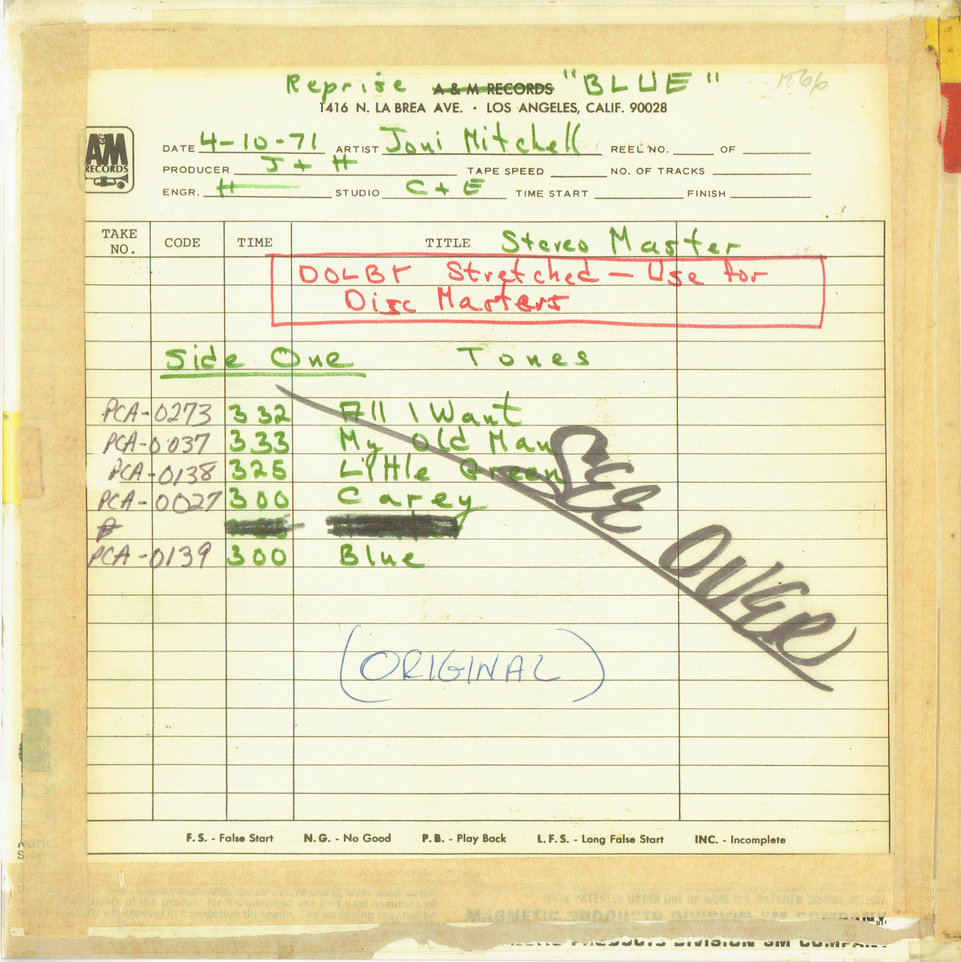
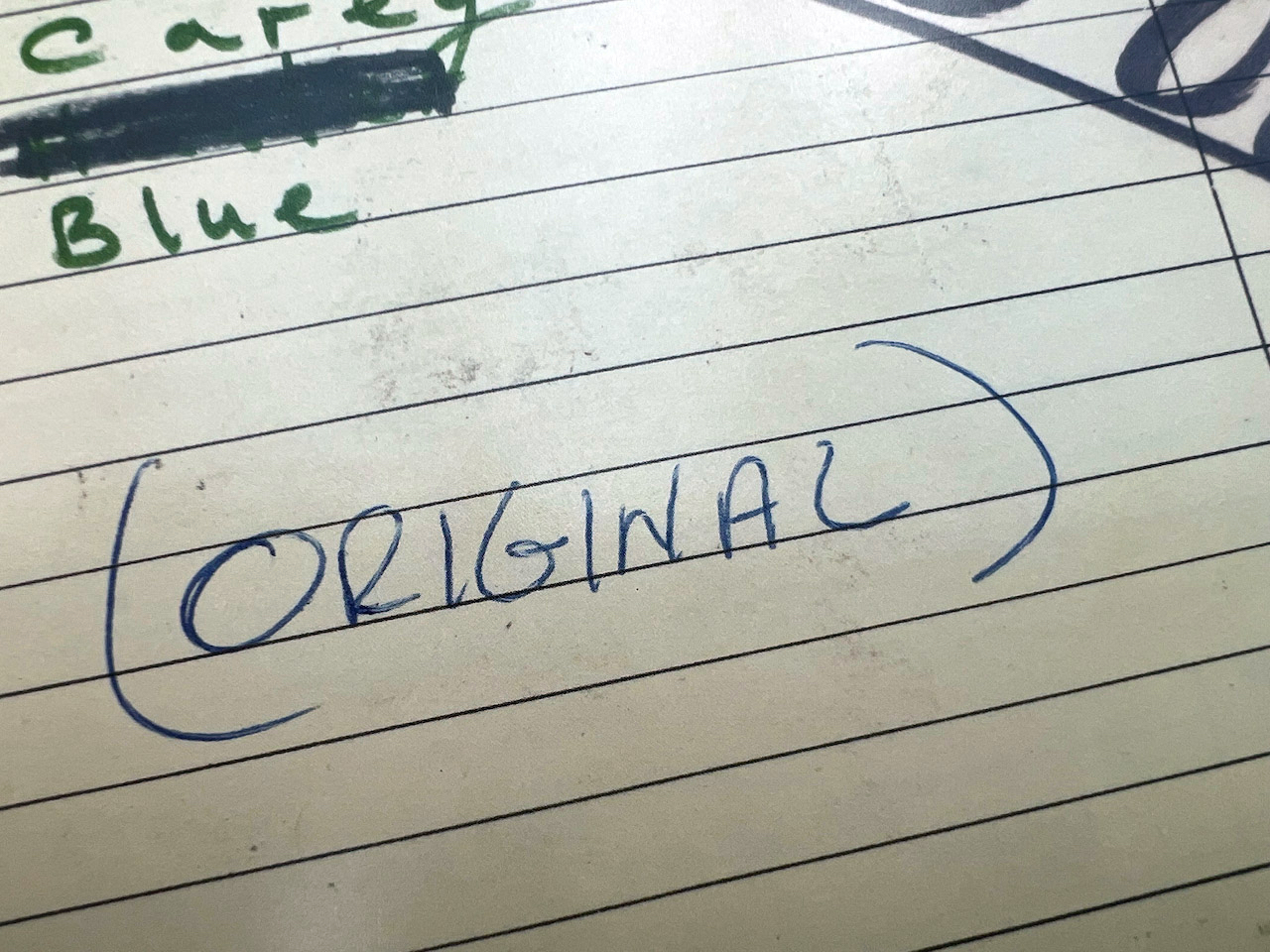
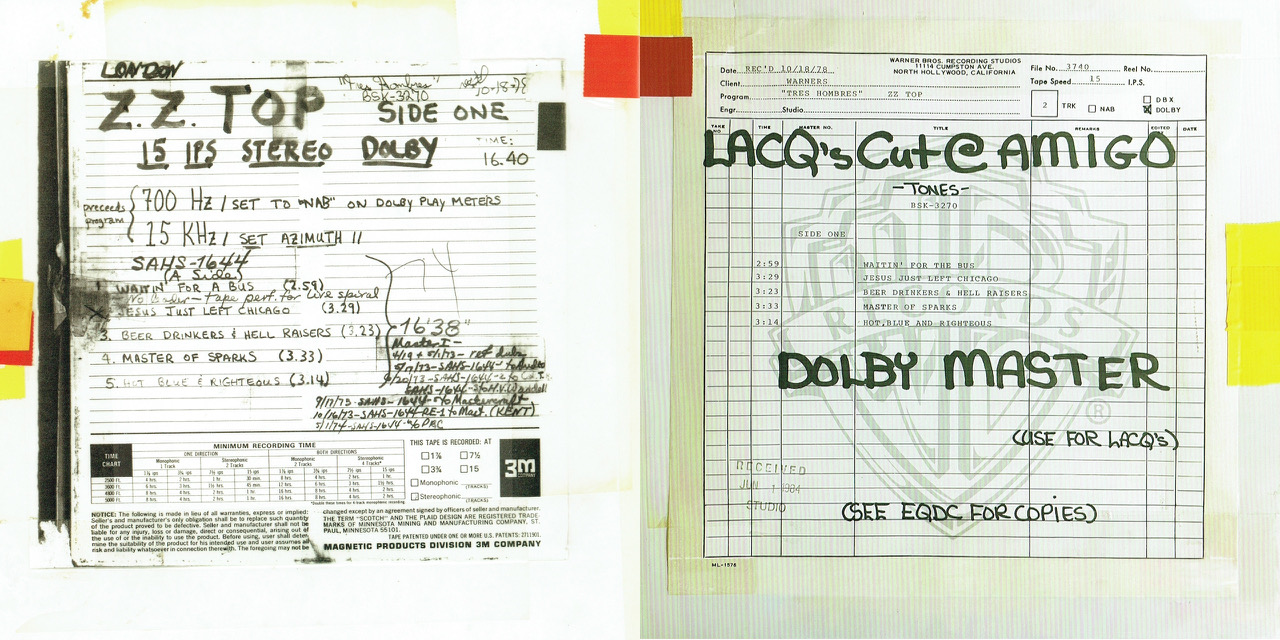
Before I move on – one more brief word on tape box notes: as I surmised in my previous review of the ZZ Top album Tres Hombres, the original master tape box notes reproduced on the Rhino High Fidelity release and the Analogue Productions release are different. The Rhino tape and vinyl showed original London Records notes from 1973 whereas the Analogue Productions UHQR showed Warner notes from 1978. Does this mean the Analogue Productions used a later tape, a copy of the original London master? No, it turns out that those two sets of notes were in fact on the opposite faces of the same tape box: when ZZ Top signed a contract with Warner in 1978, Warner also took over their back catalogue and so added their own information sheet to the other side of the tape box, complete with new catalogue number. So, what might appear at first glance to be new notes indicating a new master, copy, dub, whatever, often it just indicates a new custodian of the same original tape. So, reader beware / be savvy / be open and curious!
And a word on pricing
This old chestnut again! Look, for the first time ever, thanks to Warner / Rhino and the studio engineers involved, we, the paying public, now can actually hear exactly what these wonderful classic albums sounded like as they left the studio. And how much do we have to pay for this experience? $300. Now, that might well be twice the price of a super high-end vinyl LP, but these tapes are so much closer than anything ever has come, and will ever come, to the actual pieces of art that these magnificent classic albums are. And there are just 350, more or less, of them. OF COURSE they’re not cheap, but just think about what you’re buying for a moment. Seriously. In many ways you could say these are the bargain of the century! And how any self-respecting audiophile who has spent years or decades upgrading their hi-fi and buying costly audiophile reissues in the hope they’ll sound better than the standard release, how they can have anything but absolute reverence for these tapes strikes me as utter heresy.
Right, that’s my rant over (trust me, it’s been a while coming), let’s dive into the Blue…
Joni Mitchell’s Blue
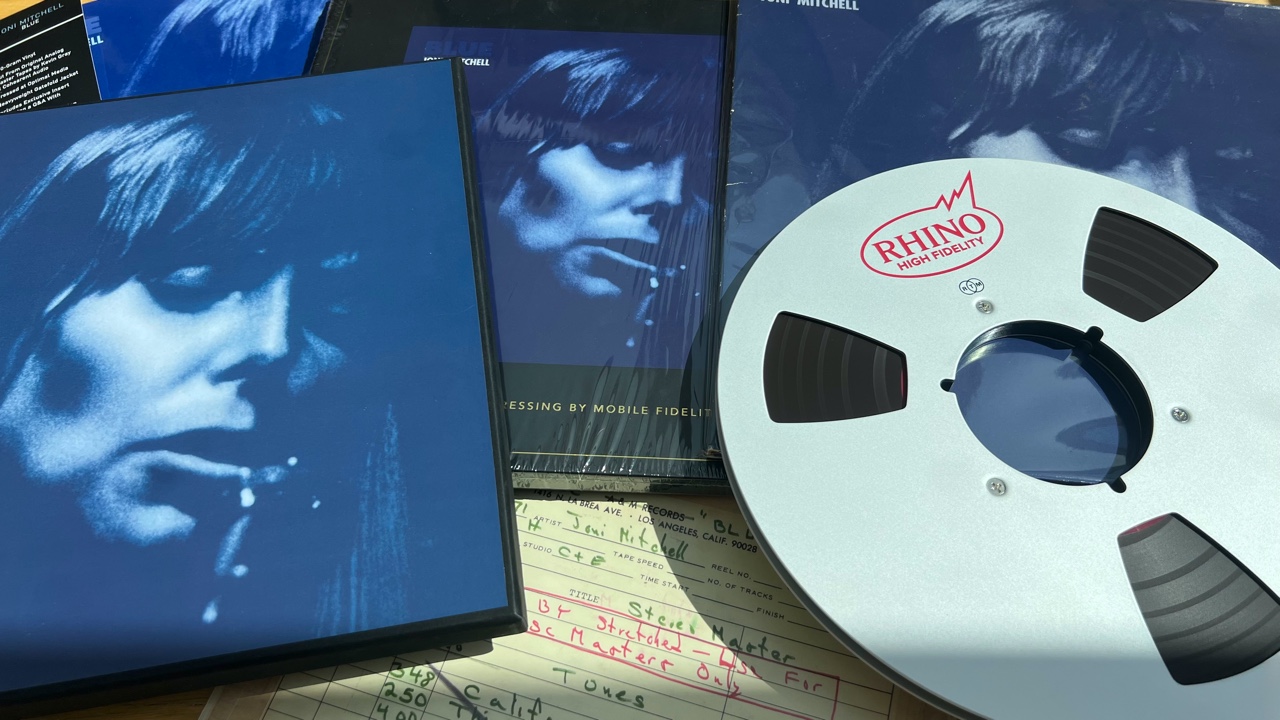 Let’s work on the assumption that everyone reading this knows Joni Mitchell, and very likely knows Blue. Whether Blue is her greatest work is of course an arguable point. But it’s certainly up there… equalled maybe, but probably not bettered. If pushed to choose I could argue the merits of several phenomenal albums: Court and Spark, Hejira, Don Juan’s Reckless Daughter, Clouds, Hissing of Summer Lawns, Ladies of the Canyon. These are just my personal favourites, and which one I happen to love the most might depend on my mood, the wind direction, time of the day etc. Nudge to Rhino: all of these on tape wouldn’t be too many. Honestly.
But anyway, for now we have Blue – and I don’t mind admitting I was quite literally crying with delight when this reel was announced (yep, really).
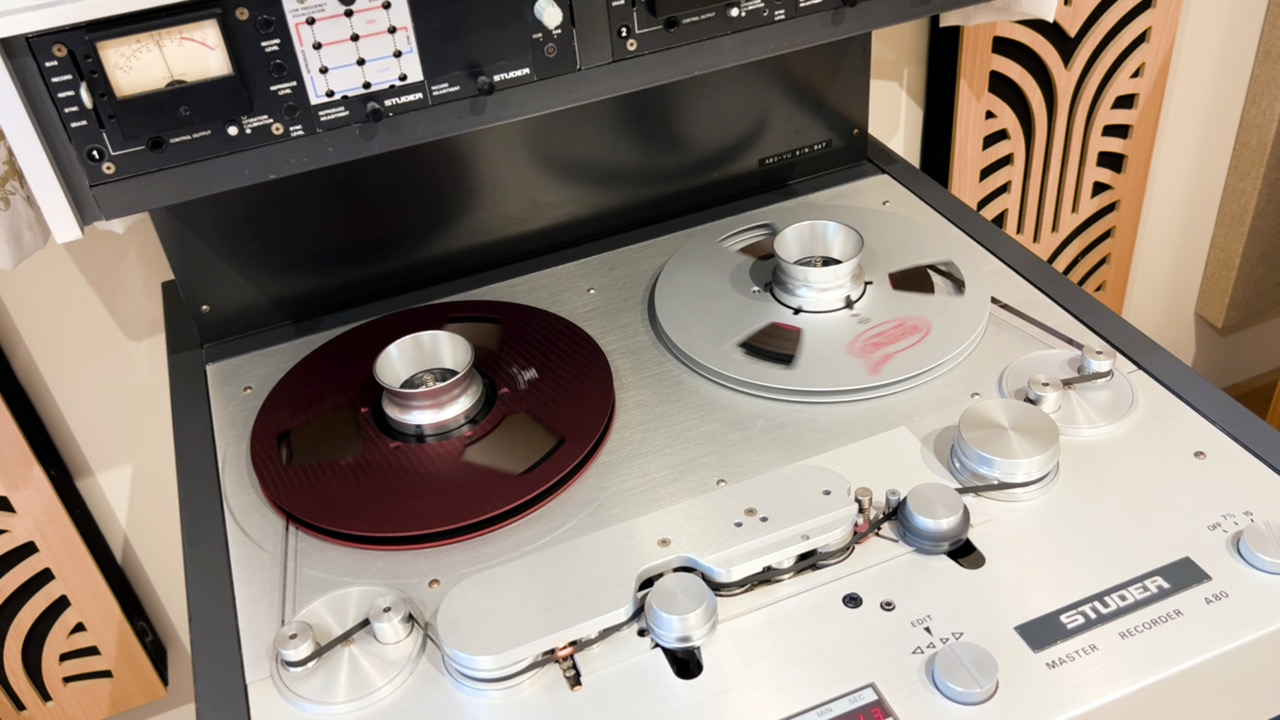 I’ve now played this album a dozen or so times, and on every single occasion I’ve been utterly spellbound. This is nothing like listening to an LP record, nothing like listening to a CD, nor a high-resolution stream or an SACD. You are there, in the room with a twenty-seven-year-old Joni Mitchell as she performs this beyond beautiful masterpiece. Unless you saw her live, you’ll have never heard her voice more intimately, never heard how she uses the microphone as implicitly, never heard the band swing so fluidly, never heard the weight of the drums, the shimmer of the guitar and the dulcimer, never heard anything like this ever before. Period. Full stop.
On some of my listens to this Rhino High Fidelity Reel to Reel, I’ve had company. As soon as word got out that I had Blue on tape there was a queue of visitors aching to hear it! First to get here were brothers Sean and Sam Lakeman (from one of the folk world’s royal families). They both sat there pretty much dumbstruck with delight. A few days later Sam came back with his wife (the award winning folk singer Cara Dillon), keen for her hear one of her absolute favourite albums as she’s never heard it before. Again, jaws dropped, hairs standing on end, Cara and Sam sat bewitched by the intimate presence of being there in 1971 in the studio with Joni.
By the way, I’d urge you to check out Cara’s beautiful version of Joni Mitchell’s ‘River’ (taken from Blue) featuring the superb John Smith on guitar and John Garrison on keyboards – here’s a link:
A four-way shoot-out
I’m not being lazy here, but I almost feel this tape doesn’t need formally ‘reviewing’ as such – but to put it in perspective I’m going to refer to two other versions of the album: my German-pressed 1971 original and the MOFI 45rpm one-step. In addition to these two, and of interest to those of you not currently able to play tape, I’ll also compare to the new Rhino High Fidelity vinyl release. Limited to 5,000 copies, this AAA release has been cut by mastering guru Kevin Gray at Cohearent Audio.

My 1971 original is 55 years old and is understandably not 100% quiet. But it’s pretty darned good and within it lies a beautifully atmospheric recording that can easily move you to tears. An original pressing is typically the closest thing you can get to the intent of the artist, to that original artwork, and this is no exception. By contrast the MOFI is cool, super smooth, and very tidy, but to me it doesn’t feel as intimate or alive. Think of it as a heavily made-up Joni, a photoshopped Joni. More like a poster than the original painting that the original pressing conjures up. (The tape isn’t even a painting, it just IS!).
Then there’s the new Rhino High Fidelity AAA vinyl cut. This one is very close to the original, and thereby much closer to the tape. For anyone not having a suitable open-reel tape player, this is a superb compromise. Would I rather have the original LP? Maybe, the original is an artifact after all, whereas the Rhino Hi-Fi vinyl is a modern, exceptionally close, copy of the original. It really is very, very close to the original vinyl release, but neither are anywhere remotely near the tape.
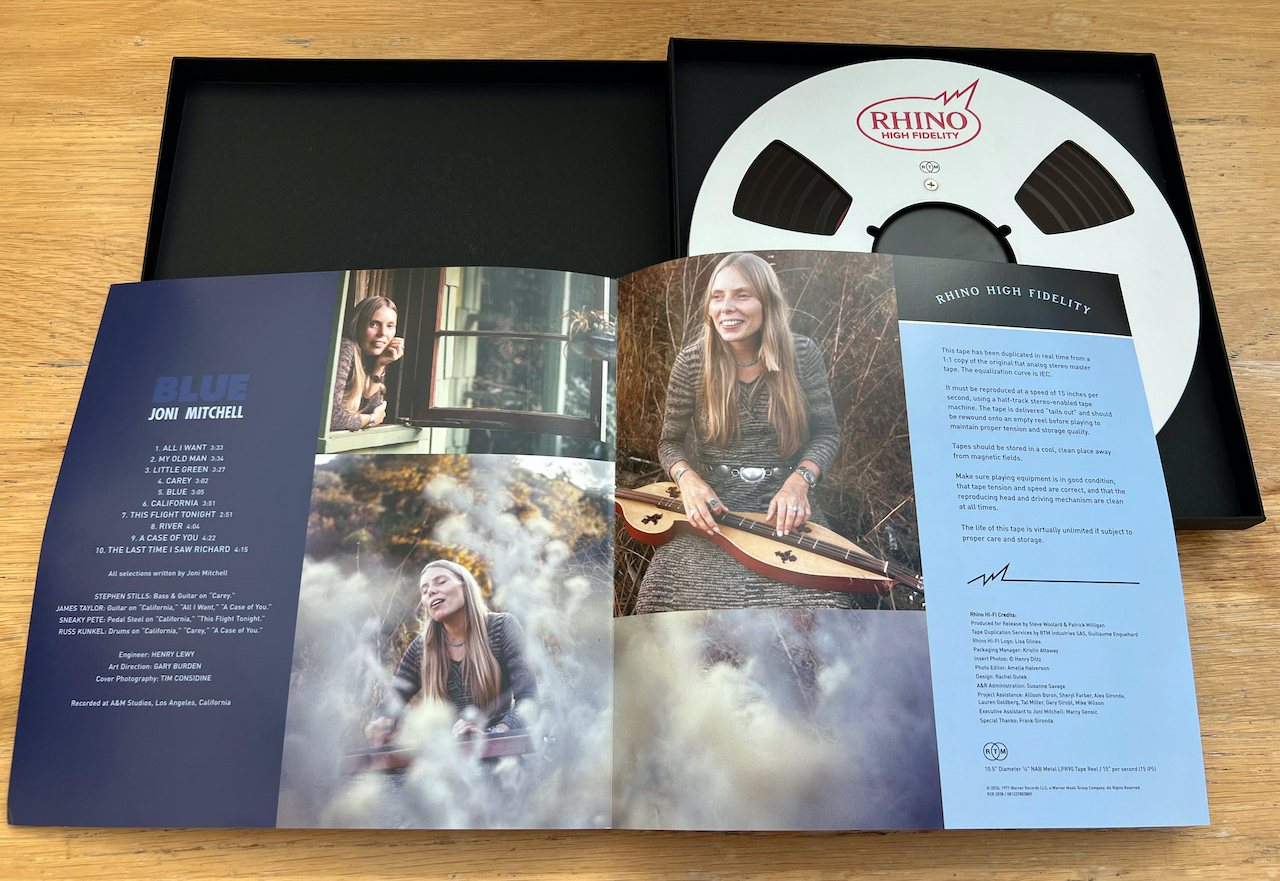 The Rhino High Fidelity Reel to Reel is on another level altogether. Joni is right there, not in an imaginary way: you hear her absolute presence. You don’t think in terms of cartridge tracking, treble break up or sibilance, you don’t think in the realms of bass depth and definition (which is saying something for your average audiophile let alone one who’s worked in the hi-fi industry for decades!). Instead, you’re just right there with Joni, hearing not only the notes she hits, but how she hits them, how she handles the microphone, how she handles the power, expression and emotion in her voice. You’re listening to the way she plays the dulcimer, the guitar and the piano. You’re listening to how her fingers press down on the strings or the keys. In fact, you’re listening to the whole band and hearing how each musician plays every note, and how they weave around each other as the songs unfurl into life. The gulf of ‘being there’ between the Rhino Reel to Reel tape and anything else is vast, it’s as big as the gulf between the original or the Rhino Hi-Fi AAA vinyl (those two are almost inseparable) and the MOFI. The MOFI is as detached as the tape is intimately present.
The tape isn’t dull, nor is it bright. It’s alive, it exudes energy, melody, cadence and subtlety. As each song ends you find yourself held in suspense as the decay of the final note extends well beyond where you thought. And then, as the first notes of the next song bursts forth, every hair on your body stands on end. The wonderment of this is like nothing else. It’s a spiritual experience. It is truly magical. The price becomes irrelevant, the experience is priceless.
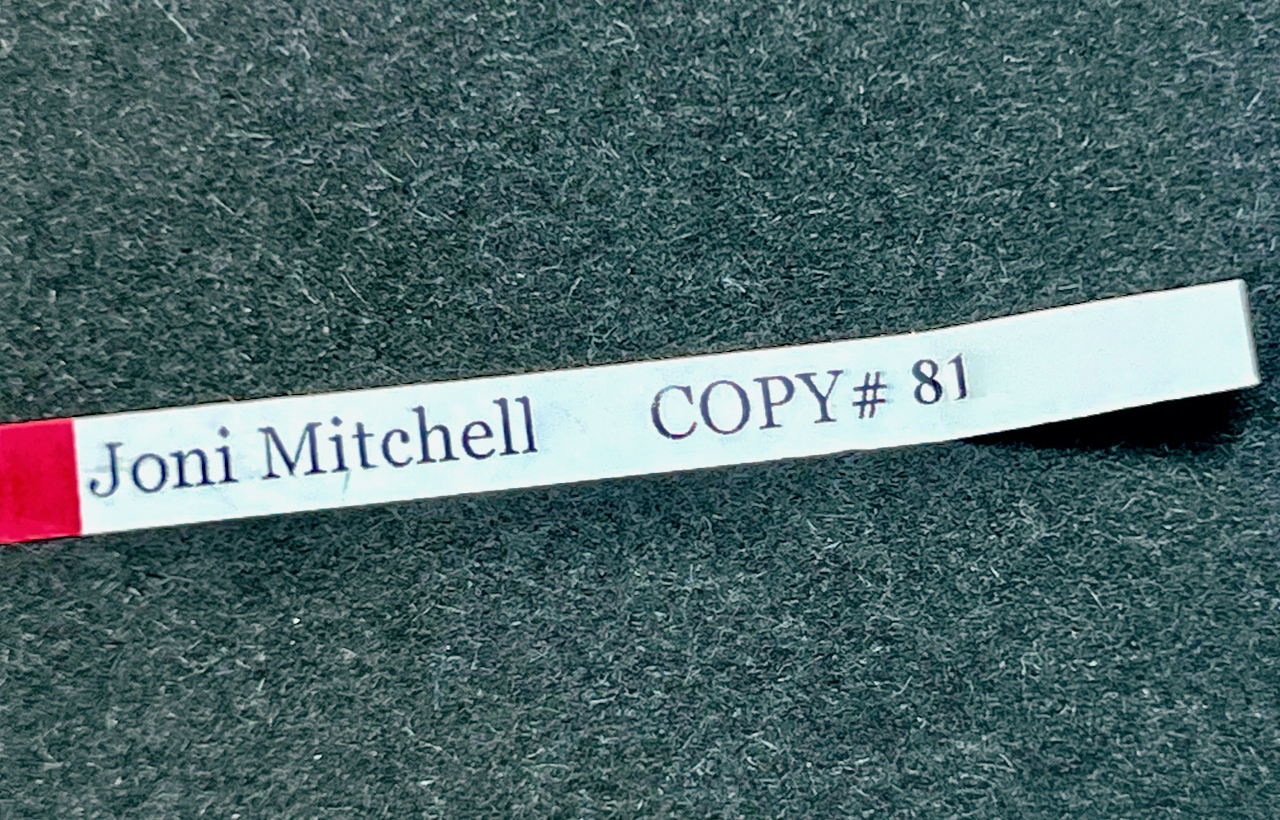 I have no doubt that once these 350 copies are sold out these reels will become hallowed artifacts, spoken about in hushed tones. Already, I notice that the Norah Jones Analogue Productions Ultra Tape, now sold out, fetches around £1,000 to £1,500. Will I sell my copy? Nope. But just in case anything ever happens to my reel of Blue, I’ve just bought a second copy!! From here on, nothing else will do. Nothing.
You can get your own copies here (if there are any left by the time you read this):
- Tape https://store.rhino.com/products/blue-rhino-high-fidelity-r2r?variant=50889530999030
- Vinyl https://store.rhino.com/products/blue-rhino-high-fidelity?variant=50889527886070
Here’s my YouTube video review:

