As the Rhino High Fidelity Reel to Reel series continues to lay down the path of excellence, I continue to be jaw-on-the-floor amazed (and increasingly broke!). In June this year we had three reel releases: Curtis Mayfield’s Super Fly, ZZ Top’s Tres Hombres and Fleetwood Mac; in July another three: Joni Mitchell’s Blue, Crosby Stills and Nash, and Van Morrison’s His Band and the Street Choir. In August yet another trio: a pair of Black Sabbaths and Jethro Tull’s Aqualung. September gave all of our wallets a brief breather, only for October to come back fighting: Joni’s Court and Spark was the first, Love’s Forever Changes (the subject of this review) the second, and then, without a hint of warning, a third title was announced just last week: a second release from The Stooges, this time their 1969 self-titled debut (if it’s anything like Fun House, I can’t wait).
The reel agenda is in top gear and steaming ahead and there’s no sign of it letting up – and why would it, since the majority of titles are selling out fast.
Love’s Forever Changes: the promise vs the reality
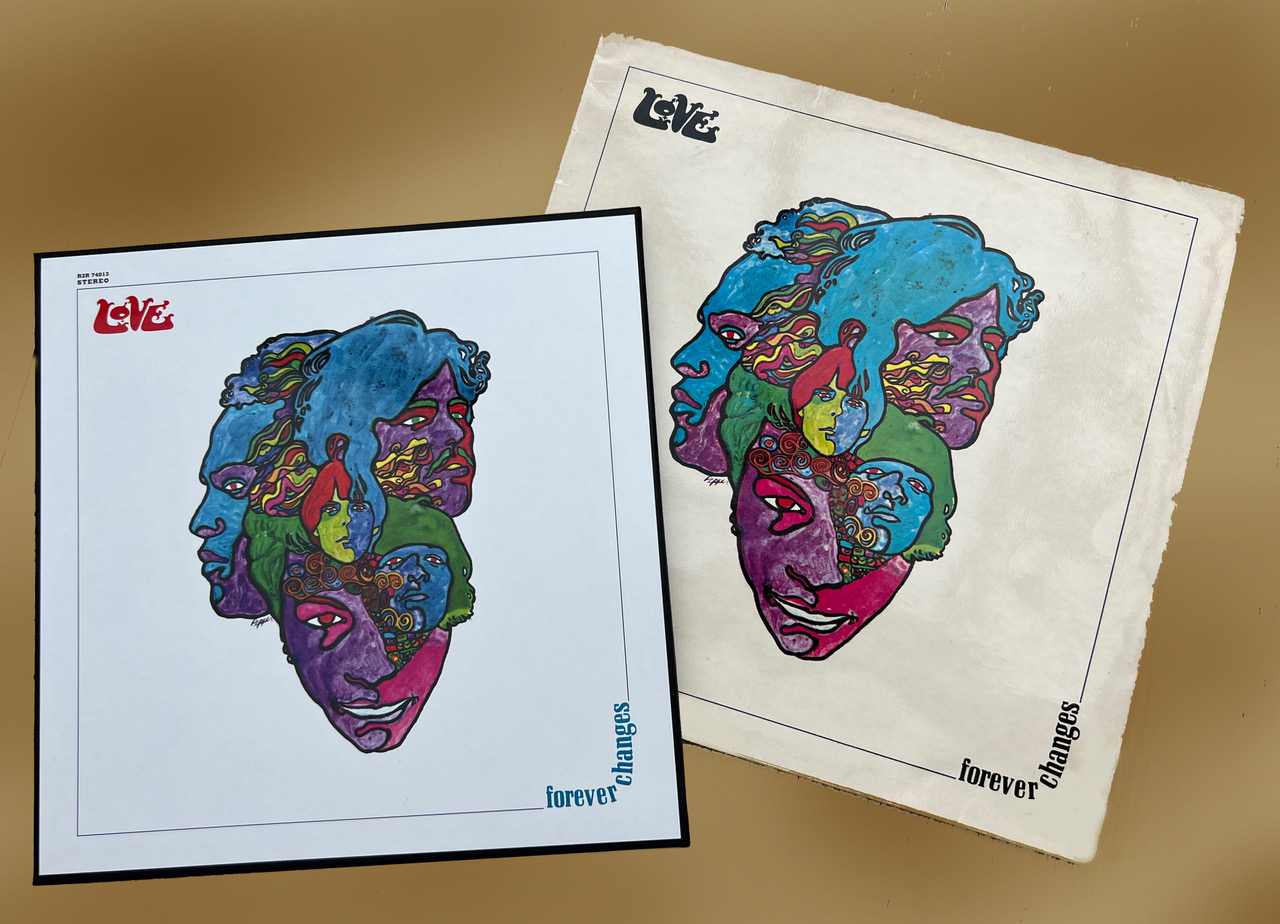 Anyway, back to the subject of this review: Love’s 1967 third album Forever Changes. Love was Los Angeles’ biggest band before the ascent of the Doors and there’s something about this album that kind of hypnotises you and dumps you into a sun-drenched L.A. sixties psychedelia (I can think of worse places to end up!). That said, categorising the album has always been difficult, as it doesn’t really sound like anything else. To my ears it starts off in an almost ‘Sketches of Spain’-like flamenco-classical jazz vein with the majestic ‘Alone Again Or’… but then it floats seamlessly through folk-pop, folk rock – and even a nod to Beatles-esque psychedelics as revealed in ‘The Daily Planet’.
There’s no doubt the record sounds of its time, and many commentators justifiably place it on a pedestal because it really does meld a kind of Bacharach & David stye of pop perfection and with a psychedelic folksiness to create something quite timeless and magical. Ironically, on release the album bombed in its native America (peaking at number 146), but then it achieved notable success here in the UK where it reached number 24 in the album charts. However, as the years have rolled by, it has found its rightful place in the classic all-time album charts. Rolling Stone places it at number 40 in their Greatest Albums of All Time, Mojo place it at number 11, while Uncut magazine ranks it third in the all-time greatest albums of all-time charts. Not bad!
Like I said, this was the third album from Arthur Lee’s Love and it’s the only one of theirs I have. I’ve had it for a good few decades and it’s one of those albums that represents a whole culture, a scene, an era. It sets the scene and puts you into a time and place that you haven’t actually been to but can easily convince yourself that you have.
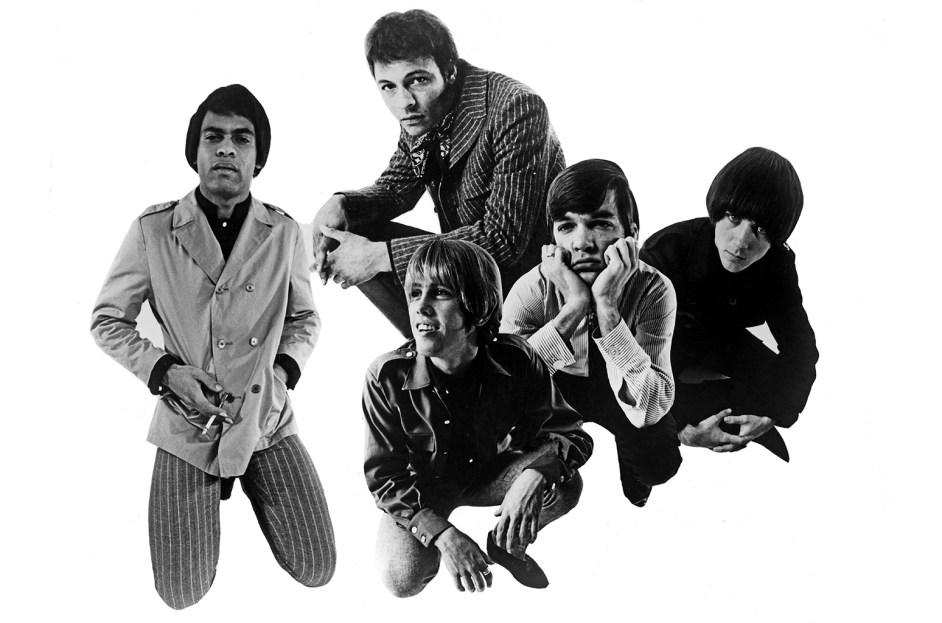
The album is a magnificent creation, a blending of beautiful acoustic guitars (which brings to mind Genesis’ first album Genesis to Revelation, which I’ve just reviewed on my YouTube channel. Forever Changes also includes a mostly acoustic bass which is not overly powerful or prominent, a delicate and expressive lead vocal, and the absolutely sublime application of a horn and string section.
However, in reality the album often fails to match my expectations in the actual listening. My mid-seventies UK reissue has charm in spades but there’s no doubting that the bass is pushed too far forwards and so it becomes bloated, heavy and indistinct. Perhaps as a consequence, the vocal becomes slightly veiled and a touch recessed. Timing cues such as the hi-hat and ride cymbals are muted to the point that the songs loose urgency and pacing.
Turns out it’s not just a problem with vinyl. I also listened to the 24/192 stream on Qobuz: again there’s the overblown bass, plus harsh, compressed horns and veiled, recessed vocals. So, while the album promises the world and does sound wonderful, there’s no denying that on these consumer formats, it doesn’t reach its potential, not even close.
Over the years there have been many reissues many with the best of audiophile intentions. The Electric Recording Company and Mobile Fidelity have taken contrasting approaches, but do they succeed in bringing this original production to life? I haven’t personally tried either at home but experience would lead me to guess not.
Interestingly there’s now also a new Rhino High Fidelity AAA vinyl release, carefully remastered by Kevin Gray. I imagine that this one is likely to be far closer to the sound of the tape than anything else, but again I haven’t actually heard it so I can’t say for sure.
Provenance and production
So, let’s go right back, and I mean right back, to end up in the studio where the magic actually happened, and we can examine the original fruits of that – the original master tape, and see what we have.
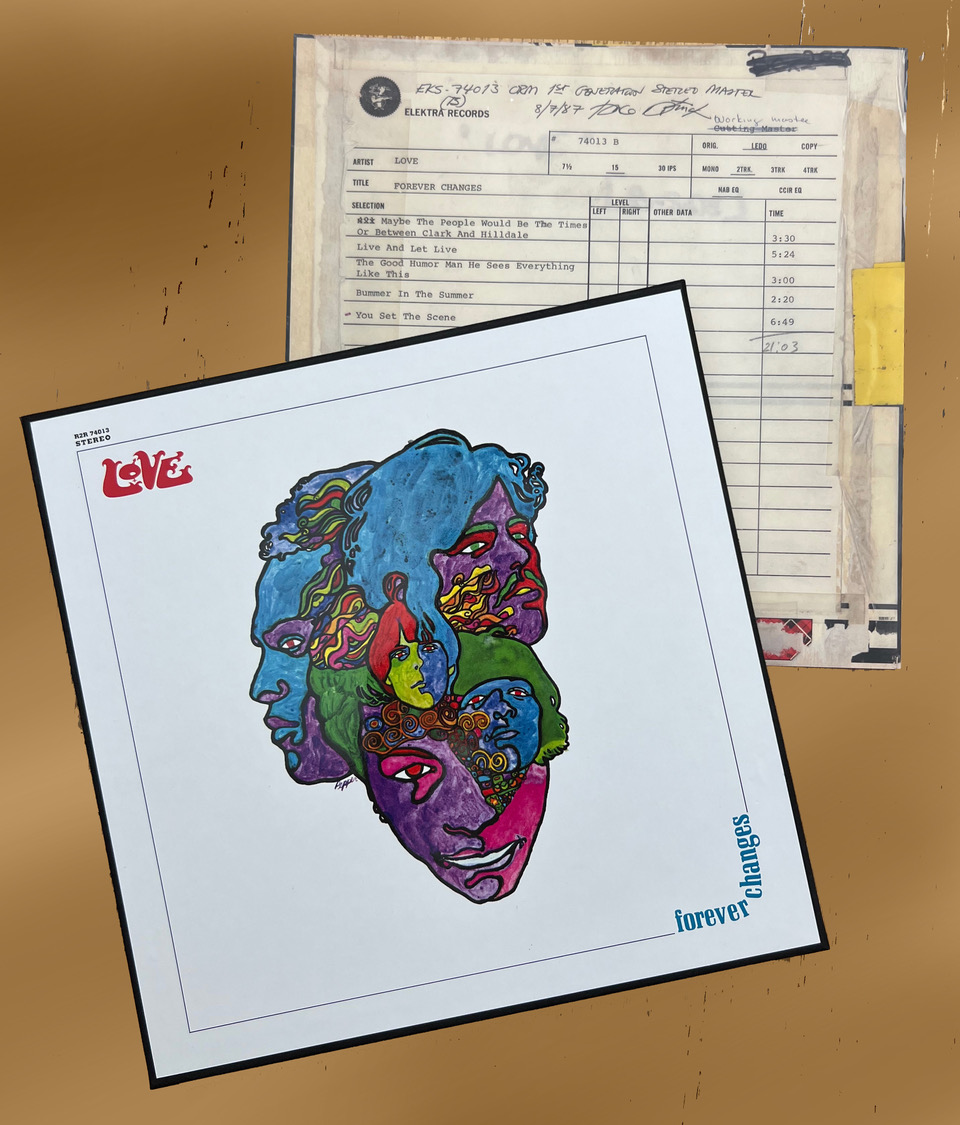
In the case of the Rhino tape release, we have a flat, third generation tape (second generation copy) of the original master tape. As regular readers here will know, the tape you buy / I’m listening to has a provenance unmatched by anything ever released to date and let’s face it, a provenance that is never going to be equalled going forward.
Rhino (the catalogue archive division of Warner Music Group) takes the original stereo analogue master tape from their archives and, using Ampex ATR 102 recorders, make two identical production masters. Those production masters are therefore first generation copies of the original master (often referred to as second generation tapes). These are then shipped to Recording the Masters in France where they’re copied onto five professionally set up recorders arranged in parallel in a custom duplication system. So there’s only one tape, the production master, between the absolute original master tape and the tape you buy and play on your system. What you buy is a direct, exact copy of these newly made production masters. It really doesn’t matter which way you spin it, the provenance is as close to the original work of art as has ever been produced. There’s no subsequent mastering, no dressing up, nor dumbing down for consumer formats, it’s exact.
Setting up my system for a three-way comparison
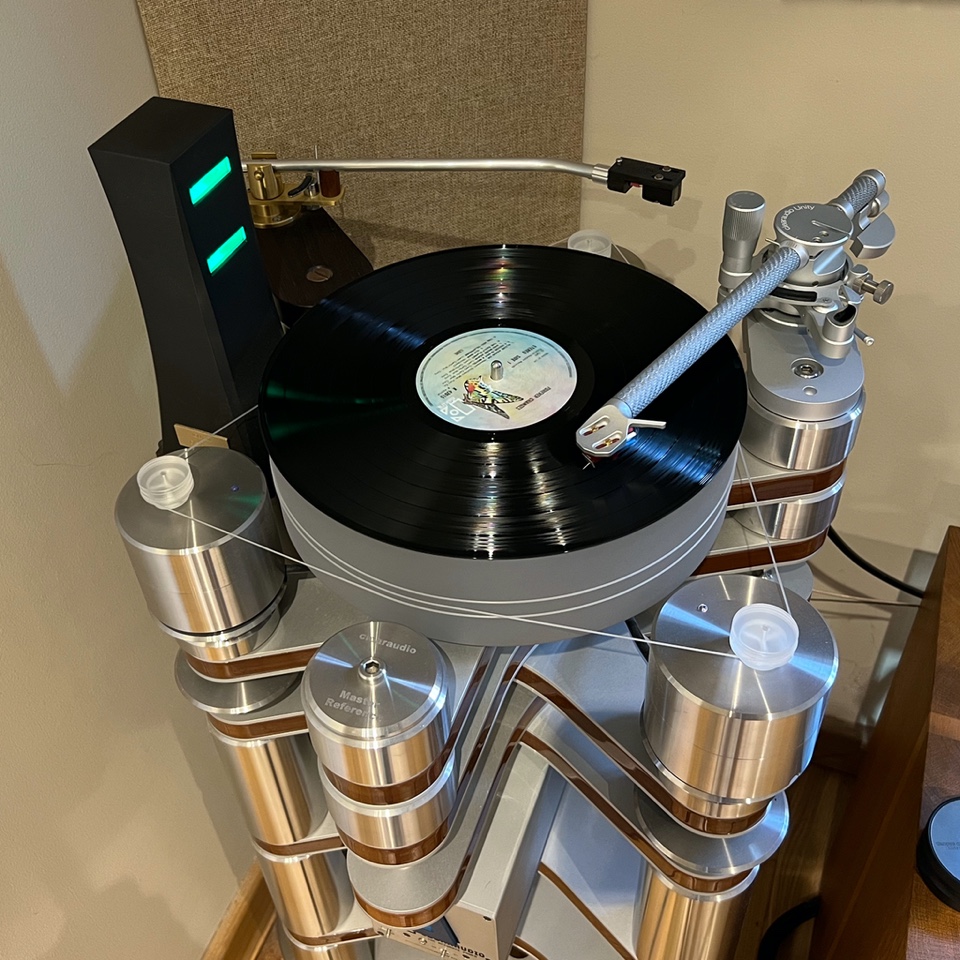 For reference during this review, I compared the reel-to-reel tape against both my mid-seventies UK Elektra pressing and the current 24/192 stream on Qobuz (as mentioned above).
I played the LP on a state-of-the-art system, to ensure the vinyl format was given its very best chance. The turntable is a Clearaudio Master Reference, situated on its purpose designed Everest stand, the tonearm is the top of the range Clearaudio Unity and the cartridge is their da Vinci v2. The phonostage is the flagship Aesthetix two-box Io Eclipse which is, to my ears, the best phonostage I’ve heard, and comes complete with no less than 24 vacuum tubes!
For digital I used Dela’s (formerly known as Melco) N5 Music Library feeding the Computer Audio Design (CAD) 1543 MkII DAC. This combo is further treated with a smattering of CAD noise reduction goodies: namely two CAD Ground Control GC3s: one on the system mains power earth and a second one on the Dela N5 signal ground. There are also CAD GC1s on the phonostage, preamp and power amps, as well as CAD’s Ethernet Silencer sucking noise from the ethernet network.
The preamp and power amp are also by Aesthetix and the speakers are Kerr Acoustic’s excellent K100 full range studio monitors.
Meanwhile the tape is replayed on a 1970 Studer A80 Master Recorder.
Forever Changes: as it always should have been
As I already mentioned, while this album is a magnificent production: a rollercoaster of light and colour, pulling inspiration from Andalusian flamenco, Mexican folk, psychedelia and pop, the lushness and complexity can be somewhat softened and subdued by the physical limitations of ‘getting it to market’. The vinyl, even played on a truly high end set-up can get brash at times, especially when the brass is at full-tilt, and slightly vague and fuzzy with so many details and textures at play. What’s more, the bass is often pushed so that it slightly overshadows the mids, making the vocals and even those thunderously dynamic acoustic guitars sound slightly muffled. You disagree? Well, bear with me ‘cause you haven’t heard the tape yet…

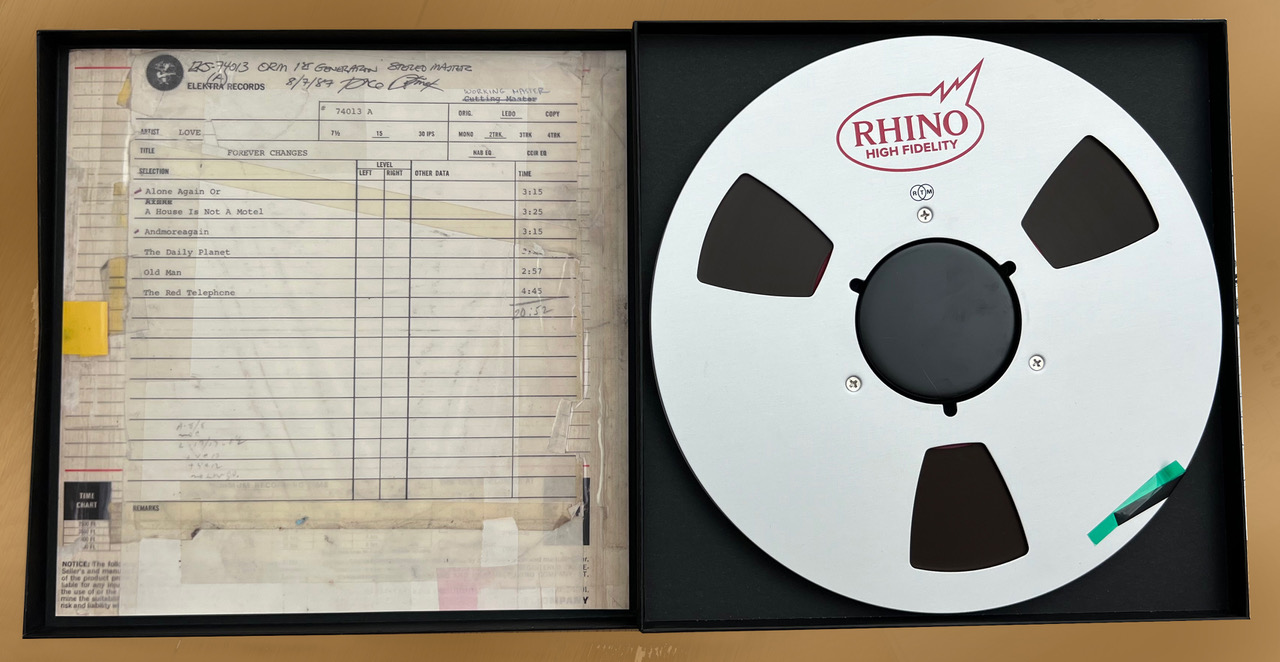

Kicking off with the opening masterpiece: ‘Alone Again Or’. The scale and majesty of this track on the tape is jaw-dropping. The guitars are even more dynamic, even more present and in the room. Remember, I do agree that this is a spectacular listen on vinyl and on digital (in some ways the 24/192 stream is superior to the vinyl – not something you’ll hear me say very often!). But the combination of space, air and solidity makes the tape so very much closer to reality. There’s no hint of murkiness to Bryan Maclean’s superb vocal, and the drums, cymbals and bass are so tight and so defined that the track propels along like you’ve never heard it before. The way the rhythm section drives the tempo is stunning. Going back to the digital stream seems flat, and going back to the vinyl feels bloated and out of focus.
When the trumpet solo starts, far from wishing to turn down the volume I found myself turning it up! Nothing gets glary or harsh on tape. The intensity and presence are palpable. The string backing is sweet and delicious. I’m struggling to think of a single 60s album that so seamlessly blends a rock band with strings and horns. The overall compositional texture is phenomenal. Think Burt Bacharach meets Quincy Jones meets Gil Evans meets Miles Davis!
‘A House is Not a Motel’ continues the awe: Echols’ Spanish-tinged acoustic and searing electric guitars are played before you as you’ll have never heard: guaranteed! The drum sound is weighty and precise with a musical flow that makes every single track on the album a joy to listen to. Track after track, the flow is constant, despite some incredibly heart-stopping effects. Just wait until the end ‘cut’ where the music abruptly stops, mid flow… On vinyl and digital this is both impressive and startling. On this unadulterated copy of the master tape, it’s life-changing!
‘Andmoreagain’ is delicate, open and clear, possessing subtle detail that is just slightly vague and either slightly blurred or flattened on other formats.
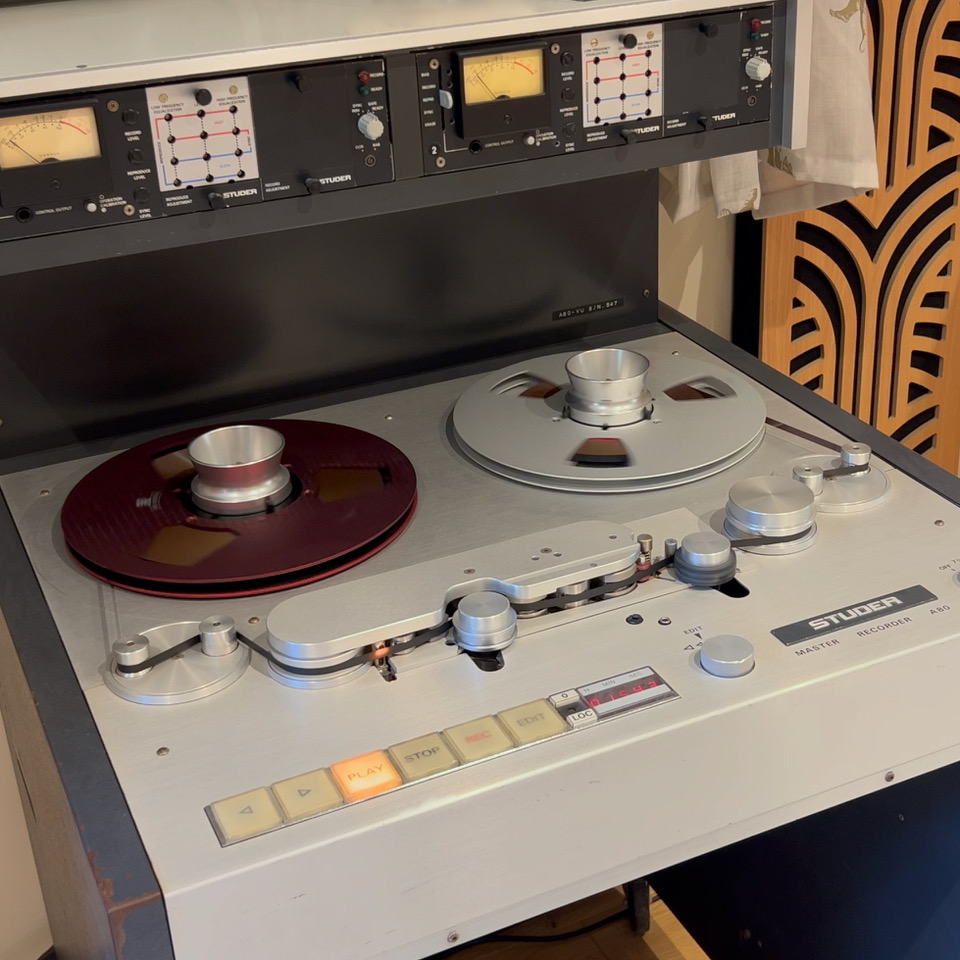 ‘The Daily Planet’ has a wonderful Beatles-esque psychedelic feel, and rhythms that drive with extreme intensity. The swing, the energy, the pacing and the air are all pure sixties L.A. Sonically, the tape is incredible. Again going back to vinyl (don’t forget, very high end vinyl) the song sounds a little fat, the bass a tad fudgy and the vocals ever so slightly veiled and honky.
‘Old Man’ has more delicacy, more fine detail, and a full bass but one with detail and texture; it remains agile and nimble, and raises the rhythmic pacing of the song. The vocal has a frailty to it (Old Man is the second track on the album to feature rhythm guitarist Bryan Maclean on lead vocal). The strings, cellos are so clear, rich and sweet and fit perfectly into the overall arrangement.
One of my favourite tracks on the album (honestly, there isn’t a weak track, not in my reckoning), is ‘Maybe The People Would Be The Times Or Between Clark And Hilldale’. I mean, what a title! But, title aside, this track contains textures, space and dynamics that would shame just about anything. The presence of the trumpet, the sweetness of the strings, the clarity of Arthur Lee’s vocal, the intensity of Echols’ electric guitar and the weight and texture of Michael Stuart’s drums are all phenomenal.
Talking of Echols’ electric guitar, in the next track ‘Live and Let Live’ he lets rip: every finger touch, and the feel and expression of his lead solo, are stunningly real and wailingly present. Your mind will be blown.
Another cracker of a title: ‘The Good Humor Man He Sees Everything Like This’ is another of my favourites. There are plucked strings that bring a baroque wonderment into the equation. Again, the balance of folk / pop / rock and a Bacharach-like 60s pop are captivating, and then the tape effects at the end will have you leaping from your chair in order to rescue the tape which you’d swear has just exploded on your machine! Of course it hasn’t, but welcome to sixties studio sound effects replayed first hand right there in your hi-fi system. It’s not just the major dynamics either: the finest details, vocal and instrumental, reveal elements that you’ve probably never heard until listening to this tape.
The penultimate ‘Bummer in the Summer’ has Lee doing his best Bob Dylan impersonation. It’s to good effect: the song is catchy and propels with an almost bluegrassy rhythm. Echols’ lead guitar licks leap from the mix, and the vocal is projected with real life size height and body. A piano joins the party, subtle but clearly there. And, again, more dramatic major dynamic shifts draw you in then slap you hard. This is a listening experience in the truest sense of the word!
Finally, wrapping up, ‘You Set The Scene’ features perhaps the most twangy electric bass on the album. The drums are intense and urgent. The cello (or perhaps double bass?) gives tremendous texture while the familiar acoustic guitars cascade like a mountain stream. The strings are silky, clean and joyous, then we slip into a horn and string led passage which doffs its hat to the late sixties Beatles.
Honestly, Forever Changes is a truly wonderful album. It’s composer Arthur Lee deserves all the credit in the world. Everyone should at least listen to this album and anyone with a record collection probably should own a copy. And if it’s not already obvious folks, if you do have a suitable reel-to-reel player, you owe it to yourself to buy this tape!
You can get your own copies here (if any are left by the time you read this): https://store.rhino.com/products/forever-changes-rhino-high-fidelity-r2r?srsltid=AYCX9vJrsMuI3gd3jjVsvzvs-FOLVcYvFbgim-WCOynbNsvm_goNgw-w&variant=52013575274742
Add here’s more rambling on video…

