The recent concurrent release of Black Sabbath’s debut album and Paranoid was of particular interest to me, as not only were those two tapes responsible for getting me into Black Sabbath (a reel-to-reel feat previously achieved by Fun House by The Stooges and Tres Hombres by ZZ Top, neither of whom I’d have claimed to be particularly into beforehand), but they also marked the first time Rhino High Fidelity had issued a second reel-to-reel title by the same artist. Which naturally led to the question: what next? More Yes? More Joni Mitchell? More Jethro Tull?
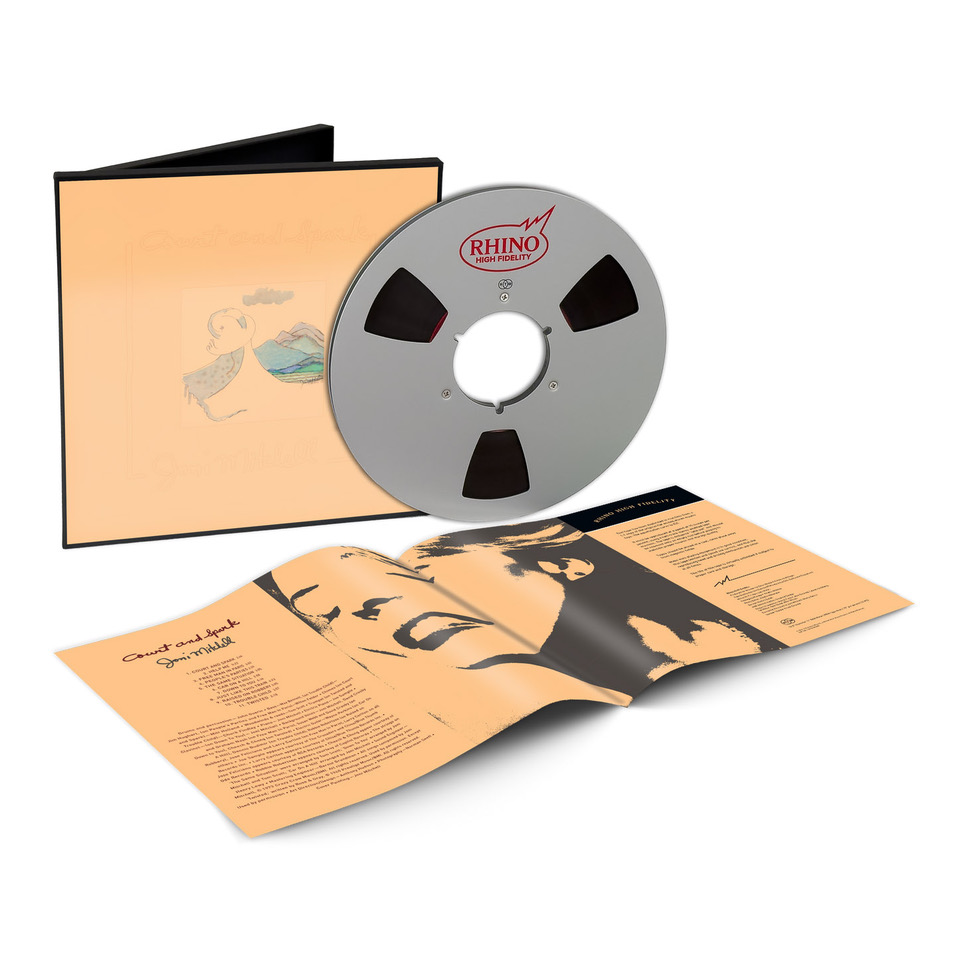 Let’s face it, every artist featured in the series already has at least one other album that could be considered essential. So, only a few weeks after the Sabbath releases we got our answer: a second Joni Mitchell title. And which one? Quite possibly my favourite album of hers, the 1974 masterpiece Court and Spark.
I don’t think Court and Spark was the first Joni Mitchell album I heard, but I do think it was my first favourite. The album I recall hearing first was probably The Hissing of Summer Lawns, her 1975 follow-up, which we used as one of the demonstration records at Reading Hi-Fi Centre, where I worked after abandoning graphic design for my first job in the hi-fi industry.
By the time of Court and Spark, Joni had largely left behind the boundaries of the folk singer-songwriter world that defined Blue and For the Roses. Here she opened the doors to a much broader musical landscape, embracing jazz influences and more sophisticated arrangements while losing none of her lyrical brilliance.
The band she assembled was effectively an amalgamation of members from The Crusaders and L.A. Express, the latter becoming her touring band and immortalised on the subsequent live album Miles of Aisles – another early Joni purchase of mine and one I can recommend without hesitation.
L.A. Express was led by saxophonist Tom Scott, who had played in the Blues Brothers band. But L.A. Express was definitely more jazz fusion than blues: the cast also featured talents such as Joe Sample and Larry Carlton, both of whom also played in The Crusaders. Bassist Max Bennett contributes some of the most melodic and effortlessly flowing bass lines imaginable, while drummer John Guerin provides the backbone of an irresistibly grooving rhythm section (while also becoming a significant love interest for Joni).
The guest list is equally impressive. David Crosby and Graham Nash provide the wonderfully close harmonies on ‘Free Man in Paris’, adding another layer to an already extraordinary record.
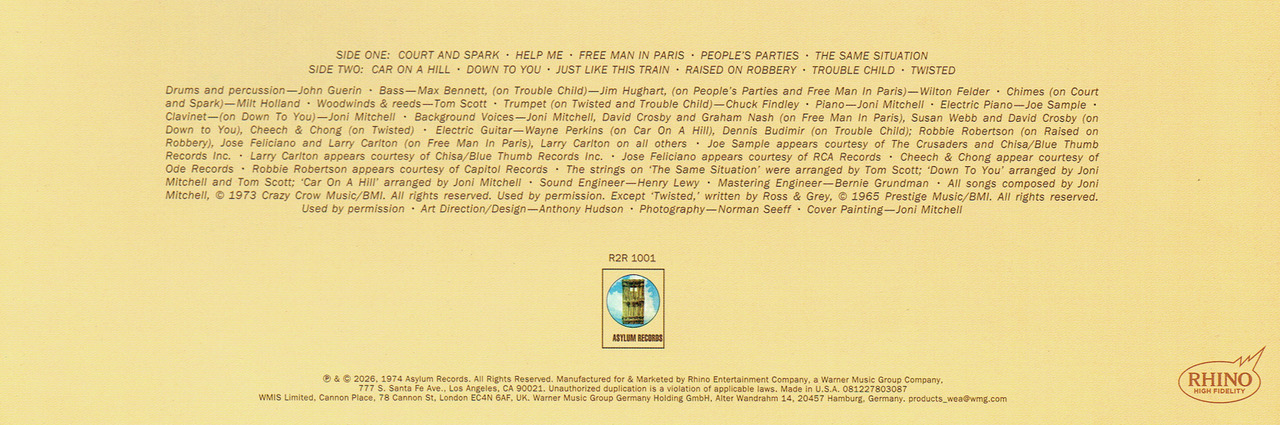
The album was recorded by engineer by Henry Lewy and produced by Mitchell herself. It remains an exquisite piece of work, and everyone involved should be immensely proud of it. The original mastering was handled by none other than Bernie Grundman, still going strong today. Fifty-two years on, having now heard the tape, I can say without hesitation that Court and Spark remains an absolute sonic masterpiece.
Provenance and production
Before going any further, let’s revisit an important question: what exactly are these Rhino High Fidelity reel-to-reel tapes, and why are audiophiles so excited about them?
I’ve worked in hi-fi since the mid-1980s, beginning at Reading Hi-Fi Centre, a small independent dealer. I landed there because I was obsessed with music and spent virtually every spare penny chasing better sound from my records. Back then CDs were only just emerging and held little interest for me. What fascinated me were products like the Mobile Fidelity Original Master Recordings, advertised as being cut directly from the original master tapes. Over time the phrase ‘master tape’ acquired an almost mythical status in audiophile circles. Everyone talked about it. Hardly anyone had actually heard one. Decades later, working in the higher reaches of the hi-fi industry, I finally got the opportunity to hear a genuine master tape copy. It completely reset my expectations.
The difference between master tape and even the very best vinyl or digital formats wasn’t subtle. It wasn’t a matter of better bass, sweeter treble, or more detail. It simply sounded right. Instinctively, unquestionably right. There was a realism and presence that made every other format feel like a representation of the event rather than the event itself.
So what are Rhino actually offering here? A glance at the included documentation reveals the key detail. The photographs reproduce the original A&M tape-box labels, complete with the glorious handwritten words ‘Stereo Master’.


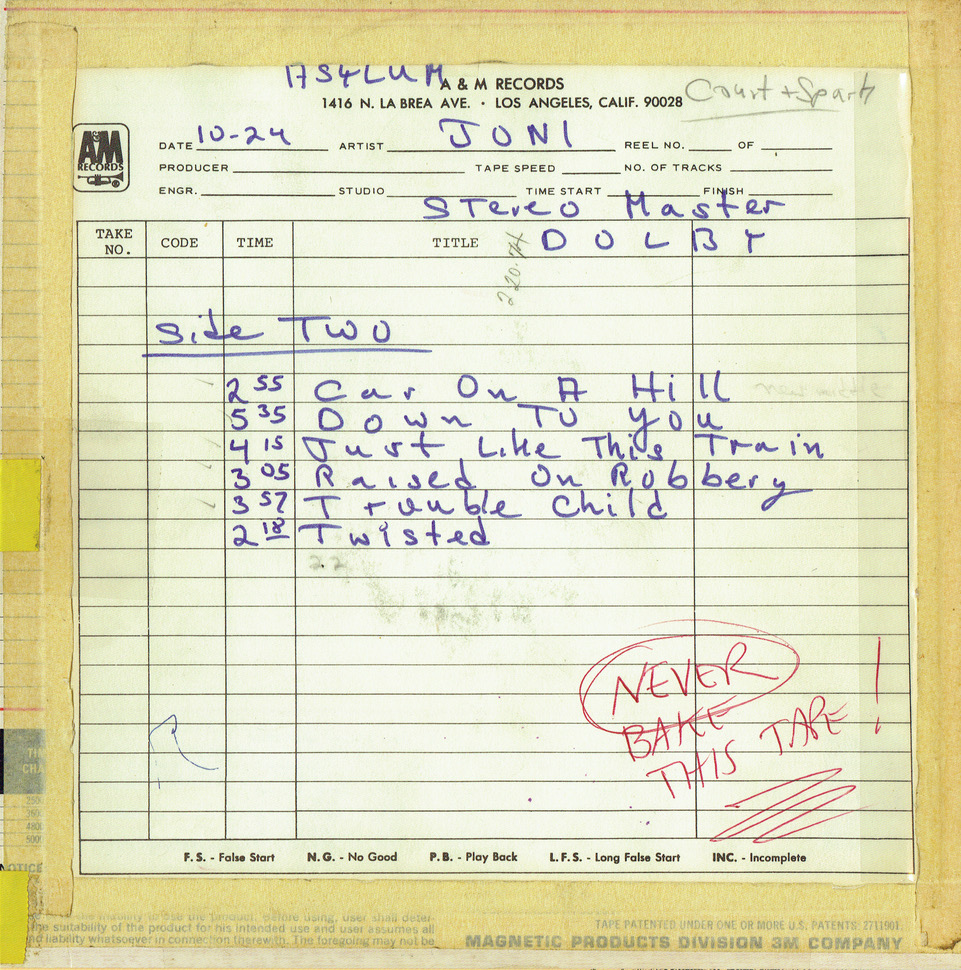
Warner Music Group begins with the original master tapes from its archive and creates production masters directly from them. These are 1:1 copies made with Dolby A decoding and alignment verified using the tones present on the source tape. Those production masters are then sent to Recording The Masters in France, where duplication takes place on a custom system designed by Reel Resilience. One Studer playback machine feeds five recorders simultaneously, allowing five real-time copies to be produced from each pass.
So two Production Masters being replayed 35 times each gives us the 350 master copies that Rhino are producing in this most exclusive of editions.
When you consider that the blank tape alone costs close to $100 per reel, alongside studio time, packaging, artwork and duplication costs, the $300 asking price starts to look like a total steal. These are not cash cows. They’re niche products aimed at a tiny audience of enthusiasts who want the closest possible connection to the original recording. A half million dollar turntable and phonostage (such things do exist) won’t better the sound from a master tape, so for those with a suitable professional spec reel to reel machine, these really are the holy grail.
Now, I’ve noticed that, especially with the Black Sabbath titles, some non-tape users are buying these as artifacts. That’s fine, of course anyone can buy them for whatever reason they wish, but these tapes are there to be played. Buying them as a collectable seems to me a bit like folks who buy a five thousand-dollar bottle of vintage wine with no intention of drinking it. Why would you do that?! Perhaps these folks don’t fully appreciate what they actually have. If you love music and love sound, playing these tapes will be the best thing you’ve ever heard!
Court and Spark: the album, the listening
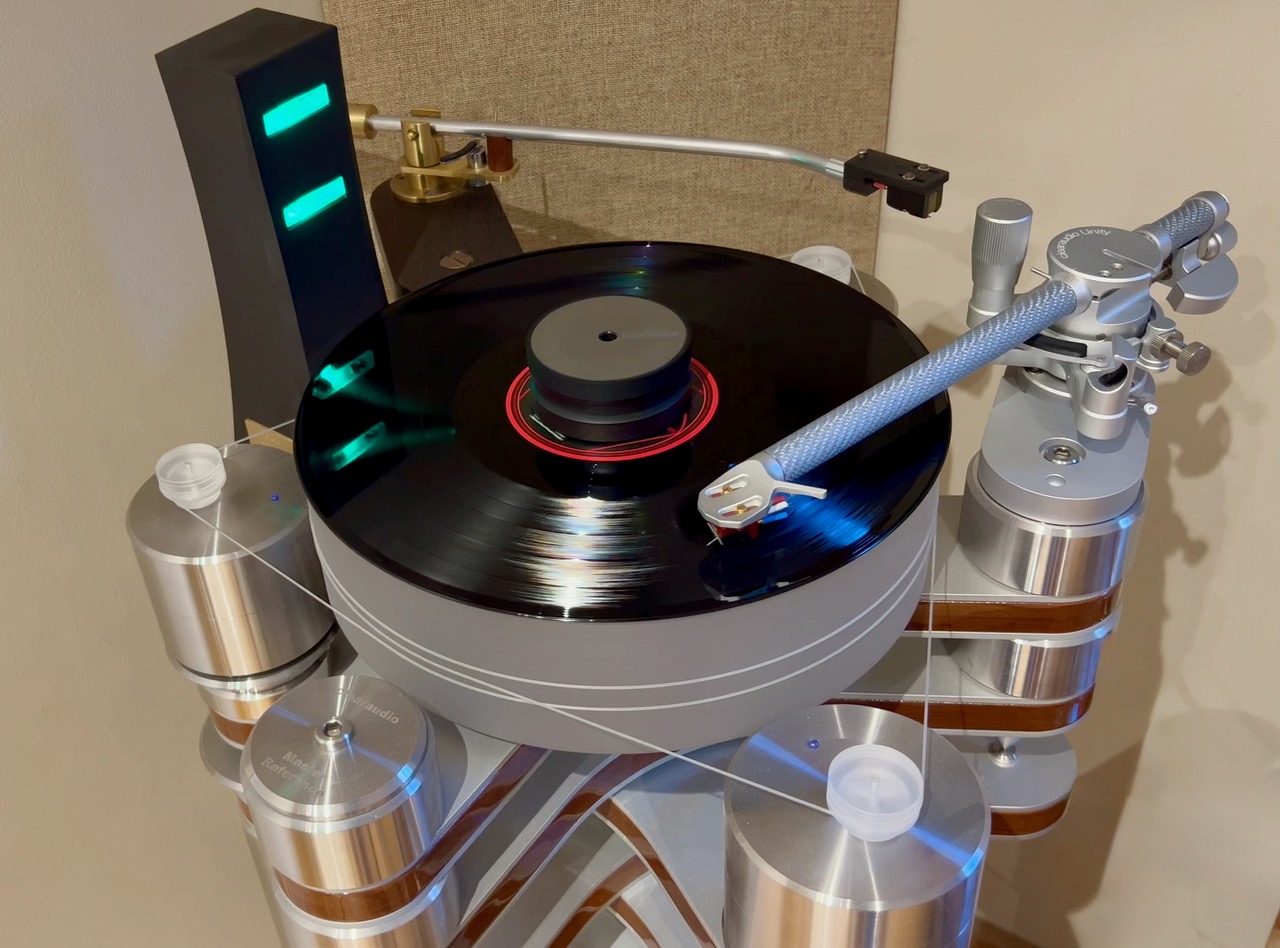
For reference during this review I compared the reel-to-reel tape against both an original 1974 UK Asylum pressing and Rhino’s recent all-analogue High Fidelity vinyl edition, cut by Kevin Gray from the original master tapes and pressed at Optimal.
But I’ll get this out of the way immediately: the reel-to-reel exists on an entirely different level.
In my review of Blue, I wondered whether that album was Joni Mitchell’s greatest achievement. It’s certainly the one most often cited, and with good reason. For me, though, especially when I first discovered her music, Court and Spark was always the one. As I already mentioned, alongside The Hissing of Summer Lawns and Don Juan’s Reckless Daughter, it formed the core of the Joni Mitchell I fell in love with, and of the three it was the album I returned to most often.
Over the years my listening drifted increasingly towards her earlier folk and folk-rock recordings. Albums such as Blue and For the Roses gradually eclipsed her mid-’70s jazz-infused work in terms of playing time. Yet whenever I return to Court and Spark, I’m reminded why it once occupied such a special place. I don’t so much listen to it as disappear into it.
Of course, trying to identify a single ‘best’ Joni Mitchell album is a fool’s game. She produced a remarkable run of records, many of which would stand as a career-defining masterpiece for almost any other artist. I can think of at least seven I’d consider indispensable, though I’ll leave you to argue amongst yourselves about which ones they are!
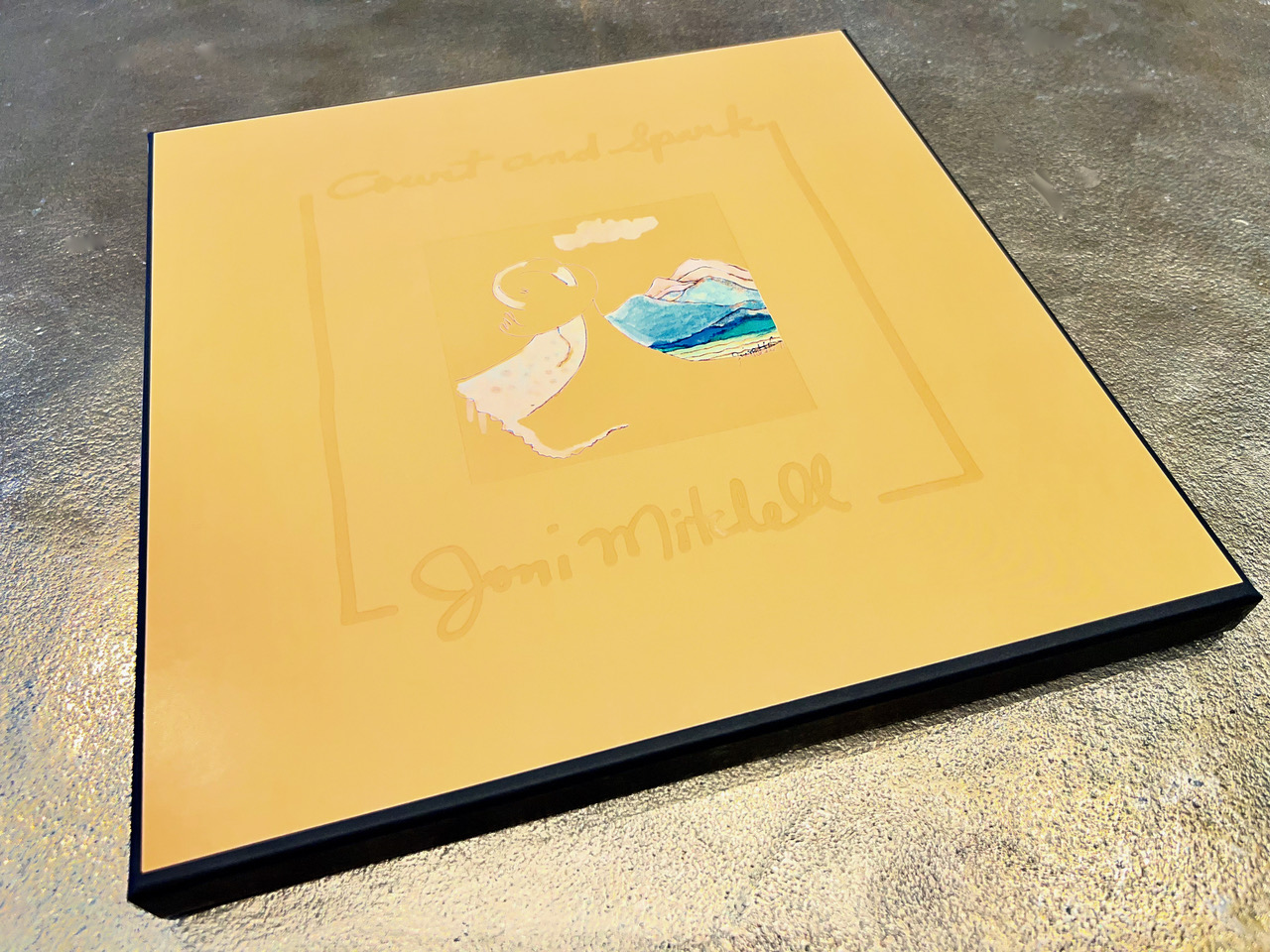 What makes Court and Spark so special is that it captures Joni at a point of artistic expansion. Following For the Roses, arguably the last of her pure folk albums, she steps confidently into a richer and more sophisticated musical world. The jazz influences are no longer merely hints; they become woven into the fabric of the music. The result is a record whose arrangements rival the best of Steely Dan while the lyrics spar with Leonard Cohen at his finest.
As a piece of music-making, it’s simply sublime. The melodies flow effortlessly, the band swings with absolute conviction, and every song seems to radiate warmth, colour and humanity. Even without understanding the words, the musicality alone would draw you in. Add Mitchell’s extraordinary gift for observation and poetry, and the album becomes something deeper: a record that quietly alters your perspective, encouraging you to see beauty and possibility where before you may have seen neither.
In that respect it affects me very differently from Blue. Blue confronts you with longing, vulnerability, loss and passion. It’s a beautiful record, but not always a comforting one. Court and Spark, by contrast, feels life-affirming. It feels like fresh air in your lungs, sunlight on your face, waves breaking around you at the seaside. It’s colourful, fluid and endlessly uplifting. Every track feels like a small celebration of being alive, which is perhaps why the album always seems to end far sooner than I want it to.
And then there’s the tape…
Shoot-out? No contest!
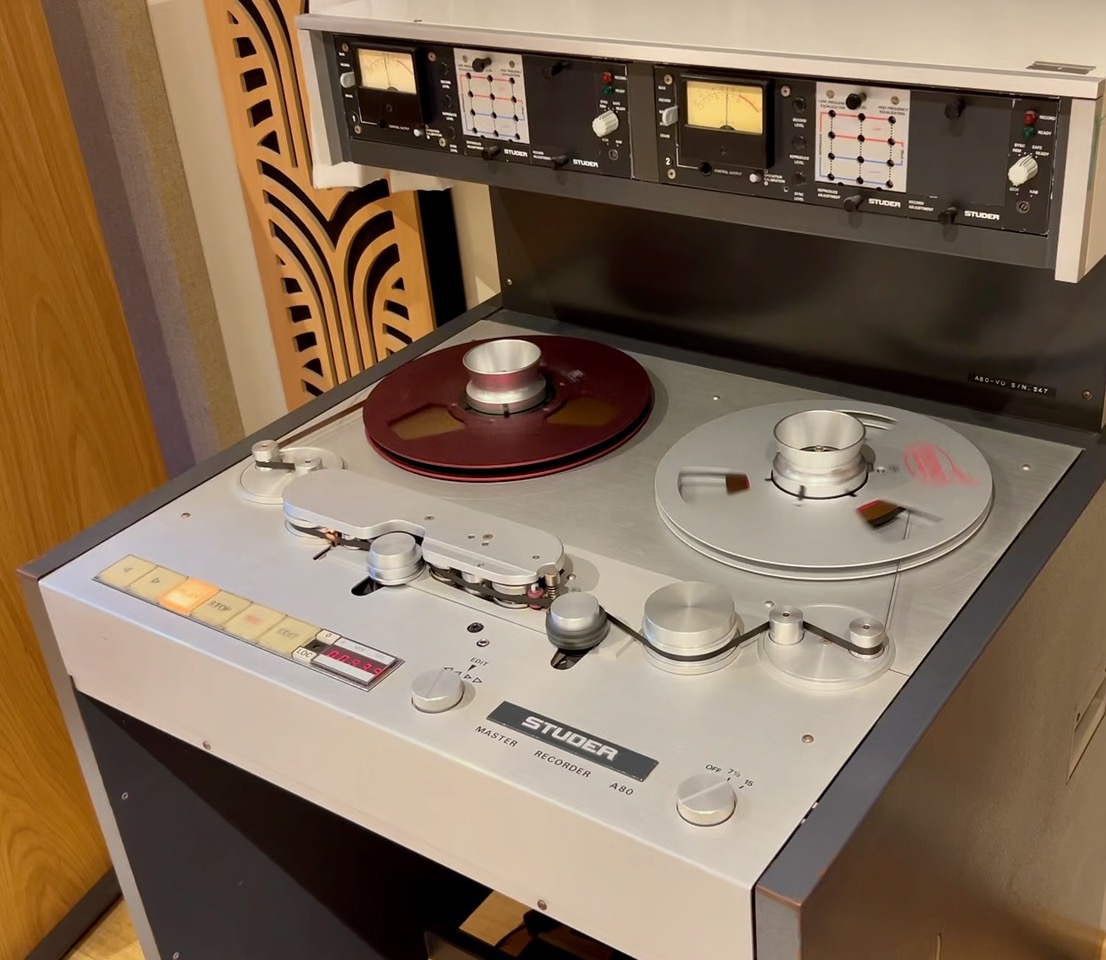
As soon as you press play, the reality of what you’ve just bought overwhelms you. The piano introduction of opening track ‘Court and Spark’ has a quality I’ve never quite experienced before. The texture, the colour, the timbre are immensely lifelike but what struck me is a dynamism and micro detail that actually changed my appreciation of Joni’s playing: the dynamic phrasing and the way the piano’s sustain and damping pedals operate became intrinsically audible. It’s not like I suddenly had microscopically surgical hearing, but the way the piano phrases ebb and flow from loud to soft, I could almost see the row of dampers lifting and returning back onto the bank of strings. I heard the whole instrument. The piano has a physical presence and a stunningly real weight and timbre – and of course Joni plays with tremendous passion. The bass cuts in with every single note perfectly pitched, tunes just unfurl, everything flows. Guitars, drums, everything is so together and utterly tuneful, musically perfect and nothing is harsh, too forward or in your face. The overall quality is like buttery champagne.
From the first few moments, all the usual audiophile questions simply evaporate. Is it bright? Is it warm? Is there enough bass? Too much bass? None of it matters. Those concerns belong to the world of reproductions. What you hear here feels much closer to the source itself.
The layers of mediation that normally separate us from a recording seem to fall away. What emerges is the album in all its creativity and humanity: Joni’s voice, the astonishing musicianship, the flow of the arrangements, the tonal colours and dynamic expression. Everything sounds less like hi-fi and more like music.
As song after song rolls by, I’m entranced by the cascading cadences, the entwining melodies, a lick of the sweetest guitar here, a growl on a saxophone there. The composition and arrangement are sublime and the actual recording and production could teach anyone a lesson in how to do it. The songs shuffle, they groove, they swing and they slip and slide along. The playing of every note on every thread is immaculate. This has got to be the one of the most exquisitely conceived and produced albums ever made!
As the album unfurls it simply deepens its spell. Every track reveals another aspect of Mitchell’s genius as a songwriter, arranger and bandleader. The grooves are supple and fluid, the musicianship astonishingly natural, and every instrument occupies its own perfectly judged space. The piano possesses a physical weight and scale I’ve rarely encountered on any playback format, while the bass remains melodic, agile and beautifully pitched throughout.
What struck me most was how effortlessly the album flows. Nothing calls attention to itself. There are no audiophile fireworks, no exaggerated detail, no artificial spotlighting. Instead you’re drawn into the music itself. The arrangements breathe, the rhythms swing, and the songs seem to unfold naturally in front of you.
Whether it’s the close harmonies of ‘Free Man in Paris’, the introspective beauty of ‘The Same Situation’, the groove of ‘Car on a Hill’ or the humour of ‘Twisted’, everything serves the music. The result is an album that feels not merely recorded but alive.
Summing up
How does it compare to the original pressing or the excellent Rhino vinyl release? Honestly, it doesn’t. Comparison implies competition. This tape simply occupies a different category. If Rhino’s previous reel-to-reel titles hinted at what was possible, Court and Spark feels like the format fully coming into its own.
Could it be the best release in the series so far? Quite possibly. For me, at least, it’s not just one of Joni Mitchell’s greatest albums. It’s one of the greatest albums ever made – and this is the best you’ll ever get to hear it.
Rather than owning a reproduction of a masterpiece, it feels as though you’ve been invited into its presence. Not so much hanging the Mona Lisa on your wall as sharing a quiet conversation with Lisa del Giocondo herself. And when the final notes fade away, she doesn’t vanish into the ether. She simply returns to her place on the tape shelf, patiently waiting for the next time you decide to pay a visit.
As each track fades away, you’re left hanging on the final decay, reluctant for the moment to end. Then the next song arrives and the sense of wonder begins all over again. That’s why these releases are so special. They aren’t merely premium editions or collectable curiosities. They are perhaps the closest most of us will ever come to hearing what existed in the control room when the album was completed.
I have no doubt that once these 350 copies are sold out these reels will become hallowed artifacts, spoken about in hushed tones. Blue sold out in a couple of weeks and the prices for pre-owned copies went skyward. I’d anticipate the same will happen with Court and Spark.
You can get your own copies here (if any are left by the time you read this):
- Vinyl (currently showing as sold out): https://eustore.rhino.com/en-gb/products/court-and-spark-rhino-high-fidelity-ukeu
- Reel to Reel: https://store.rhino.com/products/court-spark-rhino-high-fidelity-r2r?variant=51802365034742
Add here’s more rambling on video…

