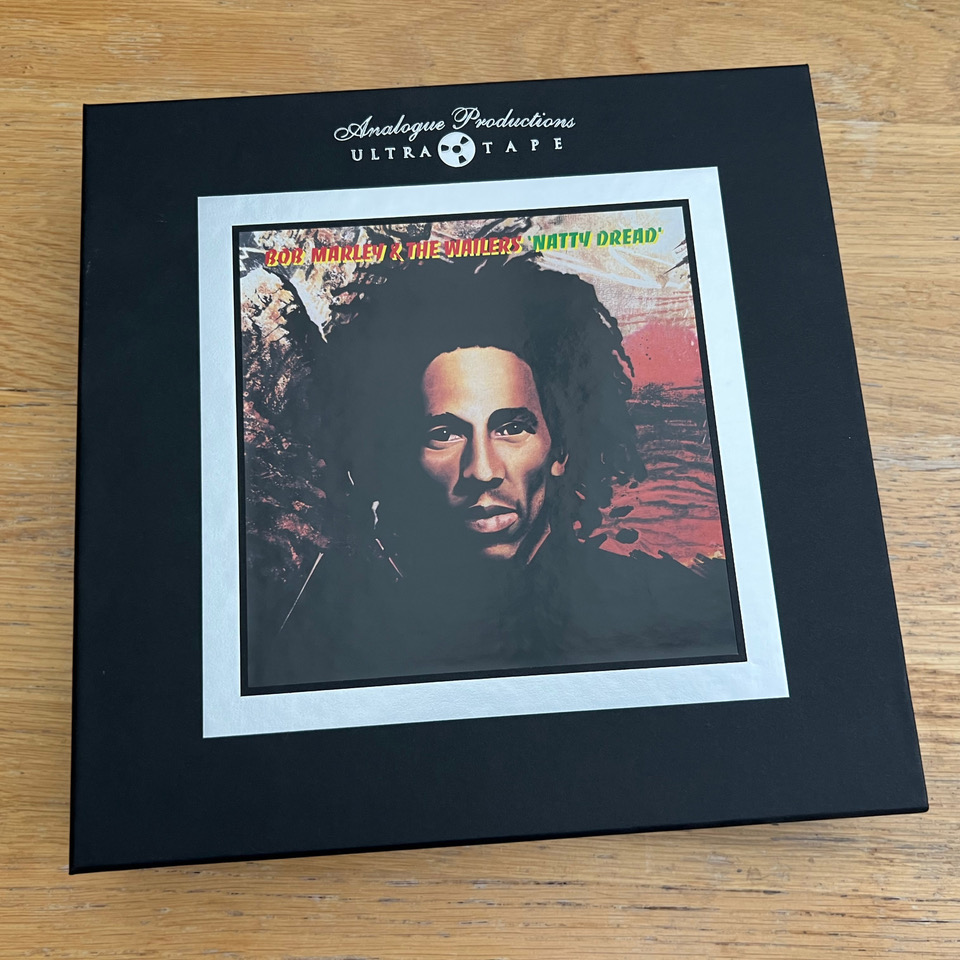
 About a year after the release of the first two Bob Marley releases on UHQR vinyl and Ultra Tape, we have the next two: Bob Marley and the Wailers’ 1974 smash hit album Natty Dread and its 1973 predecessor Burnin’ (which I’ll cover in a separate review).
The time delay with these two follow-ups was primarily due to the location of the master tapes: they’re in the UK and shipping to the US was absolutely prohibited! So, ever resourceful, Analogue Productions’ Chad Kassem came up with a supremely elegant solution. He arranged for the tapes to be made available at London’s Abbey Road Studios, and brought in local mastering engineer Frank Arkwright, who has a particular love for, and affinity with, reggae. And, since both of these albums were originally mastered at New York studio Sterling Sound and hence that’s where the mastering notes reside, Chad also arranged for Sterling’s Ryan K. Smith to fly to London to co-master with Arkwright.
I’ve had both of these tapes, and the corresponding UHQR vinyl releases, for a few months now, but the sheer volume of amazing music being released on lately has created a bit of a backlog here – so I’m grateful for everyone’s patience on this one!
(Spoiler alert… OMG. Every second of the wait was worth it!!)
I’m starting with Natty Dread because it’s one of my favourite Bob Marley albums, perhaps on a level pegging with Exodus. Now, that may change as I get to these tapes, because tape has a habit of opening up albums in a way that can turn any notion of favourites on its head. Like with with the first two UHQR / Ultra Tape releases: Rastaman Vibration and Exodus – Exodus was the one I would’ve bet on being most blown away by, but it was Rastaman Vibration that truly surprised me. I’m not saying it’s a better album, or even a better sounding album, but first the UHQR and then the Ultra Tape convinced me that Rastaman Vibration is a truly sublime album, and a far, far better one than I’d previously thought. Will the same happen with Burnin’ over Natty Dread? Let’s see – but first, let’s hear Natty Dread on its own terms.
A 50+ year-old reference
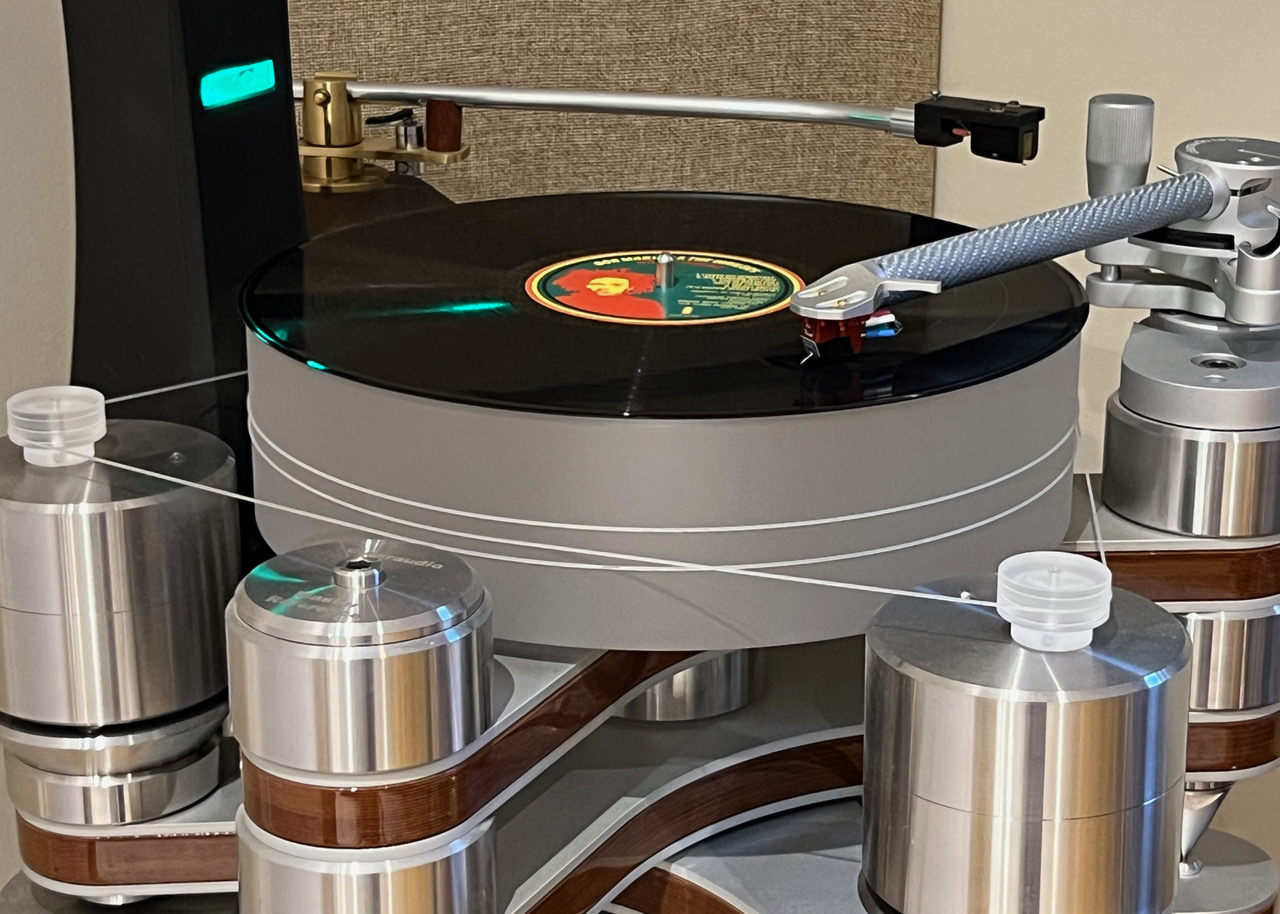
I have a very nice UK original (1974) Island Records vinyl pressing, so I kicked off listening to that. There’s no question that this is both musically wonderful, inspired and sonically arresting. The sound is sublime, even on this ’74 original.
The first two tracks Lively Up Yourself and No Woman No Cry could hardly be more accessible, more captivating, more enchanting. The band are swinging, sweetly flowing. The rhythms intoxicate and the ethereal message lifts the soul. Sonically, it’s stunning: this UK original has sensationally tight and deep bass. The bass guitar, apart from being ‘loud’ in the mix, is deeply textured and starts and stops in an instant, carrying the tune perfectly. Guitars and keyboards are superb too, and the organ in particular gives the impression that we’re in a church – it certainly feels like a religious experience! While the organ is situated far back in the soundstage, the guitar the is right up front and it’s as creamy and smooth as they come.
Them Belly Full, the third track, is perhaps my favourite on the album. Here, we get the same hit of deep growly bass and passionately delivered lyrics with the I-Threes supplying the sweetest choir-like backing. The drums are tight and weighty and the cymbals deliciously sweet.
Lee Jaffe’s harmonica in Rebel Music is about as real sounding as you’ll hear, and the bass is again solid and deeply textured. I actually keep forgetting that I’m still listening to my original vinyl, but then for fifty years these 1970s Island Records have been pressing those buttons just right!
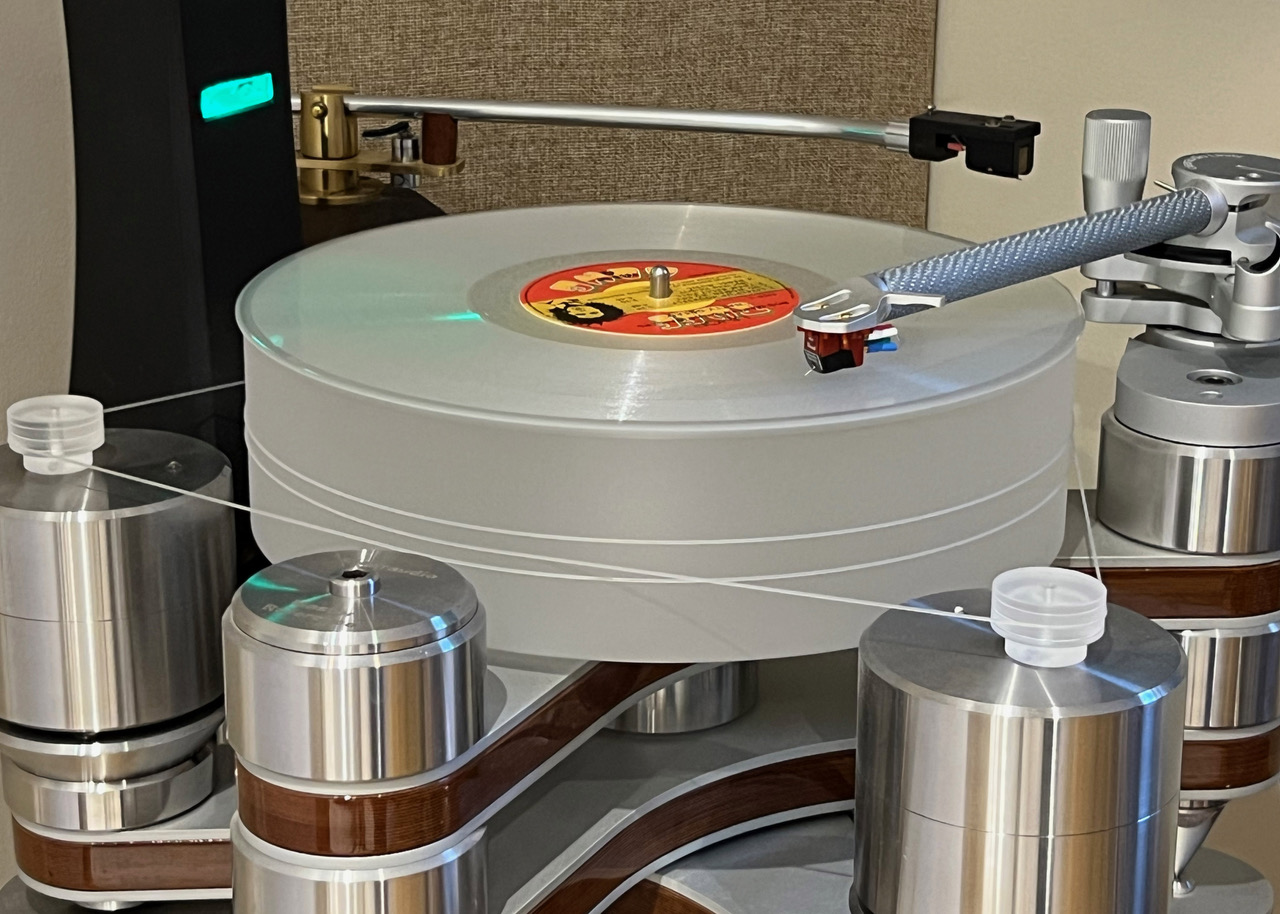
Now, rather than flipping the record and continuing onto side two of the original (which is seriously tempting), I’m itching to hear what fifty years, two top mastering engineers and a record mastered for perfection rather than pleasing the masses has produced… So, with eager anticipation I line up the Analogue Productions UHQR on the turntable and lower the needle…
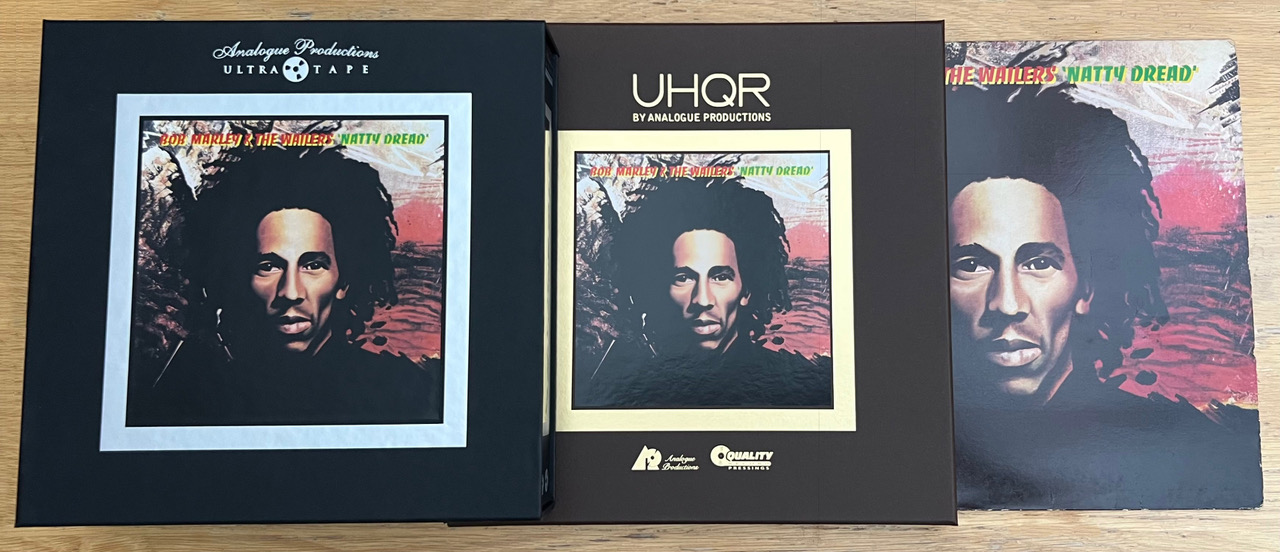
A Dreadfully Natty UHQR
Right from the first track, Lively Up Yourself, I’m sitting almost aghast, wondering WTF as the song effortlessly and infectiously rolls out from the loudspeakers. Straight away, the bass hits me. It’s even deeper than on the original, and even tighter. Which is some achievement, and if that were the only improvement it would frankly have been enough. But there’s more – plenty more. Bob’s voice feels both less forward, and sweet as a nut. It sounds more like a voice, more natural, more expressive.
And it doesn’t stop there… the guitar is incredibly sweet and creamy, and the percussion has a whole new layer – is it a washboard? It’s on the hard left of the soundstage and it’s startling! It’s not that it’s loud, it’s just that I’d never noticed it before.
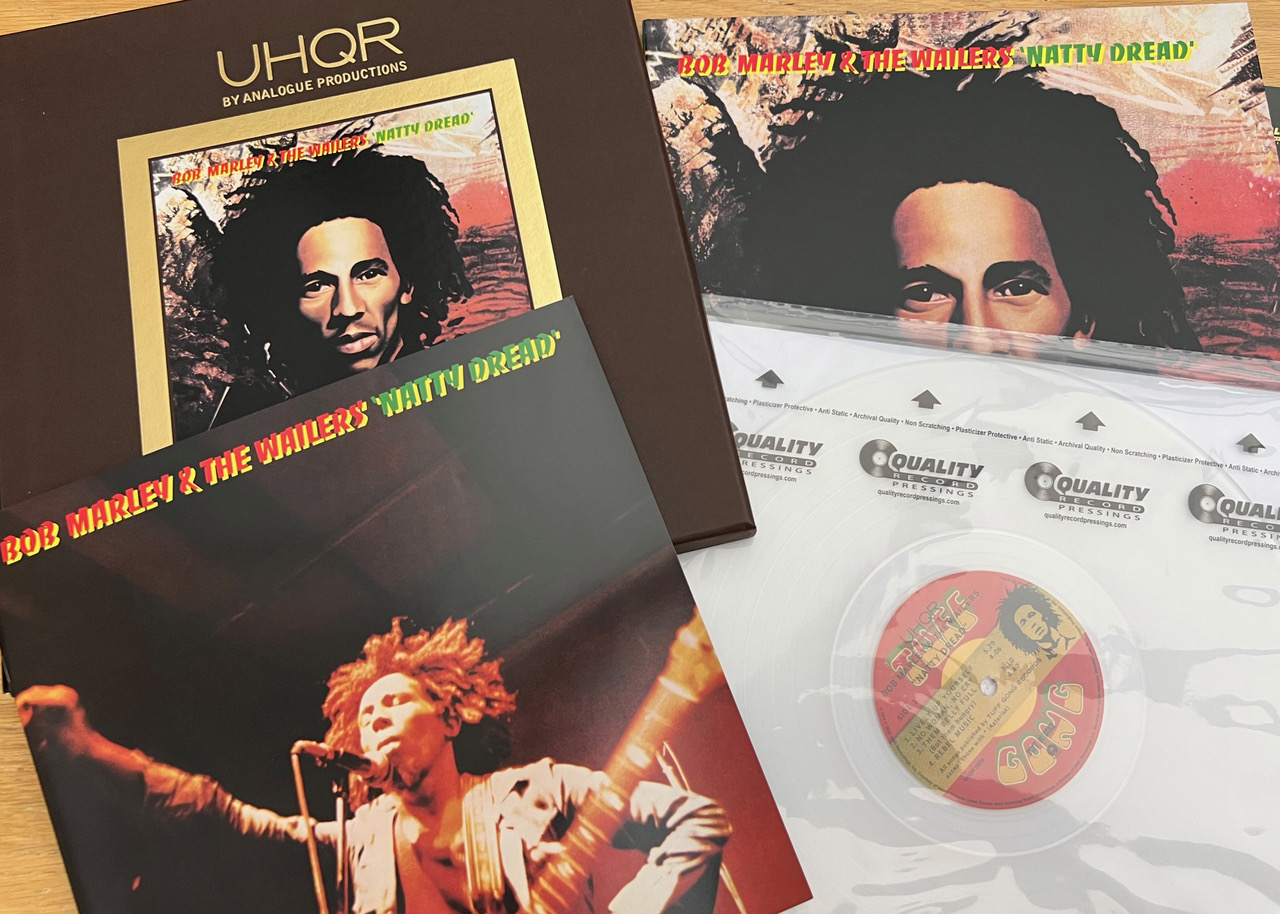
All things combined – the increased realism and detail of the percussion, the improvement in bass depth and texturing, etc – give the song even more of a naturally captivating, flowing pace. When the organ cuts in (also far left) it’s stunningly defined and clean. What’s apparent here is that it isn’t just the lead instruments that stand out. And then… oh wow, listen to the horns: rear of the left channel, again more clearly defined, textured and wonderful than I’ve heard them before. Then the organ cuts back in and the saxophone returns dead centre, astonishingly vivid but without being forward or shouty. Suddenly the whole begins to show itself – in a whole new way. The song is so much more layered than I’d previously realised. The threads are so clearly separate yet so intrinsically together.
We’re only one track in and yet I can say hand on heart that the UHQR is stunning, a 100% recommendable upgrade over what is an already staggeringly good original. (What the hell is the tape going to sound like??!!). But for now I’m sticking with the UHQR, this is way too good to skip or rush.
No Woman No Cry is up next. I’m struck by the cleanliness of the keyboard and organ, the wah-wah guitars, and Bob’s voice which is soft and clear as a bell.
By the time we get to Them Belly Full, I’m thinking woah, we’re only three tracks in here and already and things are coming very sharply into focus, although ‘sharp’ doesn’t really do this justice. The drums are clean and weighty. Aston ‘Family Man’ Barrett’s bass guitar is so heavy and thick but every single note starts and stops with both texture and timbre finely described. The guitar plays sweetly, with every bend and pick laid out for our pleasure. The percussion is agile and defined, and the vocals, both Bob’s lead and the I-Threes’ backing, are layered and three dimensional. Nothing at all is harsh, in your face, aggressive or too forward. Everything is there, everything contributes wonderfully.
Rebel Music closes side one and continues to reveal more delights to a degree that, quite frankly, I wasn’t expecting at all. The bass continues to be deeper, tighter, more defined, tuneful and textured. The vocals are again more cleanly layered. But it’s the harmonica, played by Lee Jaffe I think, that really stands out here. Now that I’ve noticed it, it puts me in mind of a young Stevie Wonder at his best. I can’t now un-notice, it’s just delicious.
So, after fifty-two years of Natty Dread’s original 1974 pressing being rightly regarded as an epic jewel of music, the UHQR reveals so much more of those fine details, layers and divine inspiration within Bob Marley and the Wailers. It’s so easy to see why Island Records’ founder Chris Blackwell was so enamoured and brought Bob to a global audience.
You can tell when something is really special, when each listen draws you further in, and familiar songs seem to fly by with ease, seemingly ending more quickly each time, and never inducing the slightest hint of fatigue. The songs on side one of this album, despite being absolute favourites, feel fresh and easy, natural and light, yet definitely more full, energetic and entrancing. It’s one of those “absolutely no need to go back to the original ever again” moments. I never thought I’d hear myself say that – I LOVED that original!
So now temptation gets the better of me, as it did with the original. I’m going to skip side two (just for now – of course I’ll be coming back, in my own sweet time) and line up the tape. I can’t wait…
The un-real, soundsterrific, extraordinary Ultra Tape(!)
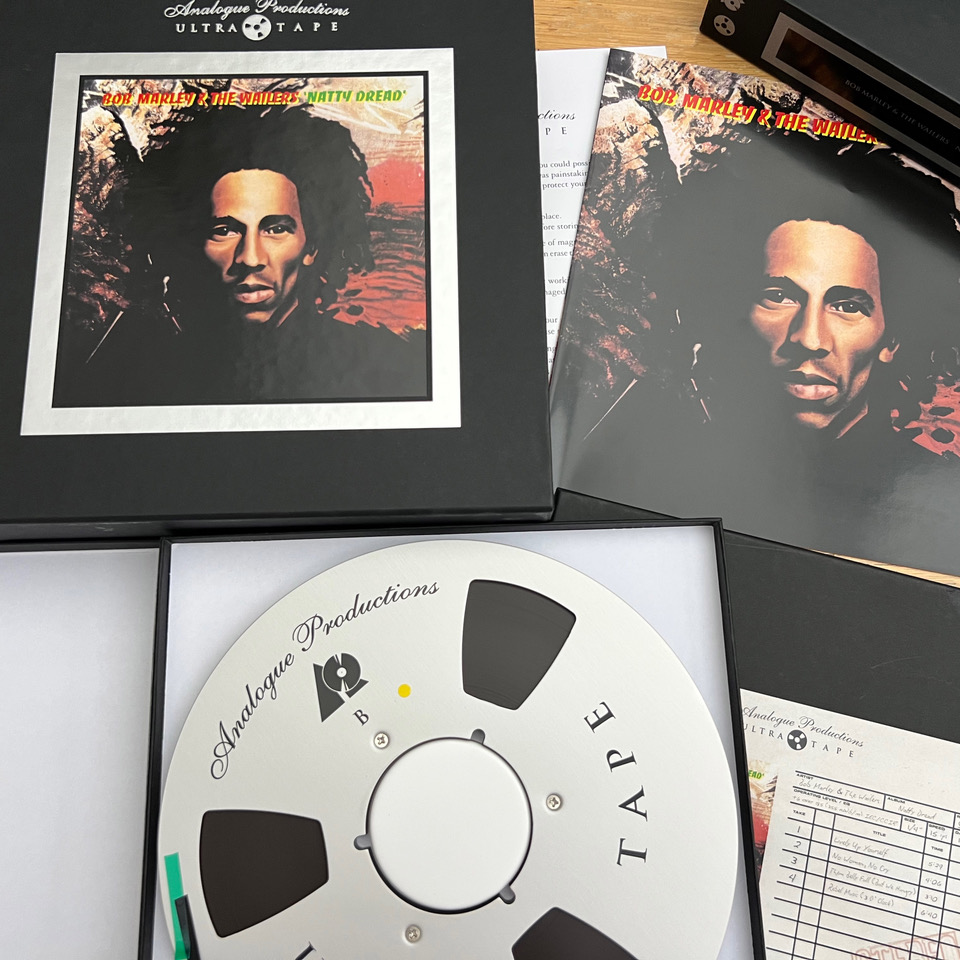
Right from the opening seconds, my foot is tapping in time with the shaker. The bass isn’t bigger but is even more defined than the UHQR. It literally bounces along. The guitar is even more upfront and still without a hint of harshness. And Bob’s voice is more characterful – you can hear every expression, exactly where his mouth is in relation to the microphone, which way he’s facing, his every breath. In fact his voice is the most impressive leap forward here, certainly at first, with the reverb added here and there. Then I notice that every single keyboard note has sensational texture. And the lead guitar melodies, plus the brass section rear left, are even more clearly defined. The organ left mid rear is more real, while the main saxophone lead in the centre is even more vivid. As for the percussion, little notes are popping like fireworks everywhere: the horn stabs, the guitar licks, everything is so fully defined in space, it’s intoxicating, there is SO much going on! And then, oh man, just towards the end of the song, that cymbal is more real and shimmery than I’ve ever heard before. It’s freaking amazing.
No Woman No Cry continues in the same vein: everything exists perfectly held above that bass foundation, which is so stable and solid. The kick drum beats punch through it, the wah-wah guitar floats above… As the song builds and the organ fills out any remaining space, the presence becomes so vivid (yet never ever harsh) that the whole band honestly appears to be right there in my room, except it doesn’t sound like my room. My room has become the studio. Bob Marley and the Wailers are in MY studio, and they’re on fire!
On Them Belly Full, those “and dance” backing vocals at the back of the room in the right channel are so sweet and layered, and then the mix drags them across to the rear left adding huge space. As has happened song after song, from the first notes of the original’s Lively Up Yourself, everything just keeps on getting better and better. The deep bass is so tight and articulated here, unbelievably even more so than on the UHQR, which in turn bettered the superbly well recorded and mastered Island Records original.
Rebel Music is up next, and oh boy am I looking forward to that harmonica. Oh and while waiting, the I-Three’s backing voices are so sweet but laser-sharply defined. I won’t say ‘etched’ because there’s a sweetness that’s just sublime and ‘etched’ sounds kinda harsh as a word!
So here comes that harmonica lead now. Woah, it might take me many listens to not be so captivated by that harmonica! And then the colour of the guitar licks, then the solid-as-a-rock thump of the bass and drums… I’m a happy man here.
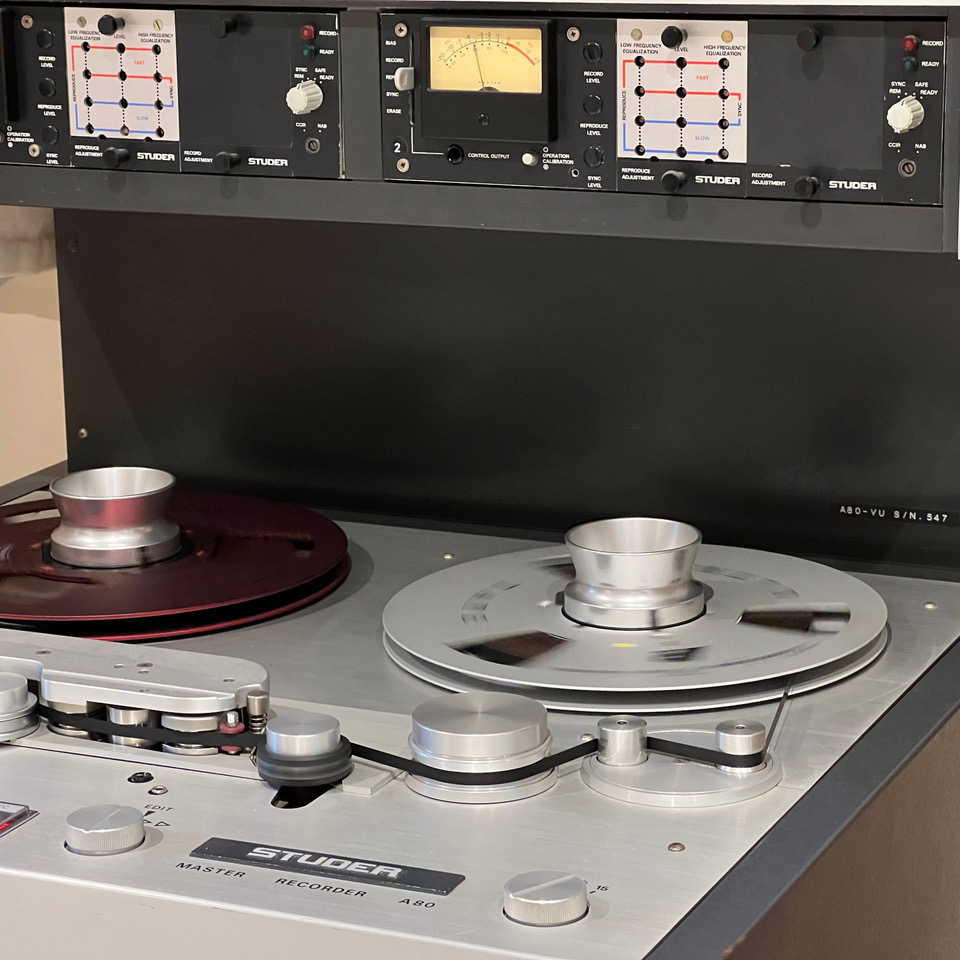
The absolute presence coupled with the utter creamy sweet colour is in a class of its own. It makes me want to play the other Analog Productions Marley tapes again, because right now this one is redefining what I can expect from musical reproduction. It’s got me thinking about how this was made in that Abbey Road session. For example, was it created using the usual Analogue Productions favourite Ampex ATR 102 or perhaps something even more exotic? Curiosity got the better of me so I ended up revisiting the video in which Chad reminisces with ‘Michael 45’ who was lucky enough to join Chad, Ryan and Frank for the amazing mastering session in Abbey Road. If you haven’t seen it, it’s really worth a watch.
Having rewatched the video, I gave Chad at Analogue Productions a call to check on a few more details. It turns out they spent about a week in Abbey Road getting this, and a couple more albums, absolutely right (including Burnin’ – to be reviewed soon, and Catch a Fire, yet to be released). In Chad’s opinion, while the original master tapes sounded superb on about half of the songs, they needed a bit of extremely deft tweaking on the rest, and of course he had not one, but two, mastering engineers on hand to perform this magic! Several cuts were made and test pressings listened to before the absolute perfection of the final result was achieved. And it IS absolute perfection – both the UHQR and the Ultra Tape are practically religious listening experiences. The sweet reality touches your soul. I mean, the UHQR alone is one of the most beautiful listening experiences I’ve had, and yet the Ultra Tape is even better.
In terms of the mastering of the Ultra Tape, once all the mastering adjustments were finalised for the UHQR, those same settings were then used to produce the new 30ips master for the duplication of the Ultra Tapes. Frankly, this is a very good thing – because those final mastering touches, those deviations from the original Sterling mastering notes to realise the absolute best on modern audiophile equipment, elevate this spectacular recording to the sublime. I don’t think there’s anyone else with the drive, commitment and passion to push the boundaries so far forward of the already excellent original. And I’m not even just comparing with the original vinyl pressing here: I have no doubt whatsoever that what Chad, Ryan and Frank have achieved surpasses even that original master tape.
And finally..
I’m going to leave you at this point… side two was equally incredible but I won’t add more detailed notes here, at the risk of repeating myself ad infinitum and diluting the message. The message is this: this tape sounds freaking in-cred-ible. Does it sound better than the other Marley Ultra Tapes? Well, I’ve recently made some changes to my room acoustics so I’ll need to get back to you on that once I’ve had a full re-listen. However, I can already say that it does sound slightly different, absolutely, for sure. There’s no question that this tape, and the associated UHQR, have a somewhat different ‘fingerprint’, let’s say. The mastering that defines an album isn’t just the ears and decisions made by the mastering engineer. It’s also the system that mastering engineer uses, even down to the cables and the acoustics of the mastering room. What we have here is one of the first (I’m struggling to think of another, so it may well be the first) commercially available master tape copy with an Abbey Road sound signature on it. No wonder it sounds so bloody special!
The Natty Dread Ultra tape is available from: https://store.acousticsounds.com/d/191471/Bob_Marley_and_The_Wailers-Natty_Dread-14_Inch_-_15_IPS_Tape
And the Natty Dread UHQR: https://store.acousticsounds.com/d/191468/Bob_Marley_and_The_Wailers-Natty_Dread-UHQR_Vinyl_Record
More rambling on video here…

